PETA Applauds NIH for Investing $150 Million in Non-Animal Science
Update (March 18, 2026): PETA is celebrating new milestones in its effort to end animal experimentation with announcements from the Trump administration of a substantial investment in sound, non-animal research models and guidance for drug developers. The National Institutes of Health announced a $150 million investment in non-animal research hubs and methods that are more likely to yield cures and treatments for humans. This progress comes after PETA scientists presented evidence to NIH on the need to support human-relevant methods in cardiovascular, gynecological, rare disease, and neurological research. These areas, which have relied heavily on the use of animals, are failing to yield treatments for humans. PETA has recommended that all current experiments on animals in these areas be ended now. Also, the U.S. Food and Drug Administration released a draft guidance to help drug developers use non-animal methods to bring safe, effective drugs to market sooner based on human-centric data.
PETA thanks NIH, the FDA, and U.S. Health and Human Services Secretary Robert F. Kennedy Jr. for their leadership in moving the nation’s health agencies away from caging, poisoning, harming, and killing animals in experiments that have failed patients.
Originally posted April 29, 2025: The National Institutes of Health (NIH) just lit a fire under scientific research, declaring a fundamental change in its funding away from cruel and outdated experiments on animals and shifting both money and focus toward non-animal research methods. In short, what PETA has been working for and advocating for years.

This move cannot be overstated. It is a fork in the road, a 180-degree turn, a tectonic shift with far-ranging implications for humans and other animals that will ripple through science and biomedical research for generations. Finally recognizing that humans will never kill enough animals to treat the panoply of human maladies will free time and billions of wasted taxpayer dollars to pursue human-based solutions to human problems.
Animals benefit. Patients benefit. Taxpayers benefit. But make no mistake, PETA has been offering NIH the matches and kerosene for this well-deserved bonfire for years.
PETA has called on NIH to abandon the cruel, invasive, and deadly use of animals in experiments—practices that are not only ethically indefensible but scientifically backward. Experiments on animals have repeatedly failed to produce effective cures or treatments for humans, wasting billions in taxpayer dollars and delaying progress in medical research. This has been a boondoggle of the highest order.
But a boondoggle that appears to be close to an end.
“By integrating advances in data science and technology with our growing understanding of human biology, we can fundamentally reimagine the way research is conducted—from clinical development to real-world application,” said NIH Director Dr. Jay Bhattacharya. “This human-based approach will accelerate innovation, improve healthcare outcomes, and deliver life-changing treatments. It marks a critical leap forward for science, public trust, and patient care.”
We could scarcely have said it better ourselves. In fact, we have. Repeatedly, daily, loudly, and to anyone who would listen and many who would not. PETA scientists have been touting our Research Modernization NOW—a roadmap to phase out pointless and deadly animal experiments.
NIH has adopted several recommendations from Research Modernization NOW in the announcement, including expanding funding, training, and infrastructure for non-animal methods and mitigating bias towards experiments on animals in NIH grant review panels, a problem that PETA scientists recently exposed in a first-of-its-kind study.
NIH’s announcement ushers in a new era of science—one rooted in relevance, compassion, and innovation. It’s major progress for every person who cares about animals, values human health, and demands the U.S. lead the world in scientific excellence. PETA looks forward to supporting this transformative shift and ensuring it results in real, lasting change for both humans and other animals.
PETA understands that taking this bold stance will inevitably invite criticism from entrenched interests who have long profited from the misery and the failure of animal experimentation. PETA thanks Dr. Bhattacharya for his—our—conviction that the path forward is compassionate, scientific, and animal-free. It is.
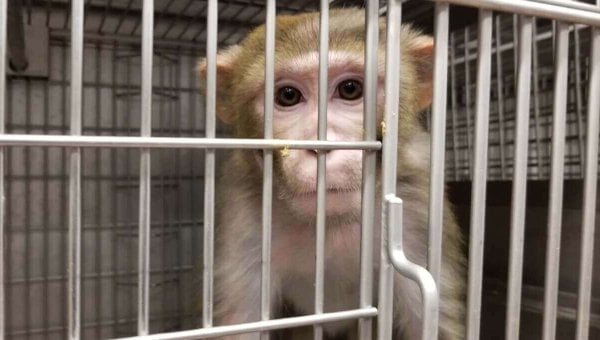
There is still more work to do. One key step is to close the seven failed National Primate Research Centers, which have harmed and killed hundreds of thousands of monkeys and are an anchor on taxpayer dollars and science, failing to deliver promised vaccines or cures for 60 years.
Join our call to shut them down: