PETA Sues Fort Lauderdale for Allowing Illegal Capybara Café to Operate
For Immediate Release:
October 27, 2026
Contact:
David Perle 202-483-7382
PETA filed a lawsuit today in Broward County Circuit Court against Fort Lauderdale and the Capybara Café, seeking a court order that would bar the wild-animal petting operation from continuing to exhibit prohibited animals. The lawsuit follows PETA’s warning to the City that the facility is operating illegally.
At the Capybara Café, customers pay to physically handle capybaras, armadillos, African crested porcupines, fennec foxes, and other animals, who are transported to a residential property at the end of each day. The city’s zoning code prohibits wild-animal petting zoos at the café’s location and prohibits keeping wild animals at or near residential properties, and although Fort Lauderdale has acknowledged this—acting on a PETA tip to cite Capybara Café and the residential property for keeping prohibited wild animals, including capybaras—prohibited animals are still being kept at both locations.
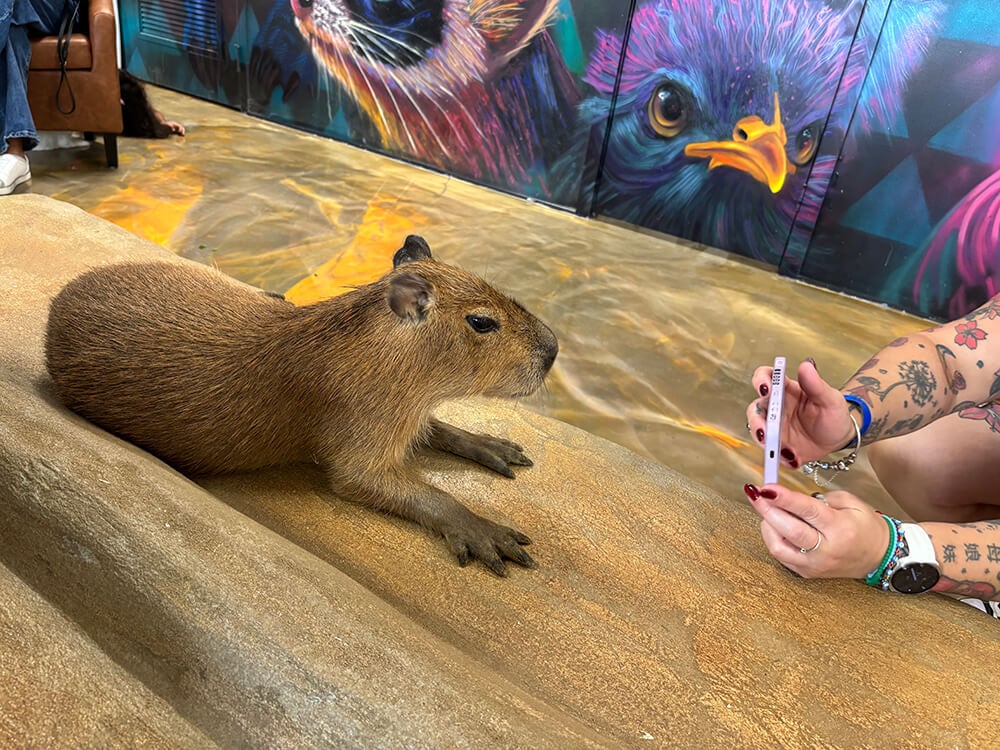
The Capybara Café’s owner, Stephanie Angel, operates various petting zoos in Florida. The U.S. Department of Agriculture (USDA) cited her operation after multiple capybaras died without adequate veterinary care; St. Johns County cited another operation as an unpermitted use; and the Florida Fish and Wildlife Conservation Commission is pursuing charges against her for failing to report a lemur bite, among other violations.
“Every day this roadside zoo stays open is another day these wild animals are subjected to constant handling that stresses them, and put at risk of transmitting zoonotic diseases to customers,” says PETA Foundation Chief Legal Officer Jeff Kerr. “PETA is asking the court to order the City to stop violating its own laws and close this illegal wild-animal petting operation. We are ready to help place the animals at reputable facilities where they can receive the care and respect they deserve.”
In nature, capybaras spend much of their days swimming, submerging themselves in water, and basking along the muddy shores of South American rivers and swamps. A September 18 visitor to the Capybara Café documented capybaras showing signs consistent with respiratory illness and a fennec fox showing signs consistent with intestinal parasites. According to a veterinarian who reviewed the photo evidence, the possible parasites could be transmitted to customers.
PETA—whose motto reads, in part, that “animals are not ours to use for entertainment or abuse in any other way”—points out that when it comes to the ability to feel pain, hunger, and thirst, a capybara is a dog is a boy. For more information, please visit PETA.org or follow PETA on X, Facebook, or Instagram.