
Victory! Tigers Who Suffered at Kirshner Roadside Zoo Now at Sanctuaries After PETA Lawsuit
For Immediate Release:
July 9, 2026
Contact:
David Perle 202-483-7382
Several tigers who once languished in barren enclosures at “The Worst Roadside Zoo in America”—the notorious Barry R. Kirshner Wildlife Foundation in Oroville—are now in the care of reputable sanctuaries, thanks to pressure from an ongoing PETA lawsuit against Kirshner and its affiliates. The tigers are finally receiving adequate veterinary care, nutrition, and enrichment—a stark contrast to the suffering they endured for years under Kirshner’s control.
Kirshner denied proper care to sick and injured animals—many of whom died as a result. Facing a state-led shutdown over repeated violations of animal welfare laws, Kirshner and its business partners sought to avoid the confiscation of several federally protected animals by shuffling them to other facilities, including an unaccredited facility in Rio Vista. PETA’s lawsuit detailed the scheme, seeking to prevent Kirshner and its successors from ever regaining possession of the animals and to instead ensure their placement at reputable sanctuaries. After PETA’s lawsuit made clear that no facility holding the temporarily relocated animals would escape scrutiny, the operator of the Rio Vista facility contacted the Oakland Zoo and agreed to relinquish the tigers.
Three of the tigers—Lapua, David Alan, and Zuri—have since been transferred to Performing Animal Welfare Society (PAWS) in California and Turpentine Creek Wildlife Refuge in Arkansas, both accredited sanctuaries focused on rescuing neglected animals, while a female tiger named Sitara will remain at the Oakland Zoo, which led the rescue effort. A fifth tiger, a 16-year-old female, was found to be suffering from end-stage arthritis and spinal disease, causing extreme lameness and neurologic deficits in her hind limbs. Despite receiving intensive care at the zoo’s veterinary hospital, her condition did not respond to treatment, and she was ultimately euthanized.
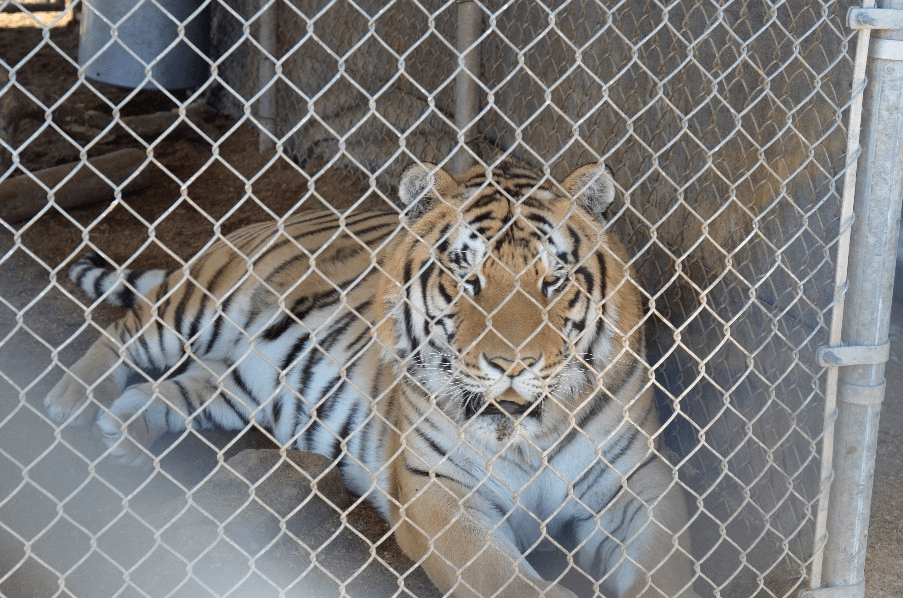
“These tigers endured hell on Earth in Kirshner’s clutches, on top of which, when authorities closed in, the roadside zoo shuffled the animals around to other seedy facilities like so many stolen goods,” says PETA Foundation Managing Director of Captive Wildlife Debbie Metzler. “PETA’s lawsuit put Kirshner’s cronies on notice and helped ensure that these tigers will finally get the care they need at accredited facilities.”
PETA’s lawsuit detailed how tigers and other big cats confined at Kirshner suffered from metabolic bone disease, a malnutrition-induced illness causing decreased muscle mass, pain, lameness, and broken bones. Lions were often left to suffer from untreated wounds, lesions, and other bodily injuries, while ring-tailed lemurs—highly social primates who typically live in groups of up to 30 individuals—were condemned to lonely lives in barren cages devoid of intellectual stimulation, often isolated or with only a single companion.
PETA’s lawsuit followed a criminal investigation opened by the California Department of Fish and Wildlife into the roadside zoo—which was prompted by a PETA complaint.
PETA—whose motto reads, in part, that “animals are not ours to use for entertainment or abuse in any other way”—points out that when it comes to the ability to feel pain, hunger, and thirst, a tiger is a dog is a boy. For more information, please visit PETA.org or follow PETA on X, Facebook, or Instagram.