Take These 6 Simple Actions to Help Shut Down Dog Laboratories
The penchant for tormenting and killing animals in U.S. laboratories isn’t limited to mice and rats. Every year, more than 42,000 dogs circle endlessly in small, barren cages, their ears tattooed with ID numbers. Each one awaits the whim of an experimenter for the next round of torture. Almost none make it out alive.
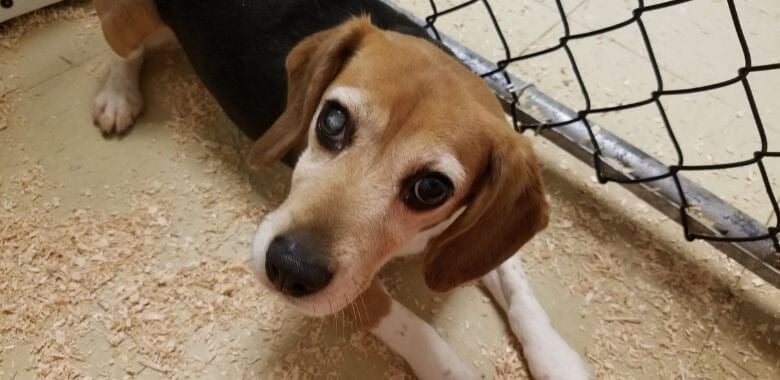
Experimenters like beagles best. They’re small and easy to handle. They’re also naturally kind, so they’re less inclined to fight back. This makes them good “test subjects” for unimaginable cruelty.
New York’s Marshall Farms makes millions every year breeding thousands of beagles and other dogs for torment in experiments. They may never touch grass or know a kind gesture. At Marshall and similar facilities, they’re born in squalor, raised in filth, and sold off to places such as the University of Massachusetts Chan Medical School (UMass Chan), where they’re reportedly starved, endure repeated and painful surgeries, and are eventually killed. That’s their whole life in one sentence.
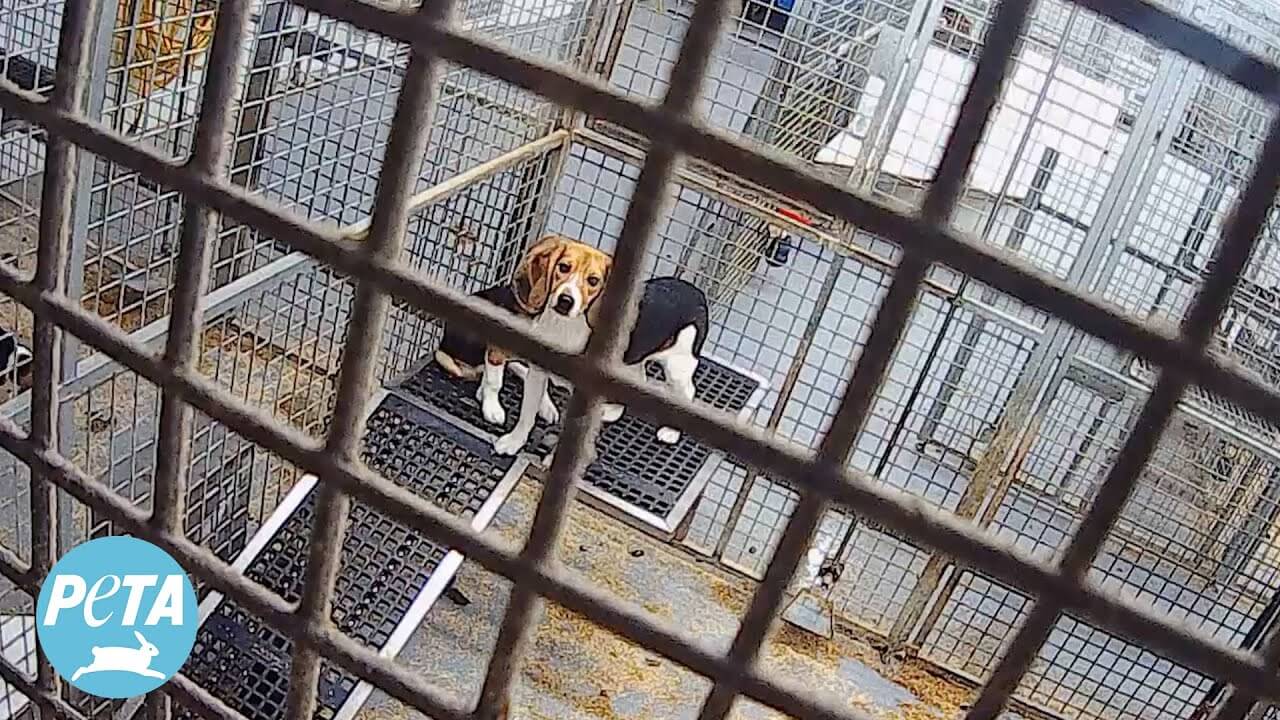
Piece by piece, PETA has dismantled portions of the dog experimentation pipeline. Our undercover investigation into Envigo helped expose conditions at the company’s fetid Virginia breeding factory and paved the way for the liberation of more than 4,000 dogs. Working with a coalition of groups, we saved nearly 2,000 beagles after years of pressure shut down Wisconsin breeding giant Ridglan Farms. A PETA undercover investigation exposing the horrific treatment of dogs and cats at Red Beast Enterprises in Colorado led to the facility’s closure and the rescue of nearly 70 dogs and cats.
There’s much more to do, but we can end the needless suffering of dogs in laboratories. Please take these six simple actions to help:
1. Email the USDA: Enough is Enough—Revoke Marshall’s license
Video footage leaked from Marshall exposed beagles trapped in filthy cages. Desperate dogs paced, jumped, and cried out from inside their barren metal cages. Their barks echoed through the building. Terrified beagles were strapped down and forced to wear tight masks to acclimate them to chemical inhalation tests.
At another facility now owned by Marshall, PETA exposed dogs and cats trapped in barren cages, denied veterinary care, and left to suffer agonizing deaths. Dogs whimpered as workers drilled into their skulls. A sick cat wasted away without medical attention for weeks. Federal and state inspectors later confirmed the horrors. Email the U.S. Department of Agriculture at [email protected] and ask that it revoke Marshall’s license.
2. Call the USDA and leave a message
Call the USDA at 970-494-7478 and then press 1. Leave a polite message urging the agency to pull Marshall’s license. Note: The rep may tell you that your comment must be submitted via email. Please let them know that, in addition to the email, you would also like them to take down your message.
Talking points
- I’m calling to urge the USDA to revoke Marshall Farms’ breeding license and ensure that the dogs and cats at the facility are released for adoption rather than sold into laboratories.
- Marshall Farms is the last major breeder in the United States that sells dogs to laboratories. It confines approximately 16,500 dogs and 1,300 cats in barren wire-floored runs and small cages. No animal should spend a lifetime in these conditions only to be sold for experimentation.
- Leaked photos have shown dogs in suspended wire cages and a dead puppy in a feces-covered bin. Experimenters fitted dogs with gas masks to train them for inhalation toxicity tests.
- The current administration and Secretary Rollins have signaled that animal welfare is a priority. The USDA should revoke Marshall Farms’ breeding license and help bring this outdated and inhumane industry to an end.
3. Contact the USDA on social media
The USDA says it’s cracking down on dog abusers, so Marshall’s cruelty to dogs and other animals should put the company squarely in its crosshairs. Take to social media to tell the USDA to yank Marshall’s license.
4. Email UMass Chan to urge it to replace cruel experiments with human-relevant science
UMass Chan inflicts cruelty on multiple species. Baby pigs suffer induced heart attacks. Cats and sheep suffer from debilitating diseases. Before they’re killed, the dogs in the laboratory of experimenter Matthew Gounis endure multiple surgeries to create artificial aneurysms and thread medical devices through their blood vessels. Experimenters reportedly starved some dogs to avoid building bigger cages. Email UMAss Chan at [email protected] to urge the school to replace cruel experiments with human-relevant science!
5. Call UMass Chan and leave a message
Call UMass Chan Medical School Interim Vice Chancellor of Communications Lisa M. Larson at (508) 856-2000 and leave a polite message urging the school to stop tormenting animals and transition to superior, non-animal methods. Use any of our suggested talking points below.
Talking points
- I’m calling to urge UMass Chan to get out of the animal experimentation business and transition to state-of-the-art, human-relevant research methods. Federal agencies are increasingly moving away from reliance on animal studies, and I hope the university will follow suit.
- I was troubled to learn that 4-month-old puppies in one of your labs endure painful surgeries before being killed. Dogs deserve compassion, not a lifetime of pain in a laboratory.
- I was deeply disturbed by reports of dogs suffering severe complications, a ferret who was left to die slowly, and allegations that some dogs are deliberately underfed to avoid the cost of larger cages.
- Most people see dogs as beloved family members, not laboratory tools. I respectfully urge UMass Chan to end these experiments and invest in cutting-edge, human-relevant science that offers greater hope for patients.
6. Contact UMass Chan on social media
If you’re in the U.S., please take one more step:
Dogs and thousands of other animals are tormented and killed in pointless experiments each year, testing medications that then fail in human trials. In 2022, Congress passed the FDA Modernization Act 2.0, which made clear that non-animal tests can be used instead of killing animals. But the FDA is dragging its feet.
Changes to the law have not prompted FDA action to support the replacement of experiments on animals. Passing the FDA Modernization Act 3.0 would help!
Thank you for your compassion for animals.

