Canton Grand Safari Caught Breaking the Law … AGAIN
PETA has uncovered evidence that the roadside zoo Canton Grand Safari may still be displaying animals illegally, even though the U.S. Department of Agriculture (USDA) suspended its license for a slew of violations of the federal Animal Welfare Act. PETA just filed a new complaint with the USDA, calling on it to investigate and to permanently revoke Canton Grand Safari’s license, warning that the roadside zoo’s actions put guests and other animals in danger.
Why Was Canton Grand Safari’s License Suspended?
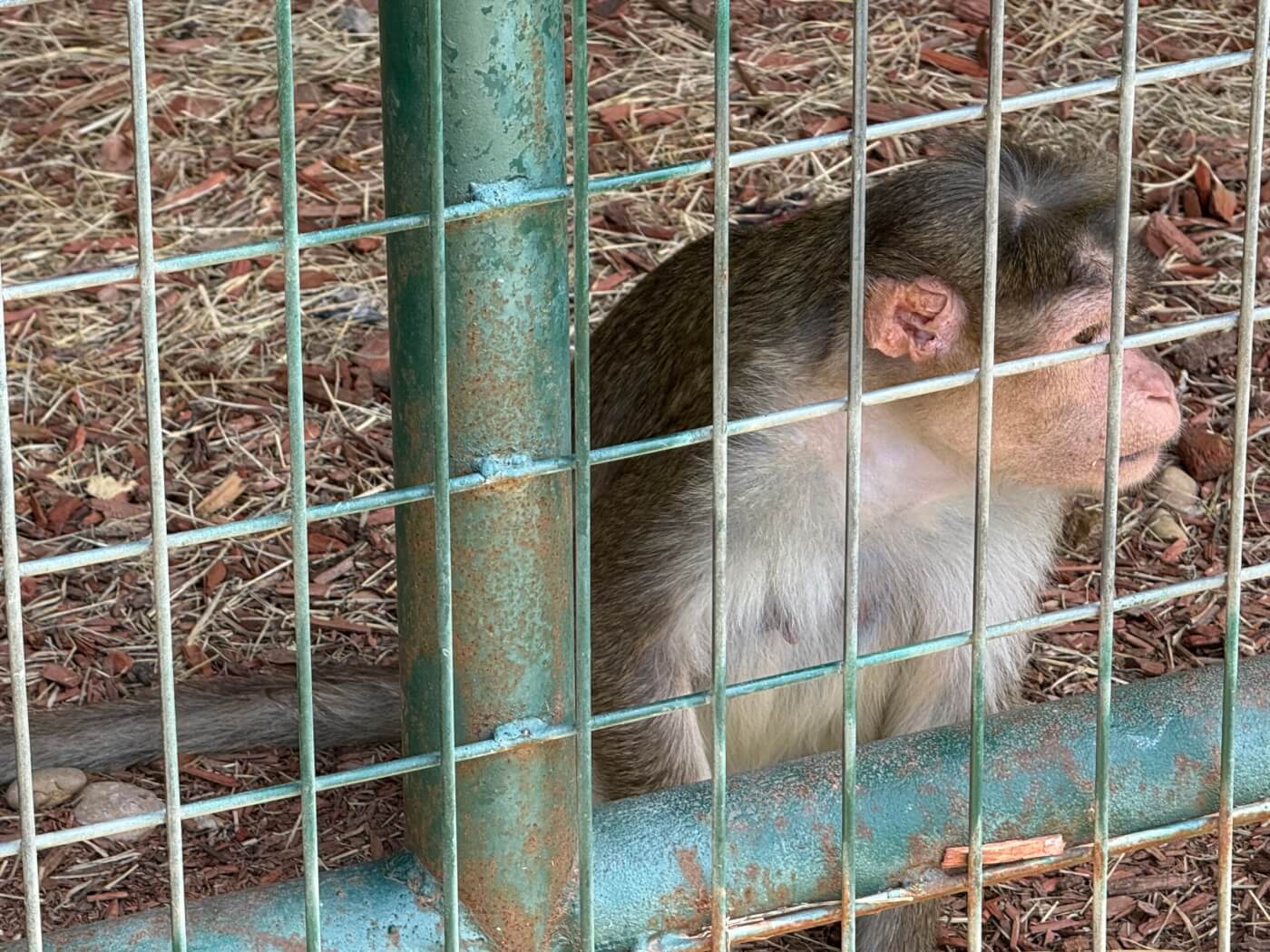
The USDA suspended Canton Grand Safari’s license after PETA filed multiple complaints against it. The complaints included eyewitness accounts and social media videos revealing that the roadside zoo was allowing dangerous hands-on interactions with young monkeys. Evidence showed monkeys climbing on visitors’ heads and shoulders without any apparent direct control from staff members. These interactions carry a serious risk of both injuries and the spread of diseases that can pass from animals to humans.
A recent federal inspection report also documented dangerous and filthy conditions at Canton Grand Safari. Inspectors found:
- a capuchin fiddling with an electrical outlet located within arm’s distance of their enclosure,
- a baboon chewing on a discarded hair tie,
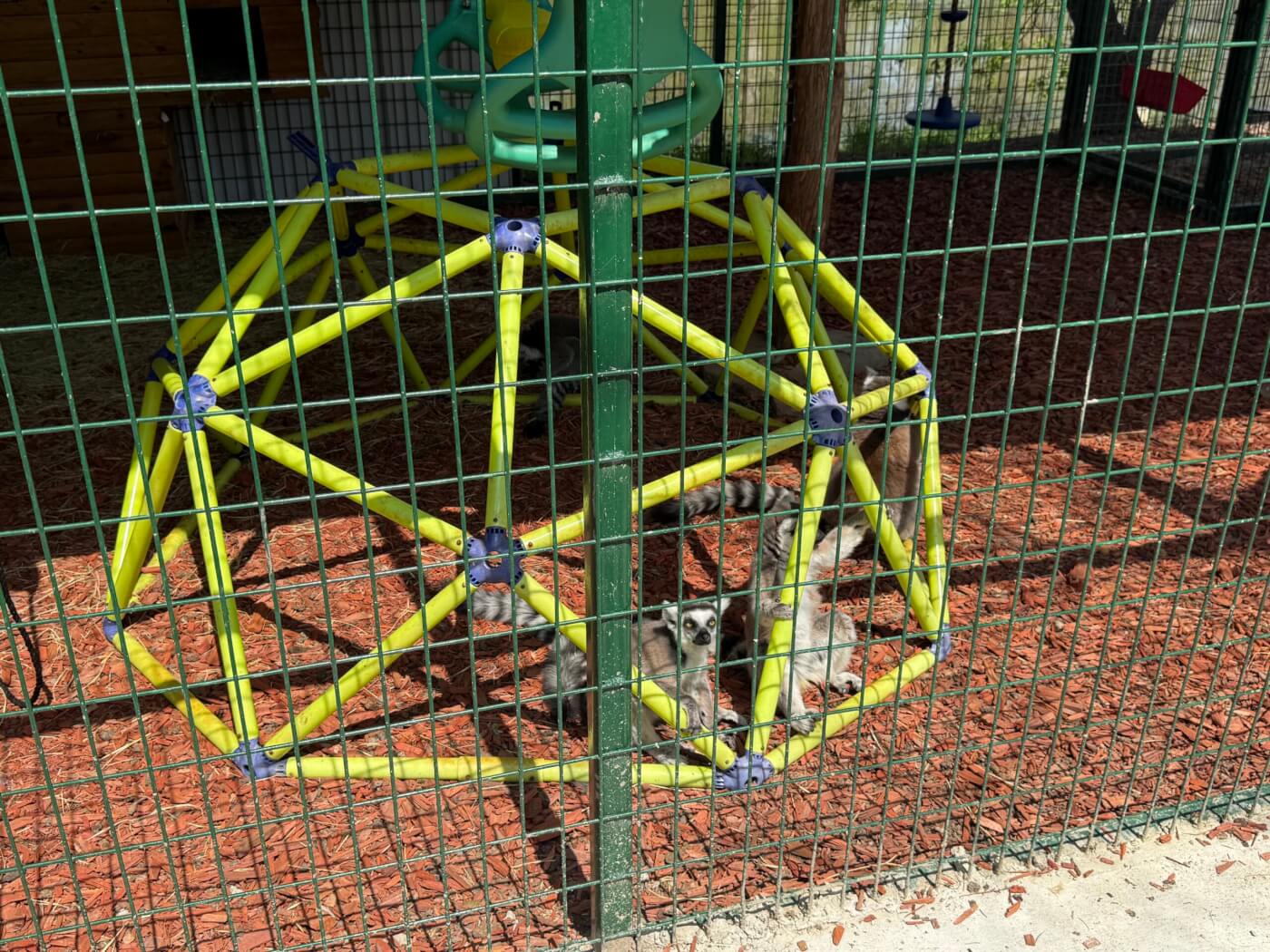
- ring-tailed lemurs kept in an unsanitary enclosure,
- and other animals confined near railroad ties with exposed, sharp metal rods.
The USDA also cited the facility for buying multiple guinea baboons from an unlicensed animal dealer, which is illegal.
Never Visit Canton Grand Safari or Any Other Roadside Zoo
Roadside zoos are a living hell for the animals trapped inside them. Many of these shoddy facilities use misleading terms like “sanctuary” or “rescue” in their names to appear legitimate, but what they actually do is breed, buy, sell, and exhibit animals for profit.
What a Real Animal Sanctuary Looks Like
A legitimate sanctuary puts animals first, providing them with safe, comfortable living conditions that give them as natural an existence as captivity allows.
A True Animal Sanctuary Will Never:
- Breed or sell animals.
- Allow hands-on encounters or photo ops with guests—such interactions with big cats are now illegal.
- Take animals on the road for public display.
Instead, support rescue operations affiliated with the Global Federation of Animal Sanctuaries (GFAS). GFAS-recognized facilities meet strict standards, don’t breed or use animals in commercial activities, and provide excellent lifetime care.