2026 is the Year of the Fire Horse – Join PETA to Blaze New Paths for Horses
The Year of the Fire Horse began on Feb. 17, 2026. It is defined by bold moves, rapid change, social shifts, new paths, and a drive to break from the past. Horses are exploited for their strength, intelligence, and beauty. There is no end to the ways humans use horses to turn a profit, so we’re honoring these noble animals by taking on seven of the industries that abuse them: horse racing, horse-drawn carriages, tourism, rodeos, circuses, Olympic sports, and slaughter.
We have celebrated a few victories for horses this year, including a ban on horse-drawn carriages in Philadelphia and forward movement in seeking criminal charges after 17 horses died in a racetrack barn fire, but we must do more! We must harness the power and energy of this 7th sign of the Chinese calendar and work toward a better future for horses.
You Can Help Horses
Please take the actions below to help suffering horses. After taking action, share this page with friends and family to make an even greater impact.
1. 🔥 Horse Racing
Horse racing is rife with performance-enhancing drugs, gruesome breakdowns, and slaughter. Horses are overdriven to speeds so fast— under the threat of whips—that they frequently sustain injuries and even hemorrhage from the lungs. Every single week, an average of 24 horses suffer fatal breakdowns. Even juvenile horses with fragile bones, some not even two years old, are forced to sprint at breakneck speeds to impress potential buyers at auctions. There are often many casualties.
2. 🔥 Horse-Drawn Carriages
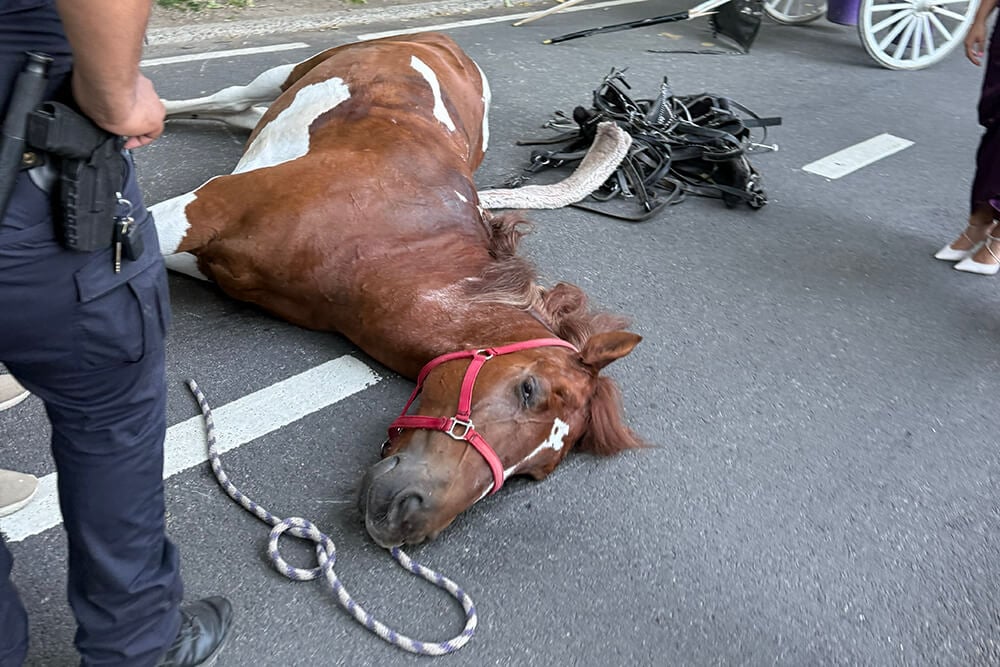
While horses are incredibly intelligent, they can also be skittish and easily frightened, causing hundreds of horse-drawn carriage accidents. As more people witness horses collapse and die while pulling heavy loads, more cities are waking up and banning horse-drawn carriages. New York City must join them! Take a moment to write a personal email to NYC Council Members, asking them to ban horse-drawn carriages in the city.
Struggling to begin your letter? Check out our facts and talking points.
- Horses work long hours (up to 9 hours/day, 7 days/week) in extreme heat or cold, on hard pavement and concrete. They are constantly exposed to traffic noise and fumes, which cause stress and respiratory illness. At night, horses used in urban areas are kept in cramped, often fire-hazardous stables.
- Horses can easily be frightened by sudden noises, traffic, or crowds, leading to bolts, crashes, and injuries to themselves, passengers, automobile drivers, and pedestrians. In addition to being abusive to animals, horse-drawn carriages are a serious public safety concern.
- While supporters of the horse-drawn-carriage industry may claim bans are based on fiction, the hundreds of accidents and collapses per year (most notably for NYC, Ryder’s collapse on 9th Street) are undeniable proof of systemic abuse.
- There is no retirement for the animals used and abused in the HDC industry. When horses become too old, weak, or are injured, they are often sent to auction so the owners can squeeze every penny of profit from the horses’ lives. Horses bought at auction are often sent to slaughter.
3. 🔥 Hauling Tourists
A PETA Asia investigation into vacation spots in Egypt documented animals being worked in blistering heat without access to food or water, and denied appropriate veterinary care for injuries. Witnesses recorded workers whipping and beating horses when they were too exhausted to continue carrying tourists. In correspondence with PETA Asia, a ministry spokesperson admitted the goal of any improvement was to benefit tourists, not abused animals. Contact the ministry on X now!
4. 🔥 Rodeos
Rodeo rules allow the electric shocking and violent spurring of horses. Animals in rodeos suffer fatal injuries like broken backs and necks, heart attacks, and aneurysms. Those who make it out alive are loaded into trucks, hauled to the next event, and forced to participate again and again. When they become too old or worn out, “retirement” is often the slaughterhouse. Contact PPG Paints Arena on social media and urge it to stop hosting rodeos!
5. 🔥 Circuses
PETA is always on the road, hosting and supporting circus protests around the country. Join or host a protest by joining our Action Team, or help animals used in circuses by taking action on our alert asking Carden Circus to stop using horses and ponies in their animal acts and ban the use of all animals in their acts.
6. 🔥 The Olympic Games
The Olympic Games have been celebrated for almost 3,000 years, but equestrian events were introduced less than a century ago. Using animals to join the Games is often cruel and deadly for horses, who don’t volunteer to compete—but submit to violence and coercion. Visit our Action Alert targeting the International Olympic Committee’s (IOC) and ask the Olympic decision-makers to end all equestrian events and allow only willing participants to compete in the Olympic Games.
7. 🔥 Slaughter
PETA’s undercover investigation of the largest horse slaughterhouse in Korea exposed what happens to racehorses when they are no longer deemed profitable. PETA dramatically rescued My Elusive Dream at the last minute before entering this slaughterhouse, but few horses get the chance to retire. Thousands are killed each year in Korea for pet food, cosmetics, and meat, while unwanted horses in the US are shipped to Canada and Mexico for slaughter.
Tell the Korea Racing Authority (KRA) to redirect just 3% of horse racing prize money to equine retirement, which would generate more than $5 million for aftercare.
Atlas Air is one of the few companies willing to ship horses overseas for slaughter. While in transit, these sensitive animals are forced to endure a grueling 36-hour journey in subfreezing conditions, without food, water, or a chance to unload. Please comment on Atlas Air’s Instagram page and tell it to immediately stop shipping horses to their deaths!
Thank you for your compassion for animals.