
What Really Happens at ‘Ethical’ Elephant Experiences in Bali
Well-meaning tourists might seek out elephant encounters advertising themselves as “ethical,” believing they’re helping to support and protect elephants. But PETA Asia’s latest investigation in Bali shows that every ticket to these tourist traps funds cruelty.
Is It Ethical to Ride Elephants in Bali?
Any facility that allows direct interaction with elephants, whether through rides, bathing, feeding, or photo ops, is putting elephants and visitors in danger. Several tourist traps advertising elephant experiences, including Bakas Adventure Elephant Safari and Rafting, Mason Elephant Park & Lodge, and the Bali Zoo, claim to care for elephants, but instead, they exploit and abuse them.
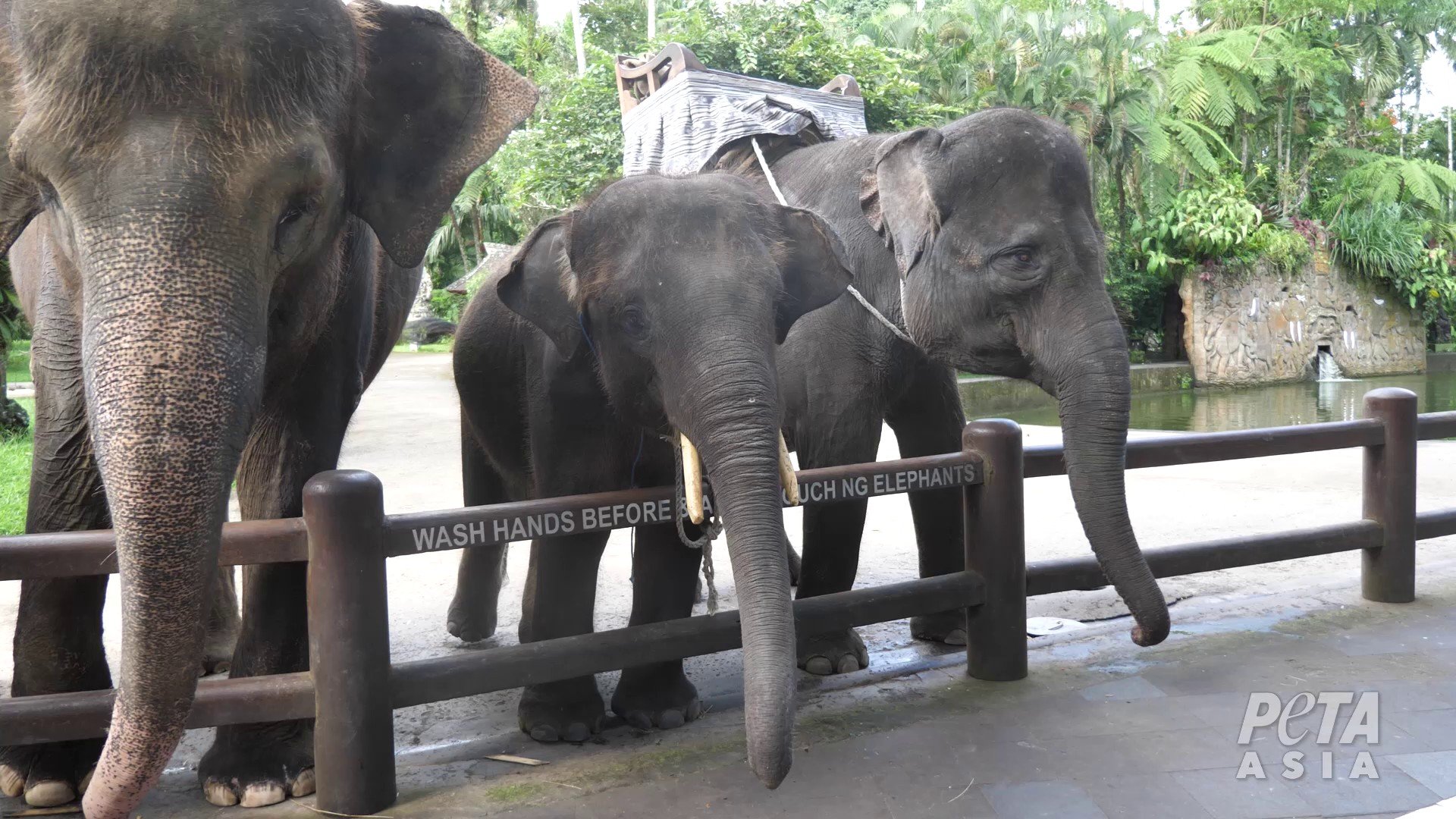
At these elephant tourist traps in Bali, investigators found elephants chained in desolate pens, bearing scars and wounds on their heads and scars on their legs. PETA Asia investigators documented handlers repeatedly jabbing and striking the animals with bullhooks—heavy weapons resembling a fireplace poker with a metal hook on one end—to force them to give rides or pose for photo opportunities. One baby elephant was confined to a dark, off-limits area. A former contractor confirmed that handlers routinely use bullhooks to compel obedience, and elephants are denied food as punishment.
“Whenever they are not following directions, we don’t give them [food]… You have to hit them hard to make them more compliant…If the elephants are not compliant with blunt hooks, then handlers use the sharp ones, until the elephants are bleeding.” – former contractor at Mason Elephant Park & Lodge
When not forced to entertain tourists, these intelligent, social, and emotionally complex animals are left chained for hours—sometimes from late afternoon until the next morning. Many develop painful foot and joint problems, and some exhibit symptoms of post-traumatic stress. In nature, elephants live in matriarchal herds, foraging for fresh vegetation, playing, bathing in rivers, and traveling many miles a day together.
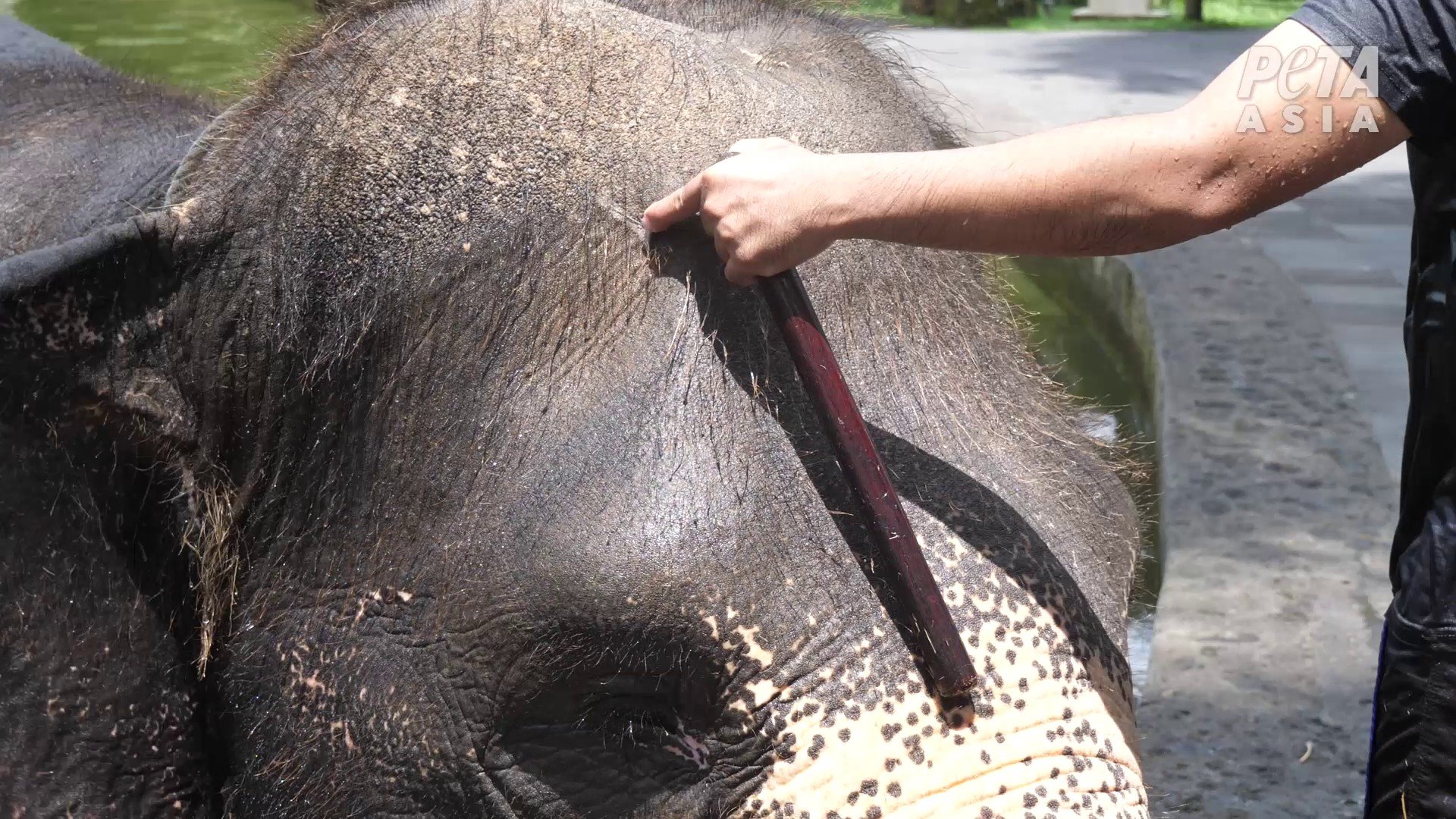
Elephants Don’t Give Rides, ‘Play Soccer,’ or Paint Willingly
“Trainers” hoping to make a buck off the backs of elephants constantly threaten them with physical violence and psychological punishment.
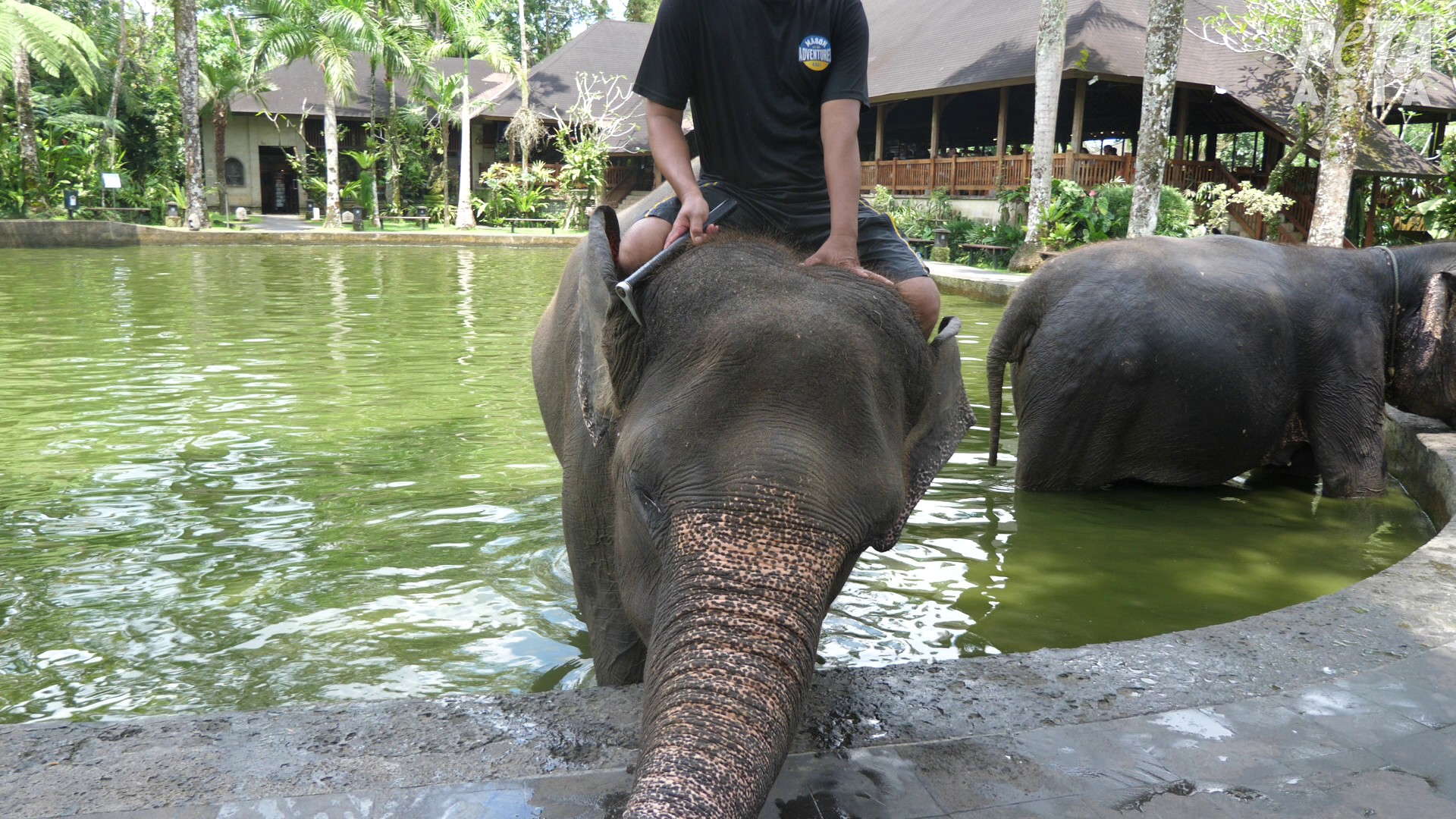
To “train” baby elephants to be subservient in the tourism industry, handlers take them away from their mothers, tie them down with ropes, and beat them mercilessly, sometimes for days on end. During these spirit-breaking sessions, some of them die.
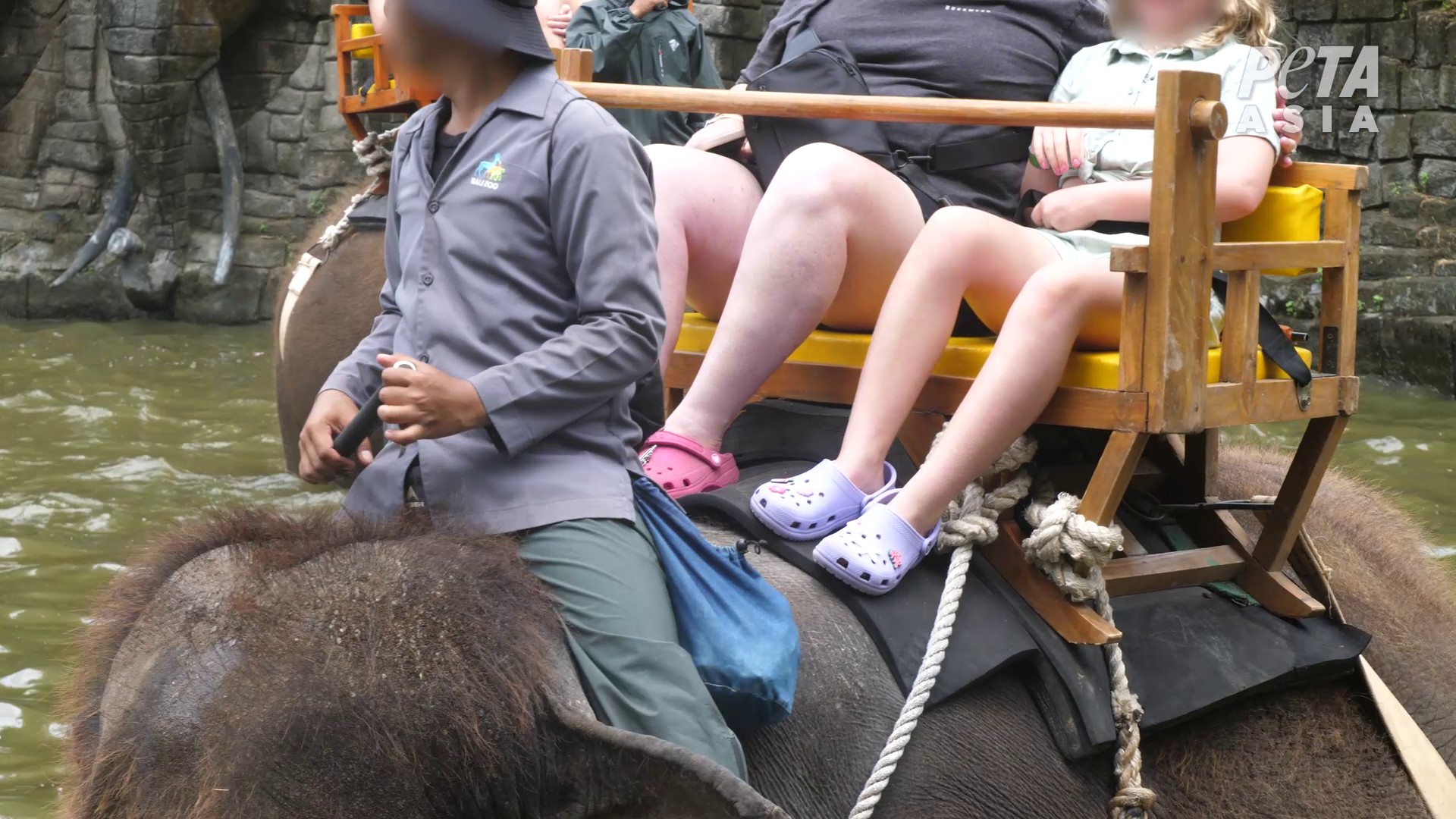
Elephant exploiters force those who survive to live the rest of their lives in servitude, lugging tourists around—sometimes for hours on end, even when they’re exhausted or injured.
How to Know if an Elephant Sanctuary Is Legitimate
Never visit any place that allows direct elephant interaction through rides, bathing, feeding, or photo ops. The same goes for places that put elephants on display, forcing them to paint or “play soccer.” True sanctuaries never buy, sell, breed, or exploit animals for profit. They allow elephants to live freely in large natural habitats and provide them with companionship from other elephants when it’s safe to do so. Visitors may be able to observe the animals from a distance, but direct contact is never permitted, ensuring both the elephants’ welfare and the safety of the public.
A handful of companies continue to endorse the beating, prodding, and torture of elephants by offering rides on them. Stand with PETA today and help us end elephant rides around the world.

