
VIDEO: PETA Undercover Investigator Jumps at the Chance to Free ‘Jumpy’ Beagle From Laboratory Hell
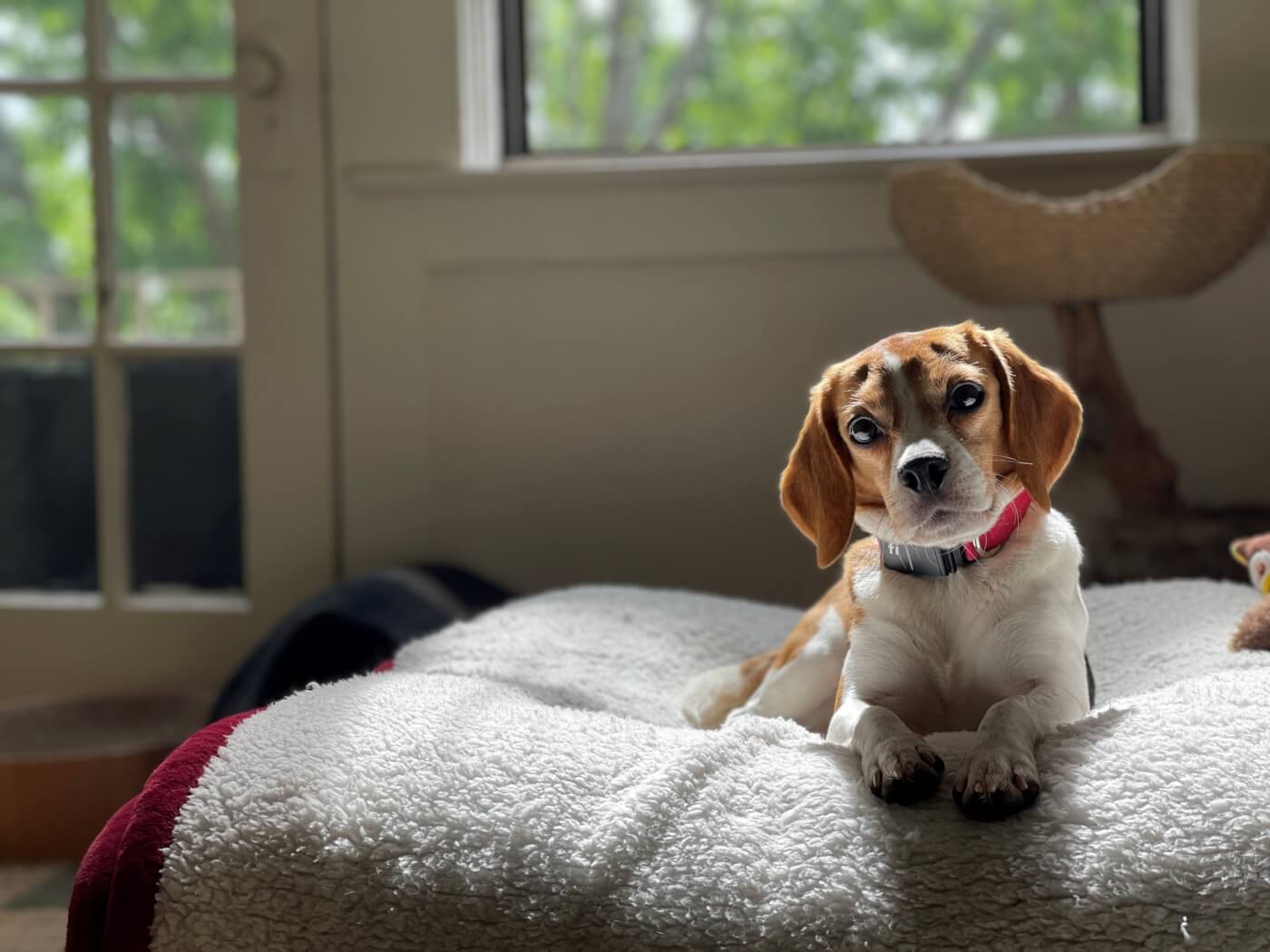
Temple likes the beach—but only when the water is calm and glassy. She loves bananas but loathes apples. She prefers napping on a sunny ottoman in the living room during the day but sleeping smack between my husband and me in bed at night. She is fond of the rain but not of thunder. These quirks and traits are unique to Temple—she’s a dog like no other. A person. Not a disposable piece of laboratory equipment, not a money-making tool, not a thing. She is as important as the dogs I spent my entire childhood loving and the other canine companion I was already sharing my home and heart with. But for the first three years of her life, Temple was robbed of such a family. She didn’t know love. At Red Beast Enterprises Inc.—a Fort Collins, Colorado, hellhole also called, bafflingly, “High Quality Research”—she was tormented and mutilated. But thanks to PETA and its undercover investigator, that’s all changed:
Before she was Temple—my family’s sweet-natured, treat-loving, toy-fetching, play-bowing girlie girl—this beagle was known as “JGI2,” as the tattoo in her right ear still reads. At Red Beast, PETA’s undercover investigator noted that Temple would cower in the corner of a pen and shake in fear.
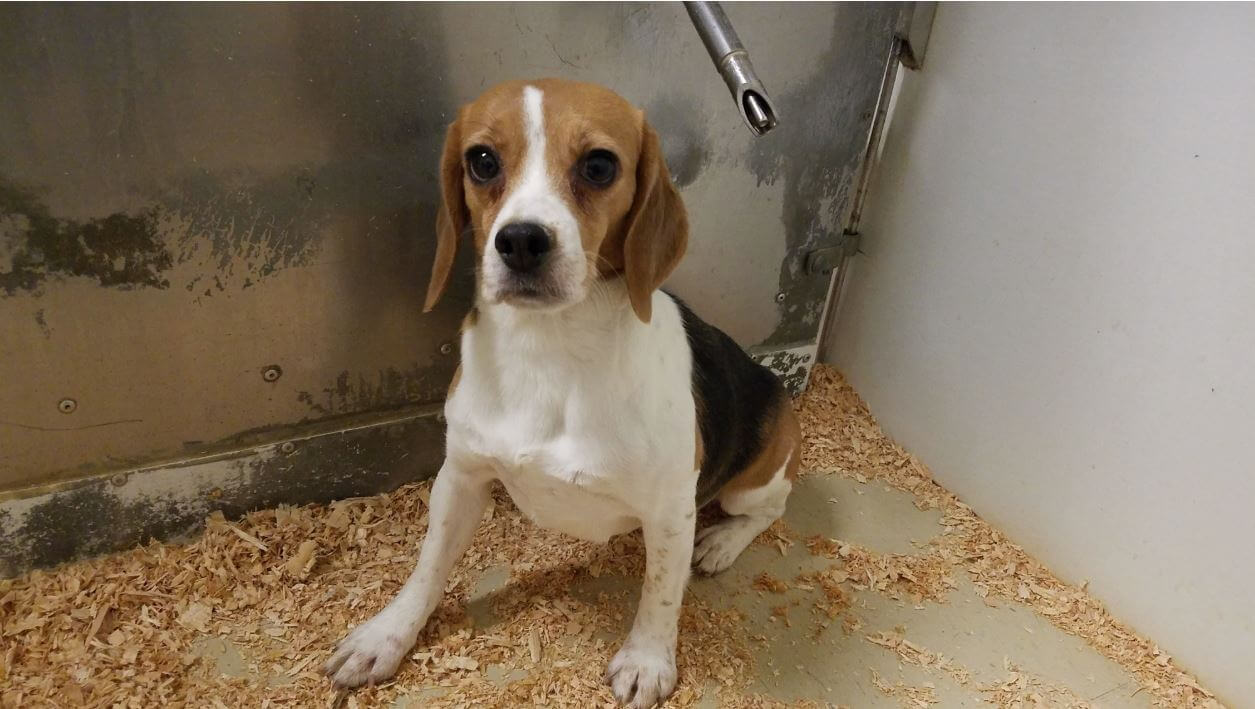
Like those of all dogs in the laboratory, Temple’s vocal cords were severed with gynecological forceps, and she was denied pain relief for the excruciating mutilation. At some point during her pre-PETA existence—likely during her first months spent at Envigo-like breeding hellhole Ridglan Farms Inc.—her front dewclaws were removed, which can cause serious problems later in life.
Talk about some low quality “bullsh*t.”
Temple and other dogs at Red Beast were confined nearly 24/7 to chain-link kennels in stark cinderblock rooms. Only wood shavings covered parts of the cold tile floors—no beds, no blankets. As PETA’s undercover investigation noted and a damning federal inspection report recently confirmed, these wood shavings were found in dogs’ food bowls, as was “a large amount” of feces. The first time Temple was allowed out of this bleak, windowless room that, for years, confined her at Red Beast was apparently when PETA’s undercover investigator was permitted to free her—an exception the laboratory president agreed to only because, as he said, this particular dog was too “wiggly and jumpy” to experiment on.
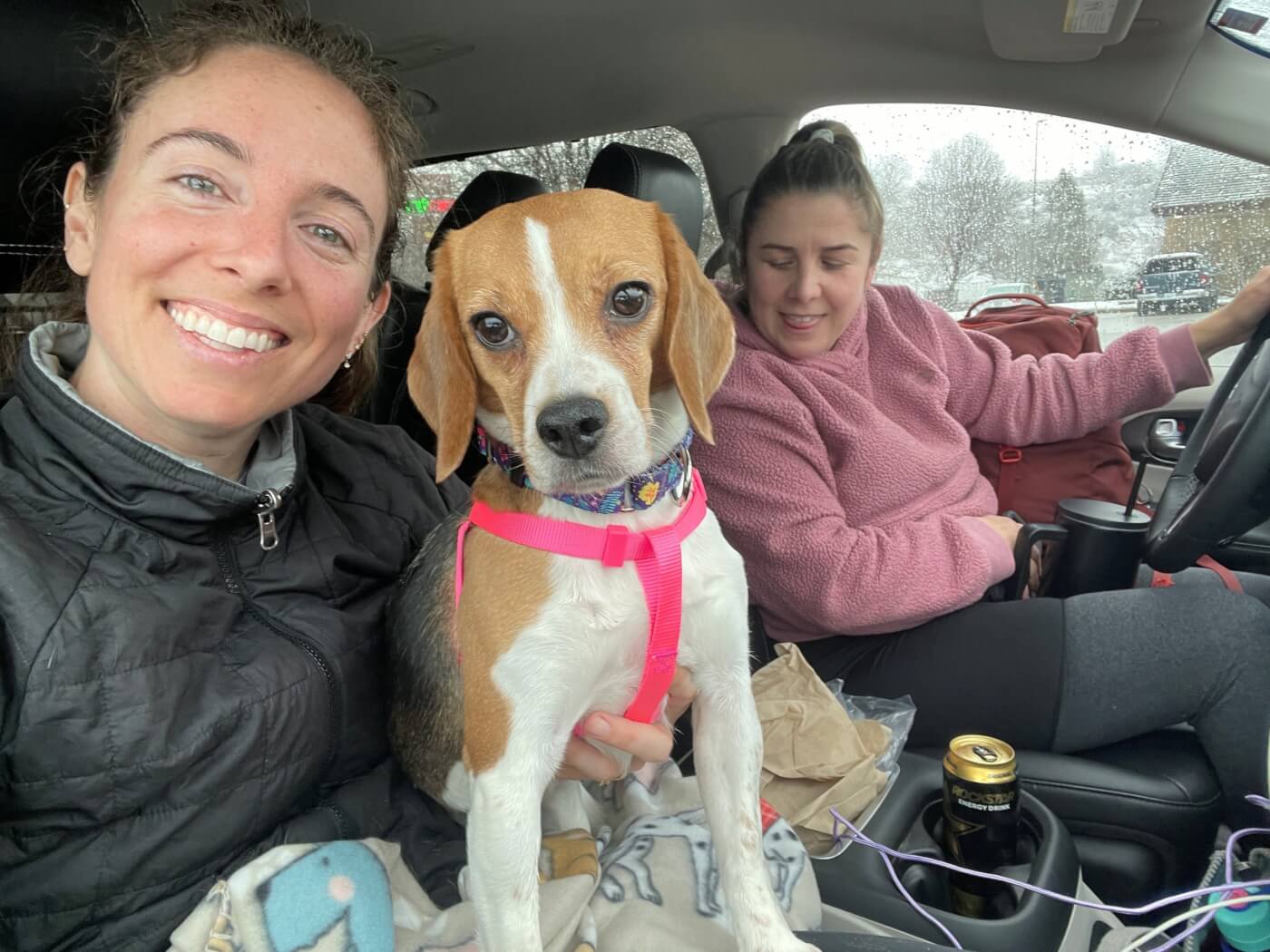
When my supervisor asked me and another fieldworker to fly to Colorado to meet PETA’s investigator and chauffeur a freed beagle safely back to our Norfolk, Virginia, headquarters, I didn’t think twice about saying “yes!” I also didn’t think the trip would result in my family’s expansion.
Despite years spent working with and helping dogs—ones who have been abused, formerly chained, or starved of food and love—I still found the severity of Temple’s anxiety and trauma to be shocking. I had to keep reminding myself that the bed and blanket, the bowl of water (as opposed to the faucet she’d had to rely on at Red Beast), the treats, the squishy toys, the fresh air that seeped through our cracked windows, Kentucky’s dusting of snow, the harness, and even the kindness that we showed to Temple—these were all likely firsts for her. As we passed through Kentucky and into West Virginia, Hollie—my coworker and copilot—said it best:
We’re providing for her now for the first time in her life something that she hasn’t had before, which is respect and autonomy. … You can’t undo two to three years of associating people with pain and fear. … So what we’re doing is just making sure she knows that some people are kind and caring and respectful and don’t hurt her, and she’ll come to us when she’s ready, and we owe it to her to give her the time to be comfortable and make those choices in her life.
Before the three of us had even reached Virginia, I was already rehearsing how I would convince my husband—who also works in PETA’s Cruelty Investigations Department and who personally worked on the Red Beast investigation—that we should foster the shy, deserving girl.
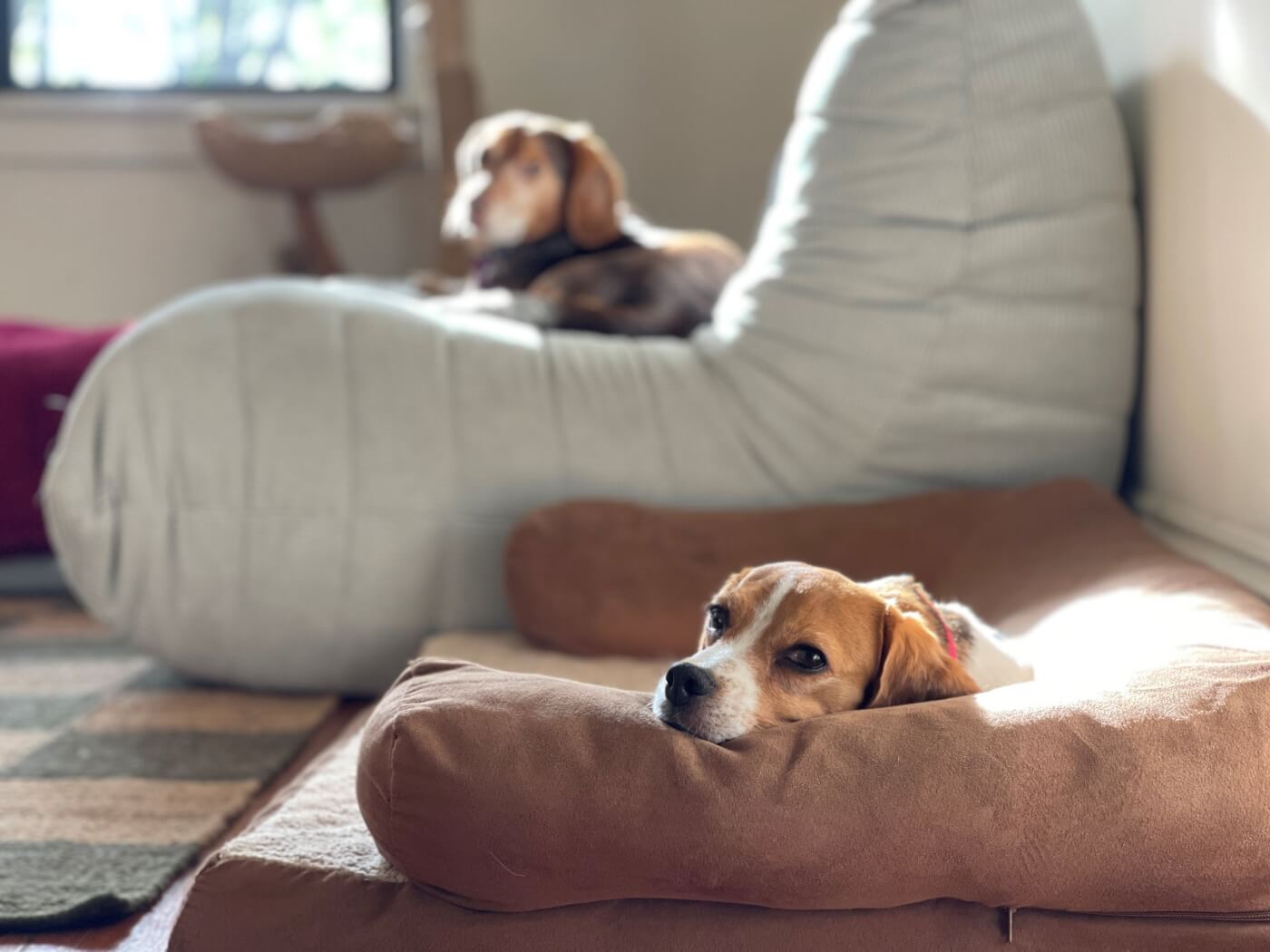
After a brief stay at PETA’s shelter, Temple—a nod of a name to fellow Fort Collins gem and 2004 PETA Proggy Award recipient Temple Grandin—joined my family’s household, which already included four other PETA-rescued companions.
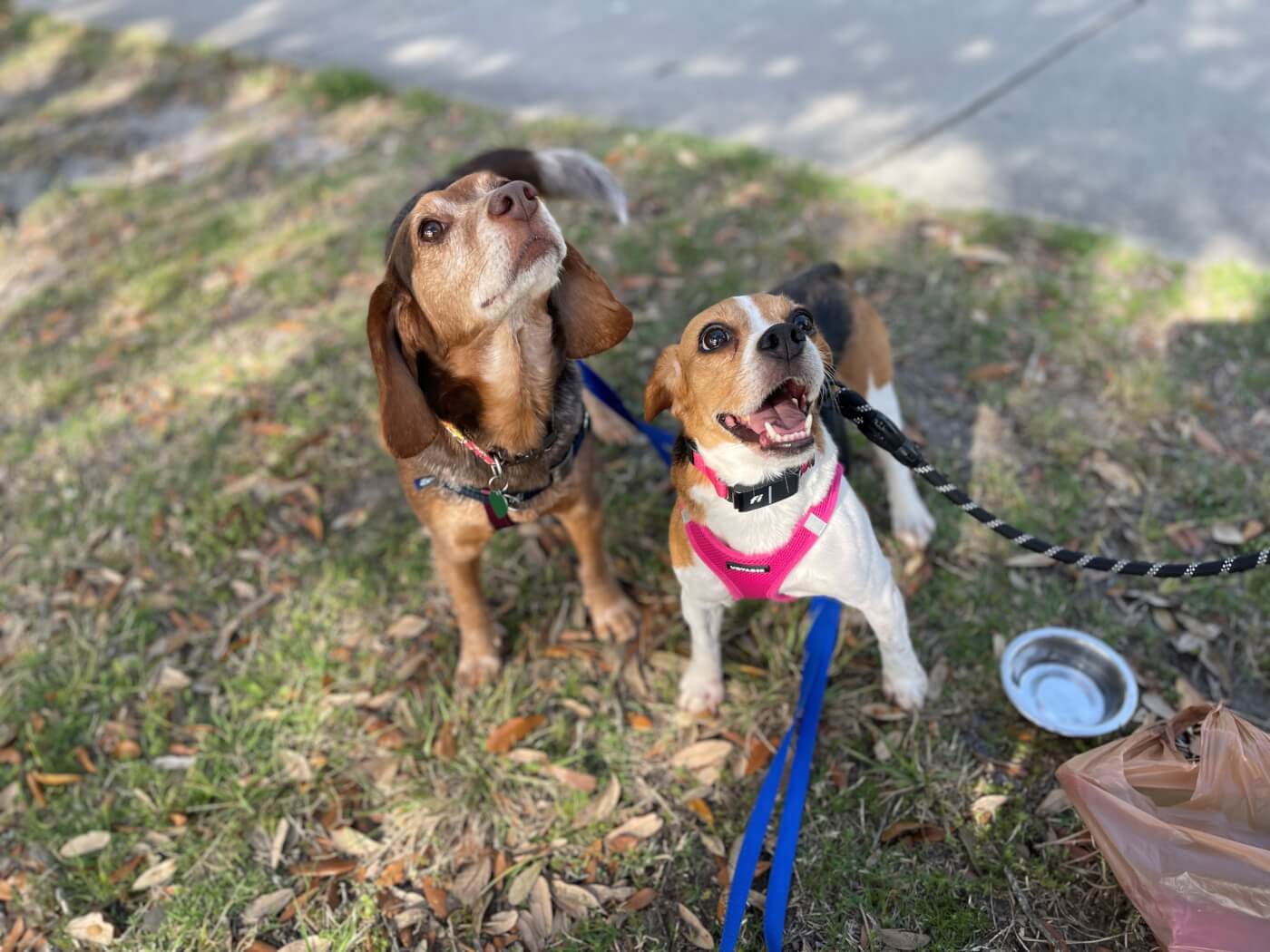
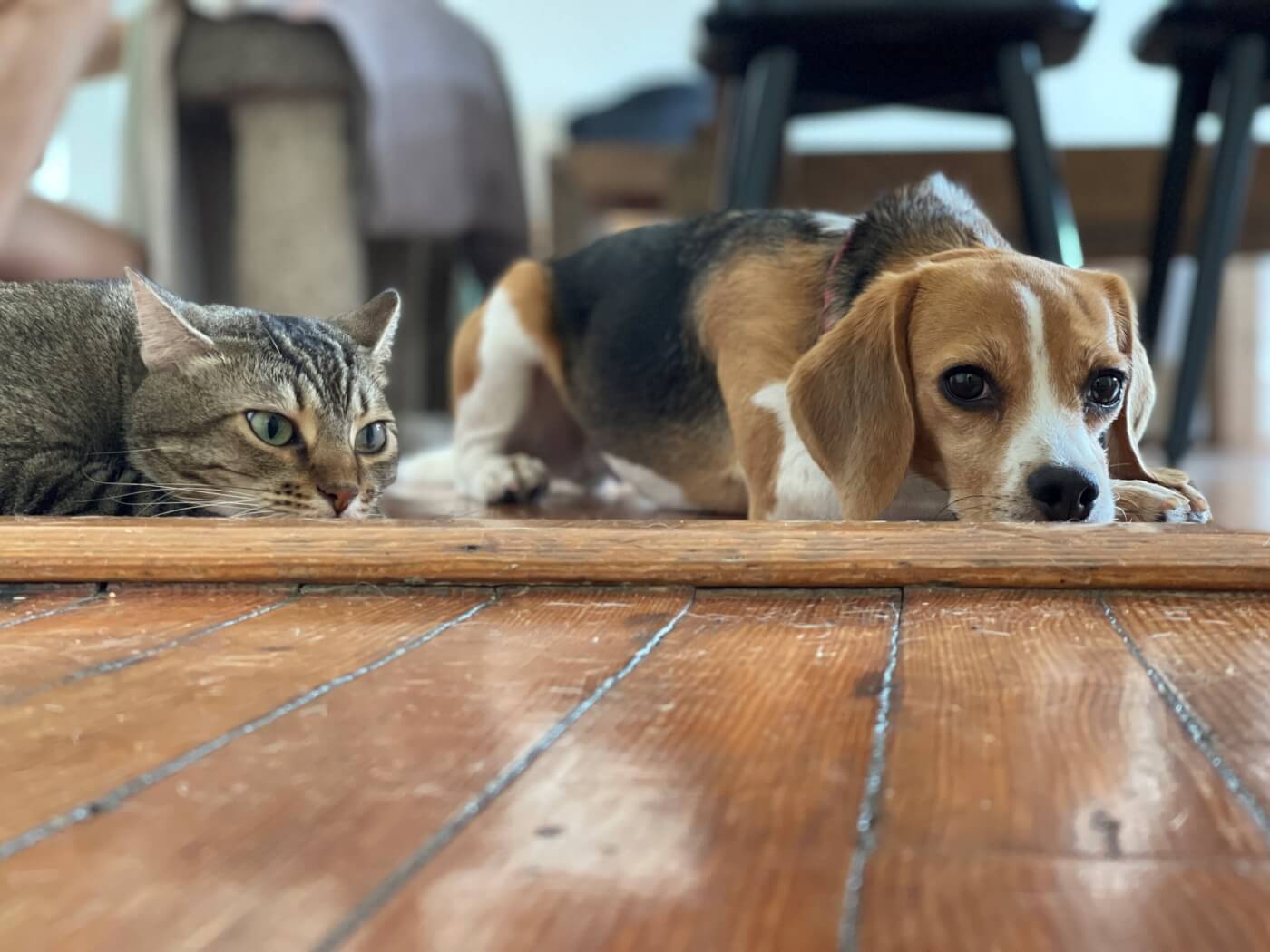
As once-terrified Temple blossomed into a curious, playful girl—one who wiggles with excitement when we grab her leash from its hook and jumps for joy when the ocean water skims her paws—our intent simply to foster her bloomed, too. Like Hollie said, “For the first time in her life, Temple’s calling the shots.” So when the sweet beagle made it clear that she feels at home in our home and safe with our family, we knew we had to make the adoption official.

Temple’s transformation and new life have been joyous to be a part of, but her story is a bittersweet one, for around 100 other beagles as well as dozens of cats are still confined to squalid, windowless rooms at Red Beast and forced to suffer through relentless, stressful experiments. As PETA’s undercover investigator and Temple’s liberator documented, some have even been denied adequate veterinary care after becoming sick or injured. Like Temple, all these individuals deserve freedom and the chance at loving homes and families, and you can help to make this happen.
From Your Lips (er, Fingertips?) to Red Beast’s Clients’ Ears
Please join PETA in urging Colorado State University and others doing business with this disgusting operation to stop bankrolling animals’ misery and suffering and to instead modernize their research culture by replacing these cruel and antiquated tests on animals with modern, human-relevant methodologies. Click below to take action for animals like Temple, who have deserved respect and autonomy all along:

