

PETA Exposé: Vietnam’s Deceitful and Dangerous Monkey Trade
Monkey farms in Vietnam are draining forests dry of globally endangered long-tailed macaque monkeys to feed the insatiable animal experimentation industry, and a new investigative report by PETA has uncovered just how deep the corruption goes.
Our findings, based on analysis of publicly available data and official documents, suggest that long-tailed macaques are being illegally captured from their homes, falsely labeled as “captive-bred,” and sold to overseas experimenters who torment and kill them in depraved tests, in a large-scale scheme that threatens public health.
We’re urging the U.S. Fish and Wildlife Service, the Department of the Interior, and the Centers for Disease Control and Prevention to take immediate action and shut down this deceitful and deadly trade.
PETA combed through government databases and international reports to build upon Sandy River Research’s in-depth, independent investigation. Here are our key findings.
A Barrel of Monkey Lies
PETA’s analysis revealed a biologically impossible surplus of nearly 4,000 monkeys on Vietnamese breeding farms in 2024—strongly suggesting that monkeys are being illegally captured from their natural habitats to supply the trade. One farm exported more monkeys than it had in its inventory, while another reported more monkeys than expected after accounting for exports and deaths. The farm documents also blatantly showed manipulated breeding records.
The numbers simply don’t add up.
U.S. Laboratories Fuel the Fire
Vietnam farms sell monkeys to major U.S. research facilities, including Charles River Laboratories and Envigo—two companies with a gruesome and consistent history of violating animal welfare guidelines.
Monkey peddlers often pay more than $10,000 per animal, fueling a billion-dollar industry that includes trappers, international breeders, commercial importers, airlines, and U.S. domestic trucking companies.
Monkey Victims
Thousands of long-tailed macaques are imported into the U.S. from Vietnam and beyond each year to meet the ever-growing demand from animal experimenters.
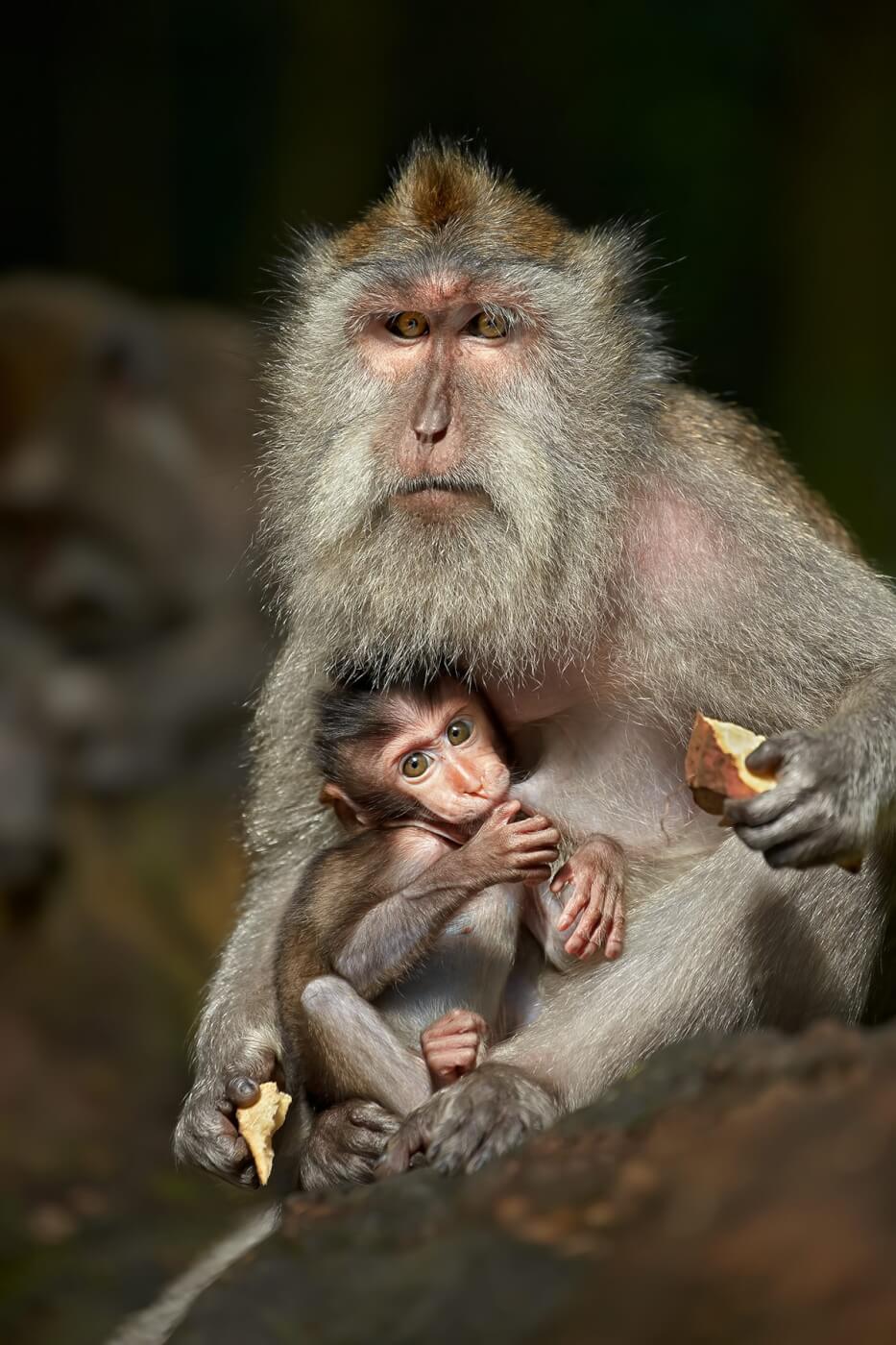
Whether monkeys have been ripped from their forest homes, often as babies, or were born on squalid breeding farms, they’re locked inside barren cages, removed from their social groups, and deprived of everything that’s natural. All suffer from chronic stress, injuries, and disease. Some die during transit, while the rest are shipped across the globe for use in gruesome and deadly experiments, spending the rest of their lives in isolation and fear.
Kindling a Public Health Disaster
Monkeys imported for experimentation are known to carry dangerous pathogens and diseases, including herpes B virus, tuberculosis, Ebola-like viruses, hepatitis, shigellosis, salmonellosis, malaria, and more.
Monkeys exported from Vietnam have been linked to tuberculosis outbreaks in the U.S. and Europe, with Vietnam-origin macaques linked to the largest recorded tuberculosis outbreak in monkeys used in laboratories. Despite the risk of transmitting dangerous diseases to humans, U.S. laboratories import thousands of monkeys each year with little to no oversight.
Governments Turn a Blind Eye
Despite public health risks and rampant fraud, U.S. biomedical research institutions and pharmaceutical companies spend millions to keep the monkey pipeline flowing.
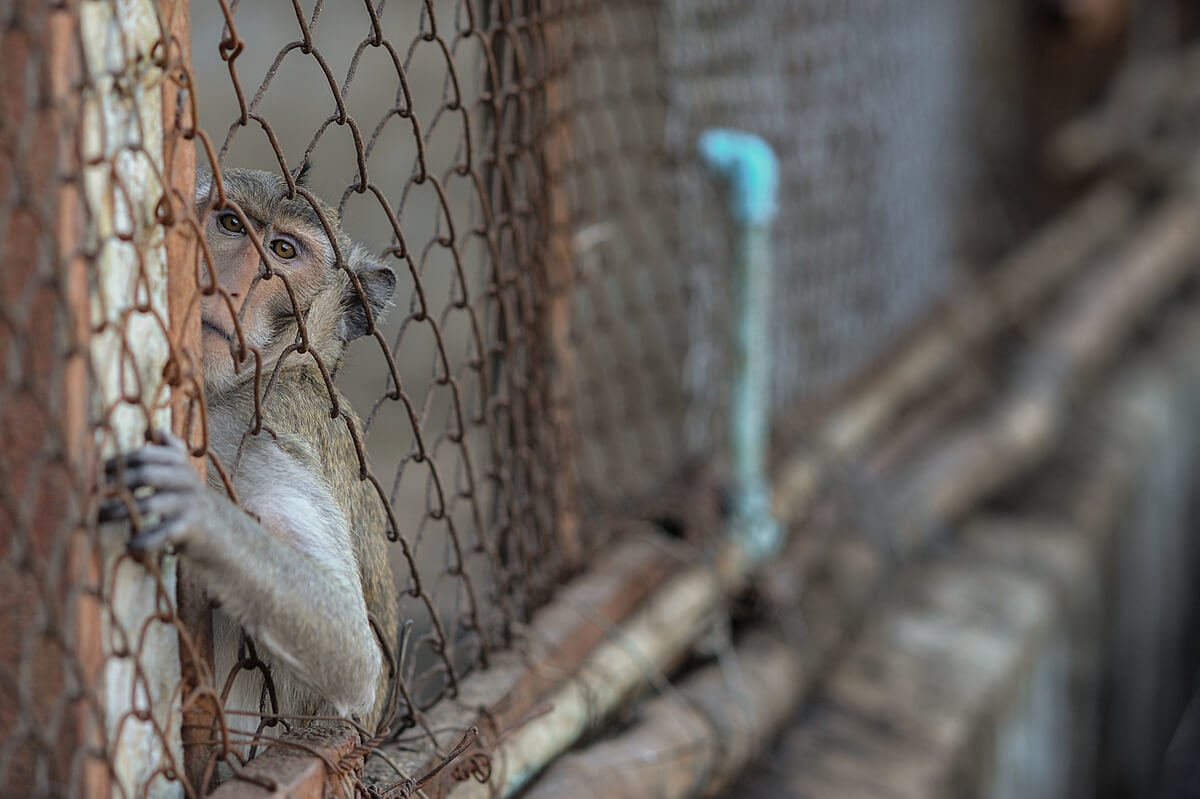
Evidence of fraud in Vietnam’s official reports to the Convention on International Trade in Endangered Species of Wild Fauna and Flora (CITES), a global trade oversight body, goes back years, yet CITES leadership have failed to take meaningful action against illegal wildlife laundering. Meanwhile, government authorities in Vietnam and around the world fail to intervene.
Shut it Down
Please TAKE ACTION by urging the U.S. Centers for Disease Control and Prevention to stop the cruel and dangerous monkey-abduction pipeline:
Join PETA in urging the U.S. Department of War to stop funding cruel and pointless experiments on animals in foreign laboratories.

From stopping bullfights to challenging cruel experiments and taking action in the streets, see some of PETA Latino’s biggest achievements for animals this year.
Through global collaboration, PETA scientists are advancing a non-animal method to study how inhaled chemicals affect human lungs.

