
Up to $10,000 Reward: Can YOU Help Us Find Who Tortured Rambo the Yorkie and Abandoned Him in a Norfolk Field?
A tiny Yorkshire terrier named Rambo was suffering from broken ribs and extensive traumatic injuries indicating severe, prolonged abuse when he was dumped in a Norfolk, Virginia, field. A woman was seen dumping him there and driving away. Who did this to Rambo? PETA is offering up to $10,000 to anyone who can provide information to help authorities find out.
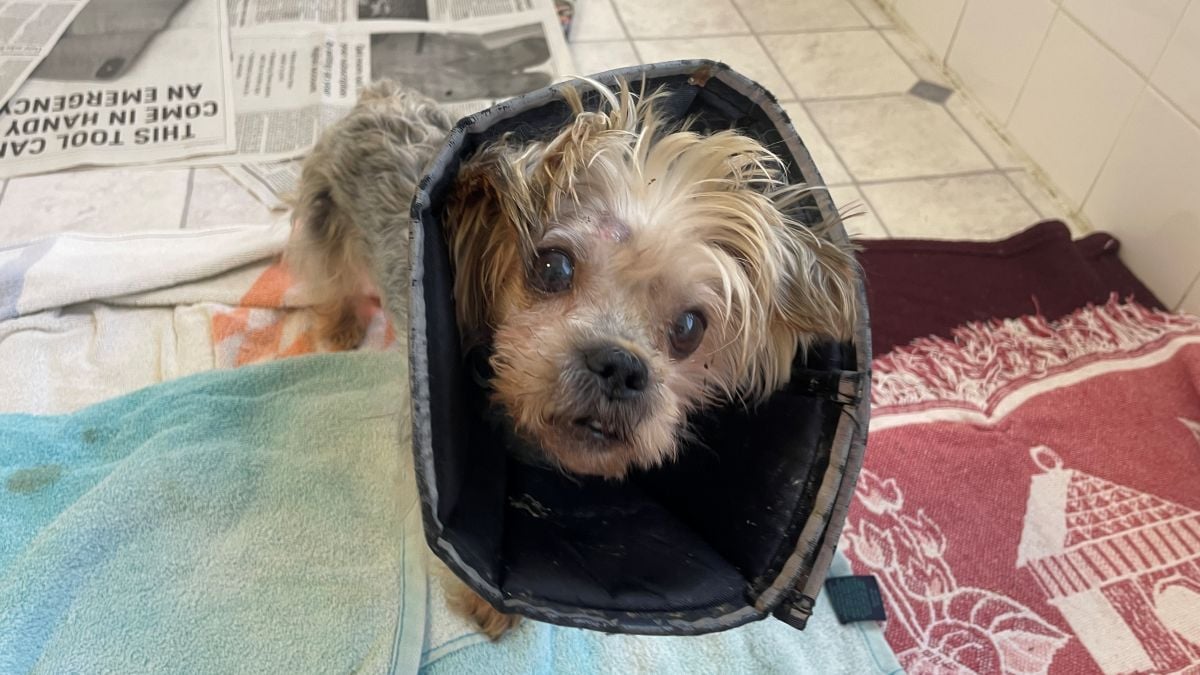
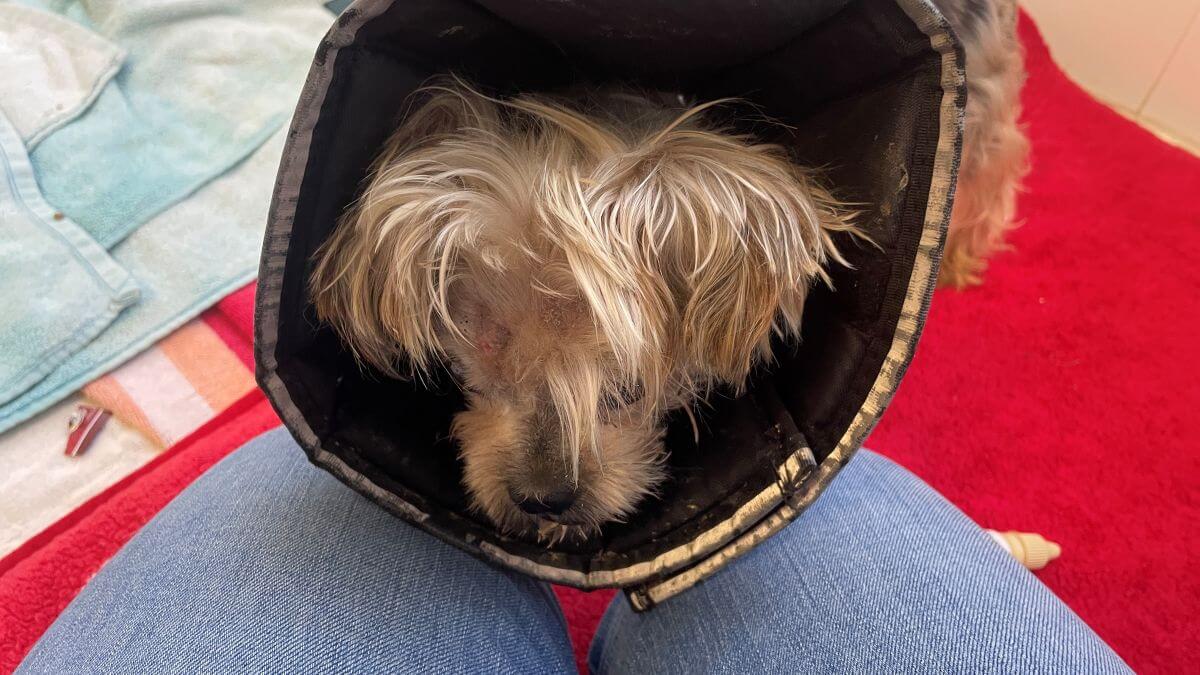
Here’s what we know so far.
Do You Know Anything That Could Help Us Identify Rambo’s Abuser? Call Us Immediately at 757-962-8338.
A Witness Saw Someone Dump Rambo
On the evening of Wednesday, July 29, a witness reportedly saw a Black woman believed to be in her 30s pull over by a field near Armistead Avenue and E. 24th Street in Norfolk in a white sedan. According to the witness, she removed Rambo from a carrier, left him in the field, and drove away.
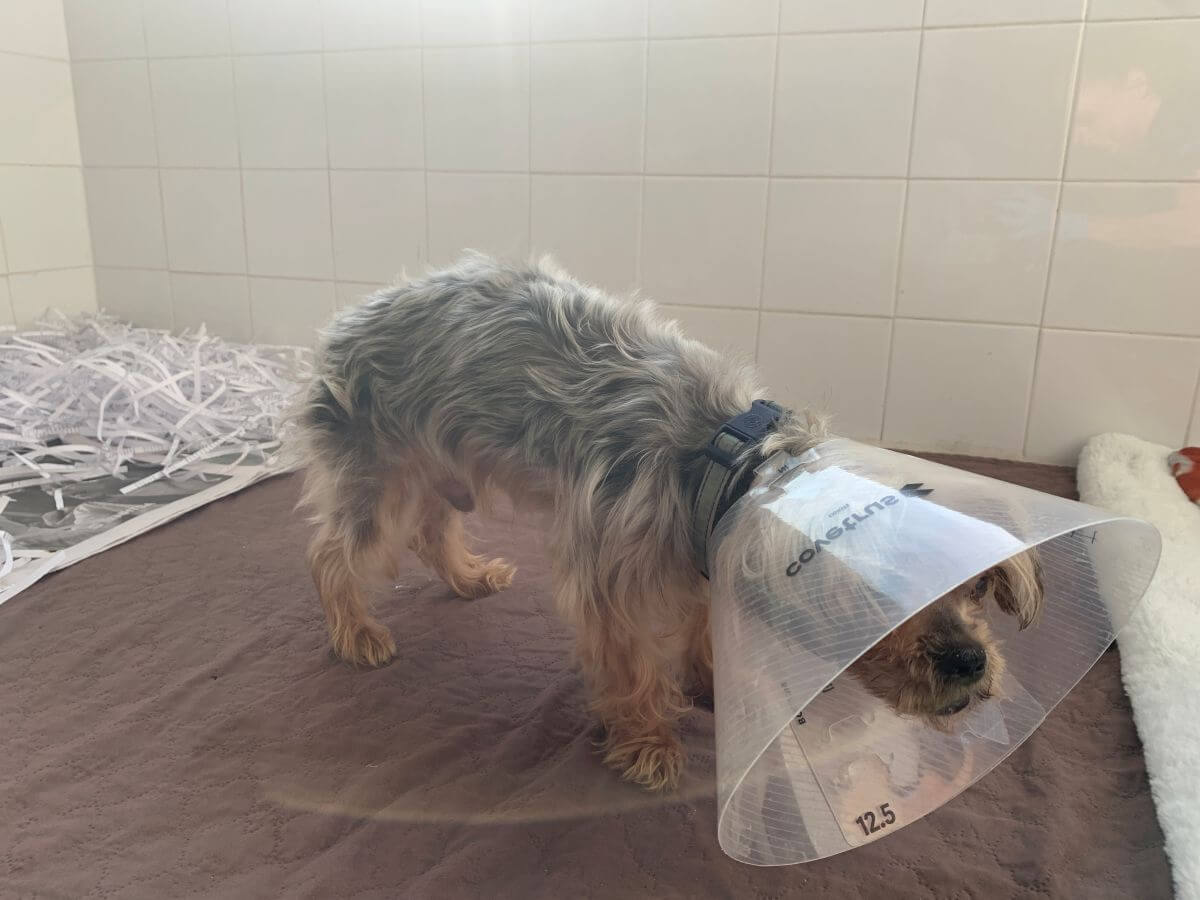
The witness contacted PETA, and a fieldworker responded to the scene. Rambo was unable to walk steadily, and his eyes were crusted shut. He was wearing a light blue collar with pink or reddish stripes. A microchip traced him to Virginia Beach Animal Services, which had adopted him out in May 2026 after he was surrendered following the death of a family member, presumably his guardian.
Rambo Left the Shelter Healthy—Two Months Later He Was Dead
Records show that just two months prior to his abandonment, Rambo had been adopted as a healthy, bright-eyed dog weighing 8 pounds, 12 ounces, with no noted behavioral or physical issues.
By late July, Rambo had lost roughly 21% of his body weight and was nearly blind, apparently deaf, unsteady on his feet, and unable to walk without excruciating pain. He was so severely traumatized that he was terrified of human contact and panicked whenever he sensed people approaching.
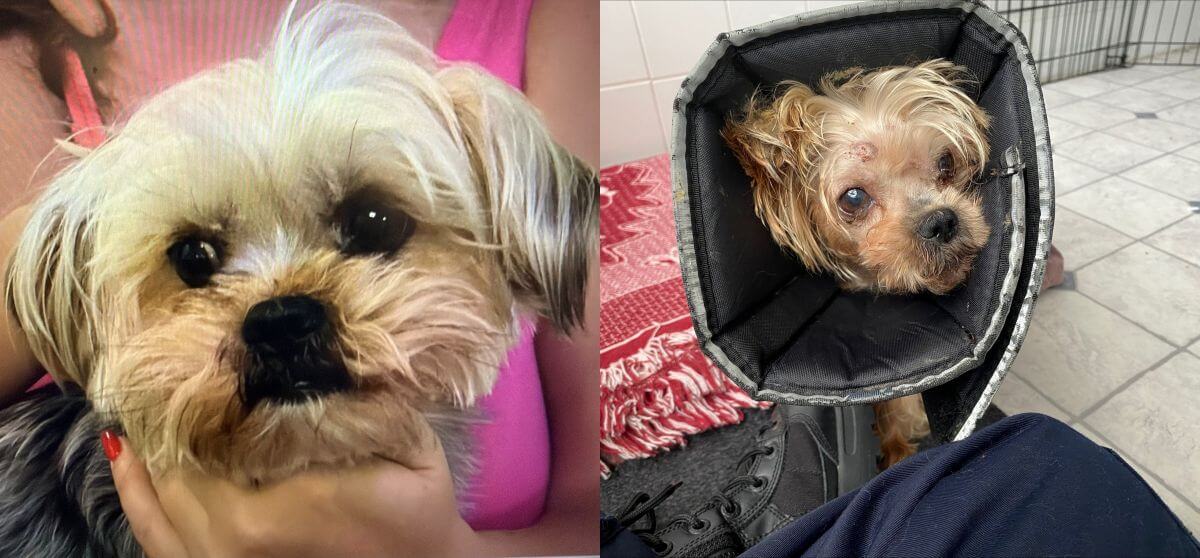
Despite receiving intensive treatment, Rambo’s psychological and physical condition did not improve, and he was euthanized on August 7 on a veterinarian’s recommendation. Norfolk Police are investigating the case.
The Necropsy Showed Evidence of Repeated Abuse
A forensic necropsy confirmed that the tiny dog had suffered the following:
- Two fractured ribs
- A separated pelvis (when two bones in the pelvis are pulled apart as a result of blunt force trauma)
- Severe injuries to his rear legs, which would have caused him to be in excruciating pain
- Extensive bruising and bleeding throughout his legs, side, and groin, consistent with him having suffered significant blunt force trauma
- A painful and deep eye ulcer and blood in the other eye as a result of trauma
- An untreated skin infection
The necropsy findings ruled out the possibility that Rambo had been hit by a car, and indicated that Rambo “suffered violent abuse at different times.” His rib fractures no longer showed external bruising, meaning someone broke them before injuring his pelvis.
Help Law-Enforcement Officials Find the Person Responsible for Rambo’s Suffering
Rambo likely spent his final days frightened, injured, and in pain. While it’s too late to change what happened to him, it’s not too late to hold the person(s) who tortured Rambo accountable.
The suspect is out there, but has not yet been identified and may have other animals in their possession who are in danger. That’s why PETA is offering a reward of up to $10,000 for information leading to an arrest and conviction in this case and is placing billboards and distributing flyers throughout Norfolk and Virginia Beach.
Anyone with information is urged to contact PETA at 757-962-8338. Even the smallest detail could help.

