Veterinary Malpractice and Grooming Accidents
The difficulty of coping with an animal companion’s injury or death is compounded when you suspect that a veterinarian’s negligence or abuse may be to blame. You can help protect your animal before tragedy strikes by looking for a skilled and caring veterinarian (ask for references from trusted friends and humane organizations, and call the local Better Business Bureau, Chamber of Commerce, and State Board of Veterinary Medical Examiners to check for complaints), seeking a second or third opinion about your animal’s diagnosis before proceeding with surgery or treatment, and carefully monitoring your animal’s stay and treatment at veterinary clinics. Never hesitate to ask questions about your animal companion’s treatment, and never leave your animal overnight at a veterinary hospital unless you are convinced that it is necessary and in your animal’s best interests to do so.
If your animal companion becomes sick or injured at a veterinary clinic, immediately take him or her to another veterinarian for a second opinion and treatment. Ask for copies of your animal companion’s medical records from the original veterinarian, and show these to the second veterinarian. If your animal dies, consider having the body necropsied to determine the cause of death.
What You Can Do if You Suspect Malpractice
There are several steps that you can take when you suspect that veterinary malpractice has led to your animal companion’s injury, sickness, or death.
First, send a concise, accurate, and factual written complaint (including what happened, when, and where) to your state veterinary licensing board asking for an investigation and a response. Follow up on your written complaint by calling the licensing board. You should also submit a complaint to your local veterinary medical association asking for an investigation. Any veterinary clinic should be able to provide you with the addresses for the state licensing board and veterinary medical association, or you can search the Internet or look in the phonebook under state agencies. File copies of your complaints with the Better Business Bureau, local and state consumer affairs offices, and the local animal control agency or humane society as well.
You can also file a small-claims suit against the veterinarian by filling out a form and paying a small fee at your local courthouse. You are responsible for presenting your own case in small-claims courts, so be sure to have copies of all your animal’s medical records (including the results of the necropsy, if performed), statements from other veterinarians who examined your animal after you suspected negligence, and copies of your veterinary bills. Although small-claims courts award only “out-of-pocket” expenses or the cost of replacing your animal companion if he or she dies, the attention generated by your case may be enough to prevent a veterinarian from acting irresponsibly in the future.
You can also hire a lawyer to help you bring a malpractice lawsuit against the veterinarian or negotiate a settlement. As with a small-claims suit, you will need documentation to back up your case, including statements from expert witnesses (such as veterinarians, pathologists, and others with special professional knowledge of the issues under consideration). You may find that many lawyers hesitate to take on these cases because the potential for a large monetary award is low. In most veterinary-malpractice cases, awards are limited to the costs incurred plus the cost of replacing a companion animal with an animal of similar “value.” Some state courts, however, are beginning to acknowledge the unique nature of the bond shared between humans and their animal companions. These courts also permit the recovery of “reasonable sentimental value” in some instances.
To find a good attorney, ask your local bar association for a recommendation. Regardless of what action you decide to take, consider contacting local newspapers and television stations. Your story could help protect other animals from harm.
Grooming Accidents
Incidents in which animals are seriously injured or even killed at grooming salons are alarmingly common.
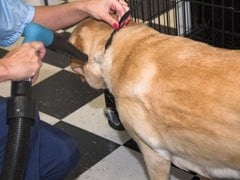
Many animals have suffered from heat exhaustion as a result of being left unattended in front of dryers, where temperatures can reach 135 degrees Fahrenheit.(1)
- A Lhasa apso died in a drying cage at a California PETCO.(2)
- Two Yorkshire terriers died from overheating when a Connecticut salon’s dryers failed to shut off. In an affidavit, a veterinarian who tried to save one of the animals reported that the dog had the worst case of heatstroke that she had ever seen.(3)
- A woman in Ohio warned groomers at PetSmart not to dry her Newfoundland (a breed known to be sensitive to heat), but when she picked up her dog, the dog was reportedly dry, walking unsteadily, and drooling and soon collapsed. An emergency veterinarian determined that the dog’s temperature was over 109 degrees and that her organs were shutting down. The dog died the next day.(4)
Groomer negligence causes many horrific injuries and deaths, such as these:
- An English bulldog was allegedly strangled to death by a collar tied to a grooming table after being left unattended at a California PetSmart.(5)
- When a guardian brought her shih tzu home from a Seattle groomer, she discovered that the dog’s ear had been cut off and glued back in place.(6)
- A bulldog allegedly died from choking on his vomit while having his nails trimmed at an Indiana PetSmart. Two groomers had apparently tried to restrain him, and one had wrapped her arms around the dog’s neck.(7)
- An 8-year-old pug allegedly died at a Pennsylvania PetSmart after being placed in a head restraint. The dog’s guardians said their biggest regret was not staying with him while he was groomed.(8)
- A Florida woman reportedly found a deep cut on her dog’s abdomen and thigh after taking him to a PETCO for grooming. The dog needed stitches and medication for his wounds. PETCO allegedly denied knowing about the cuts at first but later reimbursed the woman for her veterinary bills after she posted about the incident on social media.(9)
- A woman dropped off her dog at a Florida PetSmart for grooming but had to pick her up at an animal hospital. Allegedly, the dog had been badly cut on both legs and needed 10 stitches.(10)
- A puppy had to be rushed to a veterinarian after apparently being strangled during his first visit to a California groomer.(11)
- A 9-year-old pug reportedly collapsed on a grooming table and lost consciousness at a Pennsylvania PETCO after a groomer repeatedly warned that the dog’s lead was too tight. A veterinarian determined that the dog had been asphyxiated.(12)
- In Pennsylvania, a small dog needed emergency surgery and more than 20 stitches after reportedly sustaining deep cuts to her abdomen and leg at a PETCO groomer.(13)
- After being groomed at a California PETCO, a 7-year-old shih tzu reportedly couldn’t walk and was dangling one of his legs. X-rays showed that the dog’s hip was dislocated. He had to undergo surgery and extensive rehabilitation. The groomer reportedly admitted to tugging on the dog’s leg during the grooming session.(14)
- After taking her dog to a Rhode Island groomer, a woman reportedly discovered raw, bloody abrasions on the dog’s back. Another dog reportedly needed to have an eye removed as a result of extensive injuries after visiting the same groomer.(15)
- A 9-month-old cocker spaniel reportedly needed staples to close nine deep gashes on her neck and paws after being groomed at a PETCO in Texas.(16)
- After visiting an Ohio groomer, a 5-year-old poodle allegedly had raspy breathing and wouldn’t eat, drink, or bark. His guardian took him to an emergency veterinarian, who needed to perform an emergency tracheotomy but couldn’t because the dog’s throat and neck were so badly swollen. The dog went into cardiac arrest and died. A necropsy revealed he had died from “the application of physical force to the ventral neck region.”(17)
- According to a news source, a dog who had been taken to a Texas PETCO for grooming disappeared. Managers said she ran away into a field behind the building.(18)
Groomers have been observed and even caught on video physically and emotionally abusing animals.
- At a Georgia PETCO store, a witness reportedly used her cell phone to record an employee who violently yanked on a terrified dog’s paw and shoved the dog around on a grooming table while trying to clip the animal’s nails.(19)
- An employee of a Florida mobile grooming salon allegedly held a small dog in the air by a leash and repeatedly hit the animal in the face, leaving the dog bleeding from the nose and mouth.(20)
- The guardian of an 11-year-old dog reportedly caught a Pennsylvania groomer on video kicking her dog’s cage and yelling at the dog to shut up.(21)
- A groomer working at a Missouri veterinarian’s office allegedly threw an 8-pound dog against a wall so hard that she killed the dog. The dog reportedly suffered pulmonary contusions and bruising and bleeding on the lungs.(22)
- A California groomer was allegedly caught on video by her assistant screaming in a small dog’s face, yanking the animal by his face and neck, and shoving him around on a grooming table. The groomer admitted that she had lost her temper.(23)
Accident Prevention
The best way to prevent accidents is by using a groomer who makes house calls so that both your animal companion and the groomer are under your supervision. If that’s not possible, ask to be present during the grooming.
In addition, the following measures will help to ensure your animal’s safety:
- Check to see whether the groomer you are considering is a graduate of a training program and a member of any trade organizations. Although groomers are not required to be licensed, an association with groups like the National Dog Groomers Association often indicates professionalism. Evidence of participation in industry seminars is also a good sign.
- Find a groomer with experience. Groomers who have many years of experience working with animals will be more confident in their skills and know their limitations and should be more comfortable with animal behavior than those who have less experience. Any reputable grooming salon should have at least one veteran groomer on staff.
- Request references from other clients.
- Ask if any animals have been injured or died in the salon’s care. Also check with the Better Business Bureau to see if any complaints have been filed against the facility.
- Request that your dog be hand- or air-dried. Cage dryers can malfunction and inadvertently be left on, leaving your animal companion with no escape from the heat.
- Be sure to alert the groomer to any health issues that your animal companion may have.
Another option is to learn how to groom your animal companion yourself. Regular bathing, brushing, and clipping will help you build a rapport and trust with your animal companion while keeping him or her looking and feeling healthy. A good grooming routine should include the following:
- Brushing and/or Fleacombing Brushing removes dirt and dead hair, stimulates circulation, distributes natural oils throughout the coat, and provides you and your animal companion with a fantastic bonding opportunity. Using a fleacomb will help alert you to the presence of any flea activity.
- An Examination of the Body and Skin Regularly checking for lumps, parasites, wounds, and other abnormalities is a great way to catch potential medical problems before they become serious.
- An Ear Inspection Check for unusual odors and inflamed skin, which can indicate the presence of infection or mites.
- Toenail Clipping Overgrown nails can lead to injuries of the footpad, walking difficulties, and elongated blood vessels in the nails. Your veterinarian can show you the proper way to trim nails. When trimming your animal companion’s nails, check for cuts or foreign matter between the toes.
- Toothbrushing Use toothpaste that is specially formulated for dogs and cats. If your animal companion doesn’t like having a toothbrush on his or her teeth, try wrapping some gauze around your finger instead.
- Bathing (if needed) Depending on your animal companion’s breed and activities, baths may or may not be necessary. If you do bathe him or her, use lukewarm water, rinse well, and consider putting cotton in his or her ears in order to prevent water from getting in and causing infection. Be sure to remove the cotton as soon as you’re done.
What You Can Do if a Grooming Accident Occurs
You can help prevent grooming accidents by contacting your local and state representatives and pushing for stronger regulations in the grooming industry. Lives can be saved and tragic accidents can be prevented through laws that require groomers to use only dryers that must be reset after a period of time rather than those that reset without a break, laws that set time limits on tethering and establish standards for the types of tethers that may be used by groomers, and laws that prohibit the use of sedatives or tranquilizers.
If your animal companion becomes injured at a grooming salon, you can file a small-claims suit or a lawsuit against the groomer or salon. Remember that a story about your animal companion’s injuries on a local television station or in the newspaper can help prevent future tragedies. Public awareness is a powerful tool.
References
1) Sunday Today, “Wendy Diamond of Animal Fair Magazine Talks About Pet Salon Safety,” narr. Lester Holt, NBC, 20 Aug. 2006.
2) KFSN-TV, “Dog Dies From Cage Dryer at PETCO, Lawsuit Filed,” 28 Jul. 2011.
3) Josh Kovner, “Groomer Charged in Dogs’ Deaths,” Hartford Courant, 19 Aug. 2006.
4) WKYC, “Dog Dies After Grooming in Mentor,” 3 Sep. 2014.
5) Kathleen Miles, “PetSmart Sued for Puppy’s Death After English Bulldog Was Allegedly Strangled,” The Huffington Post, 9 Apr. 2012.
6) Natalie Singer, “Dog’s Injury Has Anguished Owner Looking for Answers,” The Seattle Times, 2 Feb. 2007.
7) WNDU, “Dog Dies Getting Nails Trimmed at Mishawaka PetSmart,” 13 Mar. 2015.
8) WFMZ-TV, “Family Says Pug Died After Trip to PetSmart for Grooming,” 5 Feb. 2015.
9) WPTV, “Woman Says Dog Badly Cut at Groomer,” 20 Oct. 2014.
10) WPLG, “Dog Requires Stitches After Owner Says Groomer in Aventura Cut Pet,” 8 Aug. 2014.
11) KTXL-TV, “Man Accuses Groomer of Strangling Dog,” 10 July 2014.
12) WTAE, “Pet Owner Says Dog Passed Out Due to Groomer’s Mistake,” 18 Jun. 2014.
13) WTAE, “Pet Owner Upset after Groomer Injures Her Dog,” 31 May 2014.
14) KGO-TV, “PETCO Settles With Shih Tzu’s Family After Alleged Grooming Injuries,” 20 May 2014.
15) Meg Fraser, “Groomer and Pet Owner at Odds Over Injured Dog,” Cranston Herald, 30 Jan. 2013.
16) KHOU, “Cypress Man Says PETCO Injured Dog During Grooming Session,” 25 Jan. 2012.
17) WCPO, “Dog Owner Blames Pet’s Death on Local Groomer,” 4 Feb. 2013.
18) Kate Shellnutt, “Austin PETCO Allegedly Loses Dog During Grooming Session,” Chron.com, 18 May 2012.
19) WSB-TV, “PETCO Employee Fired After Rough Grooming Video Goes Viral,” 4 Mar. 2015.
20) NBC 6, “Dog Groomer Accused of Hitting Dog,” 19 Sep. 2014.
21) Fox 29, “Dog Owner Catches South Philly Groomer Kicking Cage on Camera,” 30 Dec. 2014.
22) KSPR, “Springfield Groomer Is Fired After She Throws Dog Into Wall, Killing It,” 6 Sep. 2013.
23) KBAK/KBFX, “Dog Groomers Under Scrutiny, Including 1 in Kern County,” 7 May 2012.
Urgent Alerts

Update (April 3, 2024): The mayor’s office has confirmed that the abuser has been sanctioned and the dog has been removed from his custody. The dog has reportedly been adopted by a loving family. Thank you to all who spoke out in behalf of this animal! Original post: PETA has been alerted to a viral … Read more »

Please contact the following Miller County authorities to demand urgent intervention in behalf of these animals, with consideration given to the filing of charges (if appropriate) and the prompt confiscation of the dogs. Remind officials that the public will hold them accountable if these animals are allowed to freeze to death.