The EPA’s Endocrine Disruptor Screening Program
The EPA’s Endocrine Disruptor Screening Program
The Environmental Protection Agency’s (EPA) Endocrine Disruptor Screening Program (EDSP) was established in the 1990s to investigate whether or not chemicals affect the human hormone system (also known as endocrine disruption). Today, the EPA is taking steps to modernize the EDSP by incorporating more efficient and human-relevant non-animal methods to assess chemicals for their endocrine-disrupting potential.
How Did the Program Originally Function?
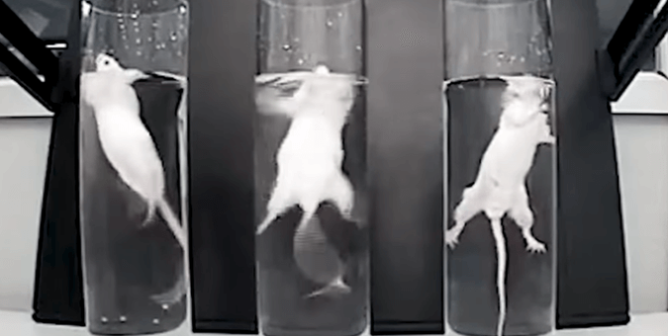
Originally, the program consisted of two tiers of testing that were proposed to assess approximately 10,000 chemicals. Tier 1 was intended to catch chemicals that have the potential to cause endocrine disruption. Although three non-animal tests were included in Tier 1, six tests using live animals and two using parts of animals were also included. If all Tier 1 tests had been conducted for just one chemical, more than 550 animals would have been used.
If a chemical displayed potential for endocrine disruption in Tier 1, it would then be further assessed with additional animal testing in Tier 2. Tier 2 tests were intended to confirm the adverse endocrine effects of the chemical on animals and determine at which dose the chemical affected the endocrine system. The proposed Tier 2 tests would use thousands of rats, fish, birds, and amphibians.
For more information on the history of the EDSP, see here.
Practical and Scientific Limitations of the Animal Tests
The EPA recognizes that conducting Tier 1 (and potentially Tier 2) tests for 10,000 chemicals is not feasible—and would use countless animals. This was made clear when six years were spent assessing 52 chemicals using Tier 1 tests. To modernize the program, the EPA developed, validated, and implemented high-throughput cell-based tests and computer models to replace slower tests in tiers 1 and 2 that use animals and animal parts.
In addition to feasibility issues, the animal tests are fraught with scientific limitations. The animal tests can provide variable (sometimes contradictory) results that are of questionable relevance to humans. To observe effects in animals, the animals are given extremely high doses of chemicals that fail to mimic the human experience of repeated, low-dose exposure to many chemicals over the course of a lifetime. Certain tests may also involve exposing animals to chemicals via injections under the skin or into the abdominal cavity, neither of which is relevant to the ways in which humans are exposed to environmental chemicals in the real world. We most often come into contact with combinations of chemicals in our daily lives through product use, food, and drinking water. These variables make the cross-species and high-dose to low-dose extrapolation of test results extremely uncertain.
In addition, the results of two of the Tier 1 animal tests have been demonstrated to lack reproducibility, which is the extent to which consistent results are obtained when an experiment is repeated. The uterotrophic test uses approximately 18 female rats to assess a chemical’s potential to disrupt estrogen activity. Out of 70 chemicals tested in more than one uterotrophic test, 26% had contradictory outcomes and were classified as both active and inactive.1 The Hershberger test uses approximately 48 male rats to assess a chemical’s potential to disrupt androgenic activity. Out of 25 chemicals tested in more than one Hershberger study, 28% had disagreements between studies.2
The EPA now accepts certain non-animal methods and other scientifically relevant information, reducing the number of animals used.
Non-Animal Methods
The EPA officially accepts two non-animal methods as standard replacements for Tier 1 tests that use live animals or animal parts. In addition to reducing animal use, the non-animal methods generate more reliable data more rapidly and at a lower cost. They include the following methods, which were rigorously assessed for their reliability and relevance:
- The estrogen receptor (ER) pathway model3 combines 18 high-throughput non-animal tests to assess the potential for a chemical to disrupt estrogen receptors. The model can be used to replace two tests that use live animals or animal parts:
a. The uterotrophic test, which uses approximately 18 female rats per chemical
b. The ER binding test, which uses uteruses from approximately 13 rats per chemical - The androgen receptor (AR) pathway model4 combines 11 high-throughput non-animal tests to assess the potential for a chemical to disrupt androgen receptors. The model can be used to replace one test that uses animal parts:
a. The AR binding test, which uses prostates from approximately 10 rats per chemical
Even though comprehensive research indicates that the AR pathway model is able to replace the Hershberger test,5,6,7 the EPA does not yet accept the use of this model as a standard replacement.
The agency accepts the use of other non-animal methods on a case-by-case basis. The following are examples of such methods:
- ER and AR subset models are similar to the ER and AR pathway models described above, but they combine only the most pertinent of the full set of tests in order to improve efficiency and accelerate testing.8,9
- Publicly available computational models CoMPARA10 and CERAPP11 can be used to assess potential AR and ER activity, respectively.12
- Another computational model, called SeqAPASS,13 can be used to understand whether potential susceptibility to a particular chemical’s endocrine activity can be extrapolated across species and taxa.
Despite progress to incorporate non-animal methods, tests using animals continue to make up the majority of the tests required in Tier 1 and Tier 2. Work to expand the development and EPA acceptance of health-protective non-animal methods is ongoing.
References:
- Kleinstreuer NC, Ceger PC, Allen DG, et al. A curated database of rodent uterotrophic bioactivity. Environ Health Perspect. 2016;124(5):556-562.
- Browne P, Kleinstreuer NC, Ceger P, et al. Development of a curated Hershberger database. Reprod Toxicol. 2018;81:259-271.
- Judson RS, Magpantay FM, Chickarmane V, et al. Integrated model of chemical perturbations of a biological pathway using 18 in vitro high throughput screening assays for the estrogen receptor. Toxicol Sci. 2015;148:137-154.
- Kleinstreuer NC, Ceger P, Watt ED, et al. Development and validation of a computational model for androgen receptor activity. Chem Res Toxicol. 2017;30:946-964.
- Kleinstreuer NC, Browne P, Chang X, et al. Evaluation of androgen assay results using a curated Hershberger database. Reprod Toxicol. 2018;81:272-280.
- Browne P, Kleinstreuer NC, Ceger P, et al. Development of a curated Hershberger database. Reprod Toxicol. 2018;81:259-271.
- Kleinstreuer NC, Ceger P, Watt ED, et al. Development and validation of a computational model for androgen receptor activity. Chem Res Toxicol. 2017;30(4):946-964.
- Judson RS, Houck KA, Watt ED, Thomas RS. On selecting a minimal set of in vitro assays to reliably determine estrogen agonist activity. Regul Toxicol Pharmacol. 2017;91:39-49.
- Judson R, Houck K, Friedman KP, et al. Selecting a minimal set of androgen receptor assays for screening chemicals. Regul Toxicol Pharmacol. 2020;117:104764.
- Mansouri K, Kleinstreuer N, Abdelaziz A, et al. CoMPARA: Collaborative Modeling Project for Androgen Receptor Activity. Environ Health Perspect. 2020;128:27002.
- Mansouri K, Abdelaziz A, Ryback A, et al. CERAPP: Collaborative Estrogen Receptor Activity Prediction Project. Environ Health Perspect. 2016;124:1023-1033.
- Mansouri K, Grulke CM, Judson RS, Williams AJ. OPERA models for predicting physicochemical properties and environmental fate endpoints. J Cheminform. 2018;10:10.
- US Environmental Protection Agency. Sequence Alignment to Predict Across Species Susceptibility. https://www.epa.gov/chemical-research/sequence-alignment-predict-across-species-susceptibility.