Written by Jennifer OConnor
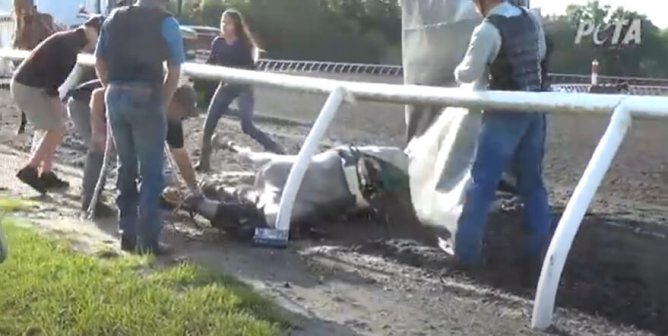
At PETA's urging, a major thoroughbred auction company has made a crucial change at this month's sales event that could reduce the risk of injury to horses forced to participate in "under tack shows"—dangerous sprints that thoroughbreds are forced to run just to impress potential buyers.
A PETA undercover investigation documented that 2-year-old horses—whose bones and muscles are still not fully developed—suffered catastrophic injuries and fatal breakdowns during these one-eighth or quarter-mile sprints.
Now, Ocala Breeders' Sales Company (OBS) has implemented PETA's most significant recommendation for its January under tack show: eliminating deadly timed sprints for juvenile horses, some of whom are just yearlings.
PETA has asked all four major thoroughbred auction companies—Ocala Breeders' Sales Company, Fasig-Tipton Company, Keeneland Association, and Barretts Equine Limited—to adopt a series of reforms to make these races safer for horses.
PETA will continue to push all the auction companies to protect horses by implementing all our crucial reforms. You can help by urging the auction companies to act now.
Written by Michelle Sherrow
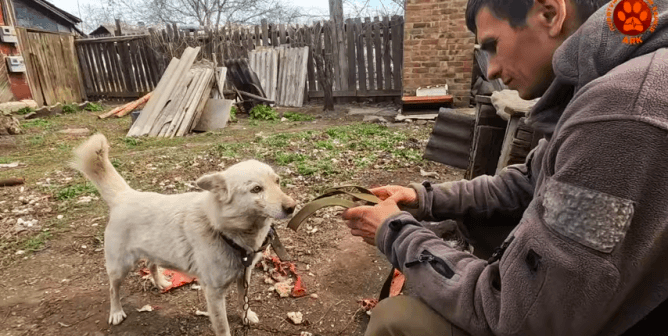
The landlord didn't know how long they had been suffering there. He just knew that when he arrived at the central Utah house from which he had evicted the tenants, he discovered six dogs, 12 cats, and a group of horses who had been left behind. He called the sheriff's department for help, but when the city humane society informed police that they were not allowed to accept animals from outside city limits, officers didn't know what to do.
For four days, the landlord waited for help while making sure the animals at least had food and water. The horses were able to graze and were OK. But the 12 feral cats inside the home had been left with no suitable place to relieve themselves. Two of the dogs were left sitting in crates amid their own waste and were too aggressive for the landlord to let them out or even give them food and water. The other four short-haired dogs were left outside in a barren pen without protection from the weather. On the fourth day, fearing that the dogs would freeze to death as the temperature dipped into single digits, the landlord called PETA.
Caseworkers arranged boarding for the dogs at a veterinarian's office, and the police agreed to transport the dogs and pay the bill. The landlord worked on trapping the feral cats and taking them to a shelter that could accept them. After everything the dogs had been through, they were either too aggressive to be placed for adoption or were very, very sick, so they were given a humane, peaceful release. The horses, however, were healthy and even-tempered and were placed in new homes. The sheriff's department is searching for the runaway owners and hopes to file cruelty charges.
The adage "If at first you don't succeed, try, try again," is especially true when trying to protect animals. You may encounter roadblocks, but with perseverance, you can save animals from suffering
.
Written by Lindsay Pollard-Post
Sparks flew recently after Congress restored funding for U.S. inspectors to oversee horse slaughter, opening the door for horses to be killed and butchered in the United States for the first time since 2006. But there is hope for a better bill: The American Horse Slaughter Prevention Act of 2011 (S. 1176/H.R. 2966), which would outlaw horse slaughter in the U.S. as well as close the loophole that previously allowed horses to be sent on grueling journeys to slaughterhouses in Mexico and Canada, something that added approximately 230 extra miserable miles to their already miserable lot. Horses urgently need anyone and everyone you can enlist—your neighbors, friends, coworkers, and family—to actively support this act. Please click here to register your support now.
Each year, more than 130,000 frightened horses are trucked from the U.S. and killed in slaughterhouses in Canada and Mexico. After enduring hundreds of miles jostled about in cramped trucks—often in extreme temperatures without food or water, on slippery floors, their heads bent over from the low ceilings, being kicked and bitten by other horses—they are shot in the head, are strung up by one leg, and have their throats cut.
The American Horse Slaughter Prevention Act of 2011 would prohibit shipping, transporting, moving, delivering, receiving, possessing, purchasing, selling, or donating horses and other equines for human consumption. In other words, it would effectively end the use of U.S. horses for food—both here and abroad!
This lifeline for horses is currently sitting in Congress and requires that we act fast. Please click here now to urge your members of Congress to vote in favor of the American Horse Slaughter Prevention Act of 2011. Ask everyone you know, and set up tables to enlist those you don't, to do the same.
Domestication certainly hasn't benefited horses, as they've long been abused as beasts of burden and in other ways—as shown by our current battle to stop their export and slaughter for meat. But the new movie War Horse makes a strong case that the bond between humans and horses transcends exploitation. Based on the book of the same name by Michael Morpurgo, War Horse follows the journey of a horse named Joey from birth to a World War I battlefield.
Unlike those involved in the making of We Bought a Zoo, the producers of War Horse took PETA's concerns about the use of animals on the set seriously and were responsive, open, and proactive. Director Steven Spielberg and producer Kathleen Kennedy—both horse lovers—took care to ensure that the horses used in the production of the film were not harmed.
(Spoiler alert: If you don't want to know how it was done, stop reading here.)
Computer-generated imagery was used in the most dangerous-looking scenes, a special track was built to help with the horses' footing, and breakaway ropes prevented tripping. In addition, the dramatic barbed wire scene was created using an elaborate system involving a harness, rubber "barbed wire," an animatronic horse, and a healthy dose of Hollywood magic. As one producer told PETA, "Great credit goes to the art department for making it look dangerous when it wasn't; everything was built to accommodate the horses."
War Horse's strong and moving anti-cruelty message is also sure to resonate with moviegoers and help them empathize with horses' plight. Hopefully, many will think long and hard before they patronize the modern-day horse "battlegrounds" created by the racing, rodeo, and carriage industries. The movie may also prompt people to call their representatives to support the bill to ban American horses from being slaughtered in the U.S. and abroad.
Why a rickshaw was on Bourbon Street in New Orleans is anyone's guess, but for the horse pulling it, it was far from the Big Easy: He fell to the ground and was dead before humane authorities arrived at the scene. A witness reported that the horse appeared to be thin and not well cared for.
Mules have been used to provide carriage rides in the city's French Quarter for many years, and they often suffer when forced to haul oversized loads in Louisiana's notoriously muggy heat. It's time to get mules and horses off New Orleans' streets.
Please ask the City Council to ban carriage rides and any other conveyance pulled by animals in New Orleans. Click here to find contact information for the councilmembers.
A frantic PETA supporter contacted us after she witnessed an underweight horse collapse and thrash around on the ground. It was clear to our caller that this poor animal was in agony and likely suffering from colic.
Law enforcement was contacted immediately, but according to our caller, when the officers arrived, "they just stood around her, watching her suffer." A PETA staffer worked on getting a veterinarian out to the horse, while the caller tried to track down the horse's owner. Within an hour of the call to PETA, the horse was gently released from her suffering.
At our urging, detectives are now investigating the cause of the horse's illness as well as the condition of the other horses on the owner's property.
If you encounter an animal in imminent danger and local officials won't help, call PETA to receive immediate assistance.
Update: Another horse collapsed in Hemet, California, after participating in a Christmas parade. The horse—who is now recovering—got spooked and took off down the street, running over the driver and striking light poles and parked cars before collapsing.
The following posted 12/5/2011
Another horse pulling a carriage fell to the street in New York City this weekend, and a spokesperson for the Horse and Carriage Association of New York admitted that it "is quite common" for horses to catch their hooves on uneven pavement.
Considering that four horses have now collapsed—and at least one has died—in New York City in the last six weeks, it is outrageous for the industry and city officials to continue to downplay the risks.
Please click here to ask the New York City Council to vote "Yes" on Intro 86A, which would replace living, breathing animals with eco-friendly antique cars, before any more horses collapse on the streets of New York.
After a 5-year hiatus, Congress has restored funding for U.S. inspectors to oversee horse slaughter, opening the door for horses to be killed and butchered in the United States for the first time since 2006.
No one wants to see any horse killed for meat or to turn a fast buck, and PETA has always had concerns about the suspension of US slaughter, since it meant more suffering for these sensitive animals, not less. What we feared would happen did: Rather than have a change of heart and stop killing horses, greedy ranchers who deal in horse flesh simply jammed their “commodities” into tractor trailers and hauled the frightened animals hundreds of miles to Canada and Mexico – a journey most did not have to face before - to terrifying deaths in slaughterhouses there.
As PETA documented years ago, that ride means horses crammed together with strangers who bite and kick, slippery floors that mean foals and pregnant mares fall and are trampled, and horses who, being taller than cows but often shipped in cattle trucks, must ride the whole way with their heads bent to their chests. That export loophole still needs to be slammed shut.
To reduce horses’ suffering, there must be a ban on exports of live horses together with a ban on slaughter in the U.S., or it doesn’t work, never did, never will.
Remember, industries that breed horses for profit—horseracing, rodeo and the carriage trade—are largely to blame for this crisis since they have created the tragic overpopulation of horses.
Help force breeders to take some responsibility for the horses they use up and then discard by signing PETA's petition to the Jockey Club calling for the club to establish a retirement fund for registered thoroughbreds.
Written by PETA
We don't know how long several horses on a property in rural Iowa spent mired in their own waste, but when a witness alerted PETA to their plight, the horses' barn floor was covered with manure up to 4 feet deep in some places.
PETA's Cruelty Investigations Department contacted local animal control officers immediately, and the agency forced the property owner to improve the horses' situation. It took several visits from law-enforcement officials, but the continued pressure was enough to convince the owner to build a spacious new barn. The horses now have a clean, new living space and plenty of pasture to graze.
If you notice an animal who is forced to live in filth or who is in trouble in any way, contact police and/or animal control, and follow up—repeatedly, if necessary—to make sure that the animal gets help. (You can look up the number now and save it to your cell phone or post it on your fridge to be prepared for emergencies.) If you do not get an appropriate response, let us know.
Written by Heather Faraid Drennan
UPDATE: When Lea Michele found out about the death of yet another horse used for carriage rides in New York City, she immediately sent a letter to Mayor Michael Bloomberg asking him to support the bill that would replace the cruel carriages with eco-friendly retro cars and allow the remaining horses to go to sanctuaries.
The following was originally posted on October 24, 2011:
Yet another horse used to pull carriages in New York City has dropped dead in the street, adding one more body to a count that continues to grow. Glee's Lea Michele recently hosted a PETA video detailing the miserable lives of these horses, who are forced to haul heavy loads in all weather extremes in one of the busiest cities in the world.
Wherever you live, if you see a horse (or any animal) in distress, contact local humane authorities immediately. If you live in New York and see a horse in trouble, contact the ASPCA at 212-876-7700, extension 4450, and PETA at CIDInfo@peta.org right away.
Never take a horse-drawn carriage ride, and please let New York officials know that you support Intro. Bill 86, which would replace horse-drawn carriages with eco-friendly classic cars.
Follow PETA on Twitter!
If you have a general question for PETA and would like a response, please e-mail Info@peta.org. If you need to report cruelty to an animal, please click here. If you are reporting an animal in imminent danger and know where to find the animal and if the abuse is taking place right now, please call your local police department. If the police are unresponsive, please call PETA immediately at 757-622-7382 and press 2.