Written by Michelle Sherrow
If you always have a sleepless night after watching a horror movie, you might want to think twice before sitting down to a meal of dead bodies. Here's why meat is more dangerous than an ax-wielding maniac:
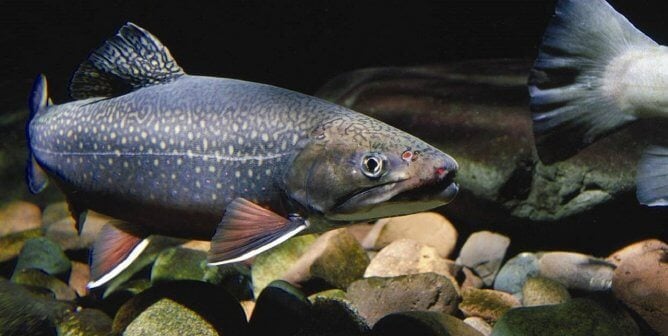
If you're still eating fish despite the dangers of mercury, might I suggest that you may also enjoy a summer job at Camp Crystal Lake?
As every randy teenage slasher-flick victim can attest, hormones can be deadly. Hormones in meat can cause all sorts of unsexy conditions, such as "moobs." Which leads me to number three …
Eating meat causes impotence. Given their druthers, I think a lot of men would opt instead for the hockey mask–wearing serial killer.
That's another good reason not to ingest all the saturated fat that meat contains.
Find yourself short of breath when you hear that ominous theme music ("Ki-ki-ki-ma-ma-ma")? The toxic gasses and bacteria that wind spreads from factory farms make it even more difficult to inhale.
Do you ever shout, "Why are you running into the woods?!" when some moron is being chased by a psycho? People in real life do dumb things that lead to their untimely demise, too, like eating meat, eggs, and dairy products even though bad diets are to blame for one-third of all cancer deaths.
Have you seen PETA's slasher movie that features video footage from chicken farms? If you're too chicken … don't eat chicken.
Heart disease caused by diets high in artery-clogging animal products will do the trick, too.
In Friday the 13th Part VIII: Jason Takes Manhattan, Voorhees is finally done in by toxic waste in the sewers. If the kids had only gotten him into one of the waterways polluted with factory-farm runoff, he would've been a goner a lot sooner.
Meat's got its own resilient killer: antibiotic-resistant bacteria caused by the overuse of antibiotics on factory farms.
Between meat and dairy products, trying to choose which is more deadly is like trying to decide which serial killer you want to take a weekend getaway with.
Poo. And lots of it. Yeah, it gets in meat, too.
Maybe the worst thing about how deadly meat is, is that we actually have to pay for it—both at the check-out counter and in the form of government subsidies. I mean, at least when Jason is swinging a machete, he's not simultaneously asking for your wallet—am I right?
Slash your risk of getting killed off early by running from meat as if your life depended on it. (But don't go running through the woods. That's never a good idea.)
Last year, PETA helped successfully defeat a series of "ag gag" bills, which would have made it a crime to film cruelty to animals on factory farms, in Florida, Minnesota, and New York. Now, another round of these unconstitutional bills has begun—in Missouri, New York, and Utah—and it's up to us to squelch these measures again.
Time and time again, PETA's undercover investigations of factory farms have produced video evidence of cruelty to animals that has helped authorities prosecute the offenders. Investigators have documented that workers slammed newborn piglets' heads into concrete floors and left them to die in agony, employees at a foie gras farm drowned female hatchlings, and workers at a turkey farm jumped on turkeys' stomachs to make them "pop."
Don't let factory farms hide animal abuse behind shady laws. Here are three ways that you can help animals on factory farms this week:
*Standard messaging and data rates apply. For full terms, please click here.
What a rooty-tooty bunch of hooey. IHOP is using the eco-friendly message of The Lorax to lure families in for Dr. Seuss–themed meals that are chock-full of factory-farmed meat, eggs, and dairy products. The restaurant couldn't serve anything less environmentally friendly than if it put centuries-old Amazon trees on a plate.
While the tree seed–encrusted bookmarks the restaurant is handing out to kids are a nice touch, IHOP would be doing a lot more good for the planet if it offered dishes that weren't concocted out of meat and dairy products that obliterate natural resources and are a major cause of climate change.
I'm pretty sure the Lorax would rather take a boot to the back than chomp down on Truffula-Killing Surprise.
For Green 'Eggs' and 'Ham' that are truly green, check out our recipe.
Katherine Heigl loves Utah so much that she chose the state as the site of her 2007 wedding and later purchased a home there. But when Utah lawmakers proposed an "ag gag" bill that would make it a crime to shoot video on factory farms, Heigl wanted to let lawmakers know that kind citizens like her would not support it.
She penned a letter on PETA's behalf to Utah's state senators urging them to squelch House Bill (H.B.) 187 and allow people to continue to obtain video evidence of animal abuse so that authorities can prosecute the offenders.
As animals cannot defend themselves, the public must maintain its right to document illegal cruel practices in order to alert law enforcement to [their] existence. In 2008, my friends at PETA went undercover at a major pig farm in Iowa that supplies Hormel and found that workers were beating pigs with metal rods and jabbing clothespins into their eyes; one employee was even caught sexually abusing a pig with a cane. Because of this investigation, six workers were charged with a total of 22 counts of livestock neglect and abuse, and all of them admitted guilt. PETA worked hand in hand with local law enforcement to achieve these convictions, for which the undercover footage made the sheriff's job much easier. Please don't impede law enforcement by passing this terrible bill.
Cloris Leachman has already asked Utah lawmakers to dump the bill, which is on very shaky constitutional ground. Last year, when similar "ag gag" bills cropped up in Florida, Iowa, Minnesota, and New York, animal advocates defeated them, thanks in part to the work of kind folks like Cloris and Mary Matalin.
Help us defeat H.B. 187 in Utah too.
Google goes gaga for vegan food, learn how to show bunnies some love this Valentine's Day, and help us ask Florida not to change its slogan to "The Hoarder State." Here's everything in PETA's world that you might have missed this week.
Don't miss any breaking animal rights stories. Hop on over to PETA's Tumblr page for the latest:
It's a brave pig who can crash a barbecue hosted by a group of hunters. But that's exactly what two PETA "pigs" did at a campaign stop for Newt Gingrich in South Carolina. The "pigs" were protesting taxpayer subsidies of cruel factory farms.
Although they were quickly shown the door, the precocious "pigs" made the most of it, with a grand exit atop a convertible with flags waving and country music blasting while photographers snapped away.
Animals have voices. They cry out when they are being skinned alive for their fur, being beaten and forced to perform painful tricks, or having their throats cut before being hacked apart for their flesh. Animals express their pain, but often, people don't understand or they choose not to listen.
As animal advocates, we must raise our voices alongside animals' and put into words what they can't. Whether we are calmly explaining to someone at the dog park that his or her dog might be yelping because the animal's prong collar hurts or telling a friend that her mascara was smeared into a bunny's sensitive eyes, we have to speak up. Animals need us to.
If you haven't yet made a New Year's resolution, how about this: Never remain silent when an animal is hurting. Just one small voice can—and often does—save animals from cruelty and abuse. How will you use yours?
North Carolina law-enforcement officials raided a Butterball turkey factory farm after viewing disturbing video footage of workers who abused turkeys. The video, shot during an undercover investigation by Mercy For Animals, shows workers who kick and stomp on birds, smash them into the ground, and bash in their heads with metal rods.
Mercy For Animals' findings mirror those uncovered during PETA's 2006 undercover investigation of a Butterball slaughterhouse in Arkansas. We documented that one employee stomped on a bird's head until it exploded, that another smashed a turkey into a metal handrail so hard that her spine burst through her skin, and that another worker sexually assaulted a female turkey. One worker told the investigator, "If you jump on their stomachs right, they'll pop ... or their insides will come out of their [rectums]." The findings are also strikingly similar to the horrific abuses documented by PETA's 2008 investigation of Aviagen Turkeys, Inc., which led to the first-ever indictments for felony cruelty to animals for the abuse of birds and the first-ever cruelty convictions of turkey factory-farm workers.
The abuse documented is apparently business as usual for Butterball and the turkey industry. Click here to urge the company to adopt "controlled-atmosphere killing" (CAK), in which birds are killed by inert gas while still in their transport crates, eliminating much of the opportunity for abuse at the slaughterhouse. And to help end the abuse that these intelligent, sensitive animals suffer before they make it to slaughter, refuse to eat turkeys and choose fowl-friendly faux turkey instead.
We've all seen the ribbons tied around trees on the side of the road, crosses stuck in the ground, and signs asking us to drive carefully—all reminders of lives that were lost in traffic accidents. Certainly, humans aren't the only casualties of reckless driving, so should they be the only ones honored? PETA doesn't think so.
We're applying to Illinois' Fatal Accident Memorial Sign Program to post two road signs as a tribute to cows who were severely injured and killed on the state's roadways.
PETA has chosen the sites of two horrific accidents as the locations for our signs. In May, a tractor trailer tipped over on an overpass, spilling cows onto the road below. Cows who didn't die on impact or from being struck by cars languished in agony until they were finally euthanized. Another truck overturned in October after the driver fell asleep at the wheel. Six cows were killed by oncoming vehicles—again, many were left to suffer for hours from their injuries.
If humans are going to continue to sentence these animals to die in slaughterhouses, isn't erecting a small remembrance of a few of the millions who lose their lives every year the least that we can do, given that they die for no better reason than because someone craves the fleeting taste of their flesh?
Written by PETA
What do Bill Clinton, former President George W. Bush speechwriter Matthew Scully, and the Rev. Al Sharpton have in common? They're all political animals who don't eat meat. Sharpton first got an idea of what happens to animals on factory farms when he appeared in PETA's video exposing cruelty in slaughterhouses that supply KFC and called on the black community to join PETA's boycott of the fast-food chain. His message to KFC? "That's foul!"
We caught up with Sharpton, who now hosts MSNBC's show PoliticsNation, to ask him what inspired him to change his eating habits, how his new diet makes him feel, and what his favorite foods are.
"I overhauled my diet after a 40-day hunger strike when I was in jail for the Vieques [military bombing practice] protest," Sharpton told us. "I dabbled with weight loss ideas, wanting to keep off the pounds I lost. First, I gave up red meat, then chicken. I ran into Bill Clinton, who told me how he has more energy, needs less sleep, and can think more clearly since going vegan, and I can tell you the same thing happened to me. I also kept in mind the words of another vegetarian friend—Coretta Scott King—who always spoke of the ethical reasons to give up meat."
Sharpton dedicated his PETA Humanitarian Award to King when he accepted it at PETA's awards gala in New York City in 2006.
Avoiding meat is the way to eat for anyone with a highly charged life," Sharpton says. "A vegetarian diet has a way of absorbing the stress and gives you greater endurance. I don't eat many starches or [refined] sugars. I just love greens and grains. I eat a lot of salad and fruits. I feel like a new, improved me.
To date, the reverend has lost more than 120 pounds. To read more about Sharpton's triumphs and tribulations, check out his essay in PETA President Ingrid E. Newkirk's book One Can Make a Difference.
If you want to be a champion for animals, take the pledge to go vegan. Not only will you enjoy reduced stress and more energy, you'll also be less likely to suffer from obesity, heart disease, diabetes, and cancer.
Written by Monica Alexander
If you have a general question for PETA and would like a response, please e-mail Info@peta.org. If you need to report cruelty to an animal, please click here. If you are reporting an animal in imminent danger and know where to find the animal and if the abuse is taking place right now, please call your local police department. If the police are unresponsive, please call PETA immediately at 757-622-7382 and press 2.
Follow PETA on Twitter!