• Don't Buy a Ticket to 'We Bought a Zoo'

    Written by Jennifer OConnor

    16 Comments


    © Zebra: deste / sxc.hu | Ribbon: Elize / sxc.hu

    Fading director Cameron Crowe is using wild animals as "actors." In his new movie, We Bought a Zoo, he used lions, bears, and other wild animals who are at great risk for abuse because of their strength and instinctive aggression.

    PETA repeatedly reached out to Crowe and Fox Studios before and during production and warned them about how wild animals used for films are often subjected to food deprivation, beatings, and jolts with electric-shock devices during pre-production training and urged them to use high-tech computer-generated imagery instead, like that used in the blockbuster Rise of the Planet of the Apes.

    Animals rented out for use in movies aren't often abused on the set—that usually takes place when no one is around to see it. PETA undercover investigations at wild-animal training facilities documented that lions and tigers were repeatedly beaten and psychologically abused by trainers intent on showing them "who's boss." When animals grow too old or too large to be controlled, they often spend the rest of their lives at decrepit roadside zoos or backyard menageries.

    Please skip this movie and tweet that animals belong in the wild, not on the big screen, @WeBoughtAZoo.

  • Child Dies After Visiting Petting Zoo

    Written by PETA

    3 Comments

    Our sympathies go out to the family of Kalei Welch, who died in an Illinois hospital after falling ill with E. coli poisoning. Health officials believe that the 5-year-old girl contracted the deadly bacterial infection at a petting zoo at the Hendricks County Fair.

    PETA has been warning parents for years about the dangers of petting zoos, which are hotbeds of E. coli. Hundreds of children have been infected after visiting petting zoos, and many have suffered kidney failure, requiring long-term dialysis and multiple blood transfusions.

    Infection can spread through direct animal contact or simply by touching the surroundings near an animal exhibit. Hand sanitizer does nothing to prevent the spread of E. coli by inhalation or indirect contact. The Centers for Disease Control and Prevention as well as many state departments of health have issued warnings about the health risks of petting zoos.

    These displays are bad for animals too. Case in point: North Carolina's Jambbas Ranch is notorious for keeping animals in substandard conditions, including a lone neurotic bear named Ben.

    Please ask North Carolina officials to keep people and animals safe by refusing to reissue Jambbas owner James Bass' wildlife-captivity license and endangered-species permit.


    Written by Jennifer O'Connor

  • Tiger's Foot Trapped at Universoul

    Written by PETA

    74 Comments

    UPDATE: After receiving a complaint from PETA about the incident below, the U.S. Department of Agriculture cited the exhibitor who provided the tiger to UniverSoul for handling the tiger in a manner that caused her stress and unnecessary discomfort. The exhibitor was also cited for failing to maintain the tiger's enclosure in a manner that would protect her from injury. 

    This is not the first time that this exhibitor has violated federal law. In 2008, he was ordered to pay a $6,000 penalty after two tigers escaped while touring with UniverSoul. In the past year, he has been cited for failing to provide big cats with a proper diet and feeding big cats unsafely handled meat.


    Video footage of a tiger traveling with the UniverSoul Circus showing his foot trapped beneath the sliding door to his cage has prompted PETA to fire off a letter to the U.S. Department of Agriculture (USDA) and Indianapolis Animal Care & Control asking for an immediate investigation into the animal's condition. The video shows the tiger struggling to free his foot, panting, and in obvious distress.


    UniverSoul rents its animal acts from exhibitors who have dismal records of animal care. The USDA has repeatedly cited UniverSoul's animal exhibitors for violations of the Animal Welfare Act, including failure to provide veterinary care, medical records, and adequate space. Undercover video footage shows one exhibitor UniverSoul has used—Tim Frisco of the Carson & Barnes Circus—viciously attacking elephants with a bullhook as they scream in pain. The circus has also had at least three tiger escapes.

    Please tell the USDA that you expect it to take immediate action to assess this tiger's condition.
     

    Written by Jennifer O'Connor


  • The Good, the Bad, & the Ugly Collide in 'Buck'

    Written by PETA

    1 Comments

    The new documentary film Buck chronicles the life of real-life "horse whisperer" Buck Brannaman and his work to help, as he calls them, "horses with people problems." The film follows Brannaman as he tours the country, giving guardians a deeper understanding of their horses and, at the same time, insight into themselves.

    Brannaman, whose own upbringing was marred by violent physical abuse, understands horses' fears and anxieties. Heartbreaking archival footage of horses being whipped and "broken" gives way to scenes of Brannaman gaining the respect and trust of a horse using no more than his voice, body language, and a gentle touch.

    Although the film challenges the cruel methods used to "break" horses, it stops short of questioning the use of horses and other animals for entertainment. Brannaman obviously cares deeply about horses and is saving many of them from abusive training techniques, which makes one hope that someday soon he will pause to think about the ethics of buying, selling, breeding, using―and inevitably abusing―horses in the first place. Brannaman himself participates in rodeo events that are stressful and potentially dangerous to the animals involved.

    To his credit, Brannaman himself admits that even after decades of working with horses, he still has a lot to learn. Perhaps someday he will fully take to heart the words of one of his students, who, when thinking back on the pain that she has inflicted, admits, "[Y]ou don't realize how unjust it is until someone shows you a different path."  We all have some growing to do, but Buck has done more than most in his field of endeavor.

  • Who’s Hurting Chimpanzees Now?

    Written by PETA

    1 Comments

    Should a wild animal be forced to sell car insurance, dance the Macarena, and smoke cigars to provoke a laugh? Not that it matters if there were millions of chimpanzees around to abuse, but a new study concludes that chimpanzees may be doomed as a species as long as the public continues to see them in commercials and movies.

    Scientist Steve Ross, founder of Project ChimpCARE and assistant director of the Lester E. Fisher Center for the Study and Conservation of Apes at Lincoln Park Zoo in Chicago, sums it up: "The inaccurate and frivolous portrayal of these complex and endangered primates should be of serious concern to anyone interested in animal care and safety. Whether intentional or not, these images are resulting in significant effects on perceptions of chimpanzees that may hinder critical conservation and welfare initiatives that much of the general public supports."

    PETA has received pledges from 10 of the top 15 advertising agencies in the world not to use great apes in their ads. And watch for innovative high-tech alternatives in Rise of the Planet of the Apes, which opened last weekend. Not one live ape was used in this thriller—don't miss it!

     
    Written by Jennifer O'Connor

  • Government Secrecy Puts Animals in Danger

    Written by PETA

    1 Comments

    Yesterday, PETA filed a federal lawsuit against the U.S. Fish and Wildlife Service (FWS) for illegally issuing a permit to an animal exhibitor that would allow the exhibitor to harm, harass, and wound endangered species.

    PETA has found several instances in which the FWS issued endangered species permits—which may be issued for "scientific purposes" or to enhance survival of an endangered species—to seedy roadside zoos while improperly keeping the application and the permit from the public. Roadside zoos breed animals in deplorable conditions solely to turn a profit.

    Frank Vassen/cc by 2.0

     
    We filed suit over one particularly miserable menagerie, Windy Oaks Farm in Hanover, Virginia, which is under formal investigation by the U.S. Department of Agriculture (USDA) after chimpanzees escaped from their enclosures three times, prompting PETA to call for an investigation.  

    Although captive chimpanzees are not currently listed as endangered, Windy Oaks' lack of experience with and knowledge of these complex and dangerous animals is indicative of its overall incompetence. The zoo has been cited by the USDA for failing to document when it acquired and disposed of animals and whether the animals had received veterinary care in more than a year. Windy Oaks also keeps endangered lemurs and gibbons, two species that have been known to attack humans.

    Since PETA and the rest of the public were denied the right to view and comment on this application for a permit, we are taking the matter to court. We will keep you updated.

    Written by Michelle Sherrow

  • The Movie We're Going 'Ape' For

    Written by PETA

    12 Comments

    I hope you're as stoked as I am to see Rise of the Planet of the Apes, which opens this Friday, August 5. The movie's message and CGI special effects are so animal-friendly that PETA has given director Rupert Wyatt a Proggy Award for recognizing that real great apes don't belong on production sets.


    Given the impressive technology available now—and you'll see it in all its glory in this film—there's no need to hire wild-animal trainers who rip baby chimpanzees away from their mothers and physically abuse them to force them to perform on cue.

    Run, walk, or swing through the trees—just don't wait to see this movie!

    A PETA “chimpanzee” gives Rise of the Planet of the Apes two opposable thumbs up outside the premiere in Hollywood.

     
    Written by Jennifer O'Connor

  • Victory! Indian 'Running of the Bulls' Banned

    Written by PETA

    27 Comments

    After aggressive campaigning by PETA India—including a lawsuit filed in the Supreme Court of India—the Ministry of Environment and Forests has added bulls to a directive that lists animals (bears, monkeys, tigers, lions and panthers) who are prohibited from being used in "performances." This means that bulls will no longer be tormented in a cruel spectacle called Jallikattu.

    Jallikattu takes place in India's Tamil Nadu province, where residents chase and taunt bulls in an attempt to grab money tied to their horns. Bulls have chili peppers rubbed into their eyes and are force-fed alcohol, and their testicles are pinched—all in an effort to get them crazed and frantic. Villagers throw themselves on top of the terrified animals in an effort to "tame" them and claim the prize.


    PETA India's Supreme Court case challenged the Tamil Nadu government's assertion that state law (which allows these cruel contests) supersedes a central (federal) law. PETA India believes that the new directive also outlaws other cruel events, including bullock cart races and bullfights, and the group will be taking action to make sure that they are stopped. Please thank the minister responsible for protecting bulls, Mr. Jairam Ramesh.

    In another chapter in PETA India's fight for bullocks, a "public interest litigation" has been filed in Bombay High Court asking for a directive to enforce an existing ban against the use of bullocks to haul oversized kerosene carts for oil companies.

    Please urge the ministry to continue treating animal issues with the seriousness that they deserve.

    Written by Jennifer O'Connor

  • Horse Breaks Back at Rodeo

    Written by PETA

    76 Comments

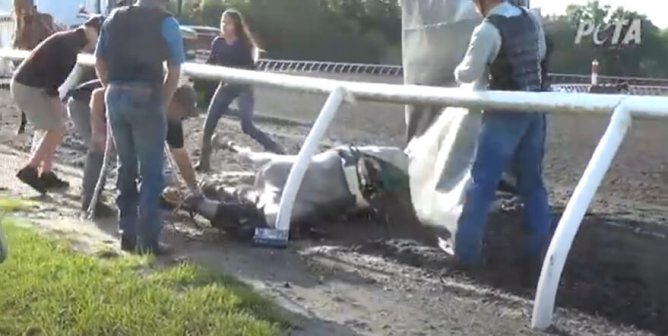
    A horse named Check Mate was euthanized this past weekend after suffering a broken back and collapsing during a saddle bronc riding event at the Cheyenne Frontier Days Rodeo in Wyoming.


    In saddle bronc riding events, horses are made to buck wildly through the use of painful "bucking straps" cinched tightly around the animals' abdomens. Horses are also often shocked with electric prods and have spurs stabbed into their sides.

    Check Mate isn't alone—horses, bulls, and calves are killed every year in cruel rodeo events. Earlier this month, two horses died after suffering broken legs during chuckwagon races in the Calgary Stampede, which was attended by the Duke and Duchess of Cambridge.

    Strict restrictions have been implemented on the use of electric prods, flank straps, and spurs in Rhode Island; Leestown, Virginia; and Pittsburgh, effectively banning rodeos. In addition, flank straps have been banned in Ohio; rodeos have been banned completely in Pasadena, California, and Fort Wayne, Indiana; and Rhode Island and California have laws requiring a veterinarian to be present on site at rodeos. PETA offers a list of rodeo ordinances in every state that can be used to protest rodeos and file complaints about witnessed abuses.

     
    Written by Michelle Sherrow

  • Furor Erupts Over Boxing Kangaroos

    Written by PETA

    27 Comments

    Update: PETA has filed a complaint with the Florida Fish and Wildlife Conservation Commission regarding Rocky's suffering, and the agency has confirmed that it has opened an investigation into the matter. We have not received word from the commission on their findings yet, but members of the boxing community are weighing in on the matter – UFC welterweight Thiago Alves is spreading the word on Twitter. Please join him in pushing for Rocky's rescue.


    Please thank the Florida Fish and Wildlife Conservation Commission for pursuing an investigation and let the commission know that you find the act cruel and objectionable. Call the commission at 1-888-404-3922 or submit a comment here
     

    It's hard to believe that anyone would haul around a diapered, distressed kangaroo and force him to box, but exhibitor Javier Martinez, who is currently traveling with the Piccadilly Circus, is doing just that. PETA has sent a complaint to the Florida State Boxing Commission (FSBC) and the Florida Department of Business & Professional Regulation urging them to intervene to stop the illegal "Rocky Show Circus," which is traveling throughout Florida. Boxing matches must be licensed by the FSBC, and there is no evidence that Martinez has complied.


    D'Arcy Norman/cc by 2.0

     
    Martinez, who dresses up a kangaroo named Rocky and taunts him into fighting back, has been repeatedly cited by the U.S. Department of Agriculture (USDA) for violations of the Animal Welfare Act, including failure to provide adequate veterinary care and safe animal enclosures. Rocky is clearly stressed and has charged people during photo shoots, chewed on his own arm, and attempted to flee the ring during the act.

    At least two kangaroos used in Martinez's boxing act have died while touring with a circus, including one who died while traveling with UniverSoul Circus from complications of a deadly bacterial disease called "lumpy jaw," which can result from severe crowding, poor hygiene, poor diet, and stressful conditions.

    Please only attend innovative, exciting circuses that don’t exploit animals, like Cirque du Soleil. Here’s a complete list
     

    Written by Jennifer O'Connor

How to Contact PETA

If you have a general question for PETA and would like a response, please e-mail Info@peta.org. If you need to report cruelty to an animal, please click here. If you are reporting an animal in imminent danger and know where to find the animal and if the abuse is taking place right now, please call your local police department. If the police are unresponsive, please call PETA immediately at 757-622-7382 and press 2.