• Video Shows Pigs Mutilated, Beaten, Duct-Taped

    Written by Michelle Sherrow

    13 Comments

    A disturbing new undercover investigation inside two pig farms in Goodwell, Oklahoma, one owned by Seaboard Foods, shows injured piglets with their legs duct-taped to their bodies as well as pigs suffering from abscesses, torn body parts, and bacterial infections without being given veterinary care.

    Workers are seen chopping off pigs' tails and testicles with no painkillers and hitting pigs in the genitals in order to force them to move from one gestation crate to another. Many of the gestation crates—small metal enclosures in which sows spend most of their lives while they are impregnated again and again—were full of feces and urine. The video shows sows desperately chewing the metal bars of their cages and struggling to stand up. Some are bleeding, and some lie dead.

    Seaboard is the country's third-largest pork producer and a supplier to Wal-Mart. Prestage is the fifth-largest producer. Both were investigated.

    Did Seaboard know that there was abuse on its farms? Well, 10 years ago, in 2001, a PETA investigation at a Seaboard facility outside Guymon, Oklahoma, led one of its managers to plead guilty to three counts of felony cruelty to animals. Video footage taken by our undercover investigator showed that employees beat pigs with metal gate rods and slammed pigs head-first into the floor in a crude attempt to kill them. Sick and injured pigs were left to die without access to food, water, or veterinary care. Different time, different people, same company, same sort of abuse.

    Not an Isolated Incident

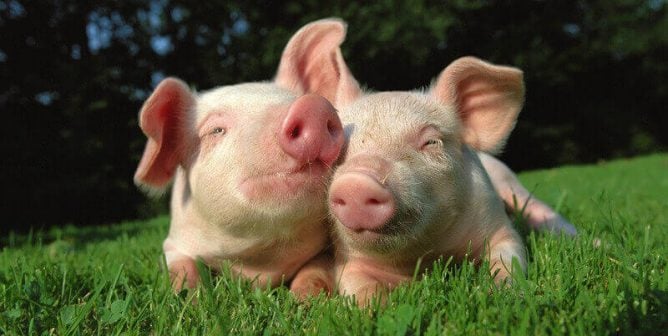
    Abuse of animals is par for the course on pig farms and all other factory farms. Pigs have the same capacity for suffering as dogs and cats do yet are abused in ways that would be illegal if these animals were the victims.

    How You Can Help

    The only way to protect animals from this abuse is to stop eating them.

  • Will an Animal's Voice Help You Find Yours?

    Written by Michelle Sherrow

    0 Comments

    Animals have voices. They cry out when they are being skinned alive for their fur, being beaten and forced to perform painful tricks, or having their throats cut before being hacked apart for their flesh. Animals express their pain, but often, people don't understand or they choose not to listen.

    As animal advocates, we must raise our voices alongside animals' and put into words what they can't. Whether we are calmly explaining to someone at the dog park that his or her dog might be yelping because the animal's prong collar hurts or telling a friend that her mascara was smeared into a bunny's sensitive eyes, we have to speak up. Animals need us to.

    If you haven't yet made a New Year's resolution, how about this: Never remain silent when an animal is hurting. Just one small voice can—and often does—save animals from cruelty and abuse. How will you use yours?

  • When Animals Need Rescuing From 'Rescuers'

    Written by Lindsay Pollard-Post

    6 Comments

    Authorities recently rescued 108 animals from three homes in Duncanville, Texas, where dogs and cats were found stacked in filthy, hair-encrusted, rusty cages and confined to rooms in which urine and feces coated the floors—allegedly up to a foot deep. According to news reports, the door to one room to which dogs were confined was sealed shut with industrial tape and hidden behind a curtain, and the dogs had been deprived of adequate food, water, and care.

    The woman responsible for these cats and dogs was apparently busy acquiring unadoptable animals from at least one local animal shelter and running a "rescue" group.

    Cases like this are common and remind us how animals suffer when people warehouse homeless dogs and cats for years—with no chance for them to run, play, or feel the grass beneath their feet—as a "solution" to quick and painless euthanasia. Animal shelters that shirk their responsibility by handing over animals to anyone who says that they'll take them—as shelters across the country are doing to make their euthanasia rates look better in the face of pressure from the irresponsible snake-oil salesmen who call themselves "no kill" supporters—share the blame for the suffering of animals at the hands of hoarders posing as "rescuers." Beware, beware, beware!

    Avoiding euthanasia at all costs is not humane, and it is not a solution to the animal overpopulation crisis. Until the flood of homeless animals is stopped through spaying and neutering, euthanasia will remain a mercy for unadopted and unadoptable animals. Spaying and neutering are the keys to keeping animals out of shelters—and out of "rescues" that are worse than death.

  • Dog Returned Like Mail-Order Sweater

    Written by PETA

    10 Comments

    After buying a dog over the Internet sight unseen for a staggering $7,500, a Long Island man added insult to injury by sending the dog on a terrifying 3,000-mile journey back to the breeder in Washington state less than a week later. The dog, who was likely confused and disoriented after the initial cross-country flight, had failed to adjust immediately to her strange new environment, so the man essentially returned her like a sweater he'd ordered from L.L.Bean, despite the fact that the breeder refused to take the dog back and reportedly said that he would not pick her up at the airport. (The breeder did eventually claim the dog but only after she'd been forced to spend the night at an airport boarding facility.)

    The dog buyer could have saved himself a lot of trouble—and the dog a lot of trauma—if he had just taken his family to the local animal shelter, where they could have chosen from among a plethora of great dogs. But considering that he was dumb enough to hand over an exorbitant amount of money to a breeding operation that exacerbates the animal homelessness crisis, allowed the dog only six days to settle into her new home, and was inconsiderate enough to ship her off to an unknown fate in an airplane's dangerous cargo hold after tiring of her, any responsible shelter worker would now lock the doors to this man.

    But for those of us who don't view animals as disposable accessories, animal shelters are the perfect place to make a permanent love connection.

    Written by Michelle Sherrow 

  • Gallery Plans to Feature Dog Killer's Work

    Written by PETA

    11 Comments

    As part of its new sculpture park, the Memorial Art Gallery (MAG) at the University of Rochester is planning to install a piece by Tom Otterness, who notoriously purchased a dog from an animal shelter, tied him to a fence, and shot him to death as part of a 1977 "art" film. Although he has since apologized, he reportedly has yet to make any meaningful gesture of regret, such as donating time or money to a reputable animal shelter.

    Public outcry has led to the cancellation or postponement of other Otterness sculptures, including a planned New York Public Library sculpture that was canceled after PETA protested. So far, MAG has ignored the most recent protests and plans to proceed with Otterness' commission.

    PETA is urging people to avoid visiting MAG so that the gallery will get the message that killing animals is always cruel and that animal abusers should be held accountable. Instead, we encourage people to check out artists such as Miru Kim and Nafe Nanfeng as well as art collective Neozoon, all of whom use their work to help stop cruelty to animals.

    Written by Heather Faraid Drennan

  • The Pony (Rescue) Express

    Written by PETA

    7 Comments

    It only takes one look to see that the pony below desperately needed help, but whenever authorities were called out to check on this miserable horse, they inexplicably found "no issues" with his condition and left him to suffer at the hands of his neglectful owners.

    The pony was so malnourished that every rib jutted out, and his hoof was so grossly deformed (possibly from an untreated broken bone) and overgrown that it had folded under, forcing him to hobble around. The pony's owners left him to wander the streets and routinely took off for days at a time, leaving him to fend for himself. He had no food, no water, and nowhere to escape the elements.

    Thankfully, when PETA and a wonderful local rescue group got involved, the owner quickly agreed to surrender the pony. His overgrown hoof was immediately trimmed, and he was adopted into a loving home within days! 


    If you've tried to get help for a neglected or abused animal to no avail, don't give up. PETA can often help when no one else can—or will. If you aren't getting anywhere with local authorities, please contact PETA. You may be the only hope for an animal in an otherwise hopeless situation.


    Written by Lindsay Pollard-Post

  • Kids, Animals Suffer in Hoarder Hellhole

    Written by PETA

    8 Comments

    A horrific hoarding case in Chicago is a reminder of why, despite any ill-founded "good" intentions, hoarding never results in a happy home—for anyone. It's absolutely vital to report all known or suspected cases of animal neglect or hoarding to authorities immediately.

    Police reportedly found a mentally disabled 14-year-old boy dead in a backyard, wearing only a T-shirt. Inside the house, they allegedly found more than 200 animals—and three more sick children—living in filth and feces. Reportedly, all 109 cats in the house were suffering from feline AIDS and leukemia and had to be euthanized, and many other animals were starving and diseased, including a cockatiel whose spine was visible on his nearly featherless back. The children reportedly had never been to school or a doctor and slept on the floor, and their bare feet were caked with feces and dirt. The children's mother has been charged with child abuse and cruelty to animals, among other crimes.

    Hoarders exist in virtually every community, so it's crucial to be alert to the signs of hoarding:

    • Hearing animals but rarely seeing them—or seeing many different animals (especially cats) in the windows
    • Windows kept closed with the shades always drawn, to hide the hoard
    • Flies on the inside of windows
    • Strong, persistent odors of waste and decay
    • Homes that look abandoned from the outside—unkempt and unlived in
    • Homeowners who refuse to open the door to visitors, instead meeting people outside
    • Dogs with bacterial infections, bite wounds, and skin conditions, such as mange
    • Yards that are overgrown, hiding the home 

    If you notice red flags of animal hoarding, please don't hesitate—call the police. Hundreds of lives—both animals' and humans'—may be at stake.


    Written by Lindsay Pollard-Post

  • 'Prop' Goat Rescued During Photo Shoot

    Written by PETA

    18 Comments

    A participant in a photo shoot became a model of compassion when she saved a goat's life. The goat was being used as a "prop," and the shoot took place on a scorching-hot summer day on a California ranch. The visitor found the goat lying on the ground with hooves that were so overgrown that he was unable to stand up or reach food and water.

    The witness contacted PETA, and we quickly alerted animal control. And voilà! The goat was surrendered to animal control within 24 hours. It likely took months for the hooves to grow so painfully long, but the goat's owner claimed that he "didn't notice." (Yet the photo shoot participant noticed them with one glance.) PETA is asking for cruelty charges.

    After a long overdue hoof trim and some TLC, the goat was put up for adoption, his photo prop days behind him.

    You don't have to be an expert to tell that an animal might be suffering. If something doesn't look right, it probably isn't right, so please speak up!


    Written by Michelle Sherrow

  • A Kind End to a Harsh Life

    Written by PETA

    13 Comments

    A concerned resident called PETA after seeing this feral cat. Take one look at his photo, and you can see why.

    A PETA supporter went to the scene and was able to trap the cat and take him to a veterinarian.

    In addition to the cat's obviously horrific ear wounds, he was suffering from an aggressive and painful form of cancer that had reduced this formerly gorgeous cat to a weak, bedraggled skeleton. The veterinarian immediately put the suffering cat out of his misery, giving him more comfort in his final moments than he had likely known for much of his life.

    Unless they are rescued, as this poor cat was, feral cats do not die gently—they incur ghastly injuries and infections, contract painful diseases, are poisoned and shot by people who don't want them in their yards, are hit by cars, are attacked by wildlife, and so on. Easily treatable conditions for cats who live in our homes, like urinary tract infections and flea infestations, can become miserable and even deadly for cats who cannot be handled.

    If there are feral cats in your neighborhood, please don't prolong their agony by simply putting out food and hoping for the best. Trap them and bring them into your home (but be aware that some feral cats never become tame and spend their lives in hiding, afraid of you and any noise); take them to a reputable open-admission shelter (not a so-called "no kill" shelter that warehouses frightened, unadoptable animals in cages for years); or take them to a veterinarian for a peaceful release from a world that has turned its back on them. I've personally done all three, and this last option, while the hardest on me, was by far the easiest on the cat.


    Written by Alisa Mullins

  • Children Forced to Crush Animals to Death

    Written by PETA

    478 Comments

    Update: The suspects were arrested on August 2 and charged with violations of child abuse and animal welfare laws. The Ridons may face more charges, but they are currently out on bail. PETA Asia-Pacific has hired an attorney and is working to make sure that the suspects appear in court and are vigorously prosecuted. Please support these vital efforts by making a donation today.
     

    After a year-long investigation by PETA Asia-Pacific and the National Bureau of Investigations, police have now charged a Philippine couple with cruelty to animals and other crimes related to producing a series of pornographic videos in which young girls torture and kill animals. Faced with the charges, suspects Dorma and Vic Ridon have fled. Warrants have been issued for them.

    WARNING: Graphic descriptions follow.

    The "crush" videos that the Ridons are believed to have produced show scantily clad 12-year-old girls as they stomp on live animals, a rabbit as he or she is skinned alive, other rabbits as they scream while their ears are cut off and they are set on fire, a dog as he or she is burned with a clothes iron, and a monkey who was repeatedly hit in the eye with the sharp end of a stiletto heel. There is more, including puppies crushed until they vomited their own internal organs. A bill currently in the Philippine Senate would criminalize the sale of such "crush videos," already illegal in the U.S. and other countries. You can e-mail Ambassador Jose L. Cuisia Jr. and ask him to vocally support the bill and help prevent the videos from being produced in his country.

    PETA Asia-Pacific is offering a reward for information leading to the arrest of the Ridons. You can also make a donation to PETA Asia-Pacific to help the group fight cruelty to animals in this case as well as in many others.

    Written by Michelle Sherrow

How to Contact PETA

If you have a general question for PETA and would like a response, please e-mail Info@peta.org. If you need to report cruelty to an animal, please click here. If you are reporting an animal in imminent danger and know where to find the animal and if the abuse is taking place right now, please call your local police department. If the police are unresponsive, please call PETA immediately at 757-622-7382 and press 2.