• Kids Put the 'Rad' in Colorado

    Written by Alisa Mullins

    Accompanied by his own adopted dog, Sky, Colorado Gov. John Hickenlooper signed a bill into law last week naming animals adopted from shelters Colorado's official "state pet." Colorado is the first state to distinguish—and promote the adoption of—animals from shelters in this way.

    The law was spearheaded by students at Peakview School in Walsenburg and Rooney Ranch Elementary school in Lakewood as part of a school project to learn about the legislative process. Kids attended a Senate committee hearing to testify in favor of the bill. One legislator's rescued dog, Angus, also took part.

    At the hearing, 14-year-old Peakview student Roger Arellano reminded legislators that raising awareness about the need to adopt animals from shelters is "a matter of life and death."

    In recognition of their achievement, PETA Kids has honored students at both schools with Compassionate Kids awards, and we've also sent thank-you notes and vegan chocolates to the bill's sponsors as well as the governor.

  • 'Maxim' Names Animal Friend Miley Cyrus the Hottest Woman in the World

    Written by Michelle Kretzer

    We think animals would agree with Maxim readers' choice for the top spot on the "Hot 100" list of the sexiest women in the world. Besides being a model guardian for her rescued dogs and a staunch adoption advocate, Miley Cyrus has worked to get horses who are forced to pull carriages off New York City's streets, shown her fondness for pigs, helped raise money for animal shelters, spoken out against "ag-gag" bills, and earned PETA's Compassionate Citizen Award for rescuing chickens. She even inspired PETA's mascots to twerk on Hollywood Boulevard! If that isn't beautiful, we don't know what is.

    © StarMaxInc.com

    Actually, animals would probably be pretty pumped about the rest of the Hot 100 list, too—it's loaded with PETA poster gals, including Daniella Alonso, Rocsi Diaz, Ke$ha, Joanna Krupa, Eva Mendes, Yvonne Strahovski, Lea MicheleCharlize Theron, Olivia Munn, and our reigning Sexiest Vegan Female Celebrity, Jessica Chastain

    Lovely ladies who subscribe to healthy vegetarian lifestyles also made the list, including Kellie Pickler, Lake Bell, and Olivia Wilde. And let us not forget the long list of celebrities who always adopt and never buy, including Zooey Deschanel, Kat Dennings, Ashley Greene, Zoe Saldana, Amanda Seyfried, Kaley Cuoco, and Emma Stone

    Hats off to you, gals, and thank you for making compassion for animals so sexy!

  • PETA Pushes for Females to Start Birth Control Before Age 15

    Written by Michelle Kretzer

    The Food and Drug Administration just lowered the age at which girls can get the Plan B oral contraceptive without a prescription to 15. Critics argue that that's too young, but PETA insists that birth control should start as early as 8 weeks—for puppies and kittens. It's called "prepubescent sterilization," and to illustrate our point, we're planning to place this billboard in Oklahoma, which has one of the highest teen pregnancy rates in the country: 

    iStockphoto.com/Kati Neudert

    Animals can't unwrap a condom, open a package of birth control pills, or walk into a pharmacy and request Plan B. So responsible animal guardians should start their young charges off on the right paw—by spaying and neutering them as soon as possible. This prevents "oops" litters before guardians realize that the animals are sexually mature. Cats, for example, can become pregnant as young as 4 months old.

    Sterilization ensures that your animal companions won't contribute to the animal-overpopulation crisis. Just one unaltered female dog and her offspring can produce 67,000 puppies in only six years. In seven years, one female cat and her offspring can produce 370,000 kittens.

    Early spaying and neutering has health benefits, too: It reduces animals' risk of some forms of cancer and other diseases. A study by the University of Georgia found that spayed and neutered dogs live an average of about a year and a half longer than unaltered animals.

    Don't let your animal companions qualify for the next Teen Mom cast: Spay and neuter them. 

  • Neil Everett: MVP for Animals

    Written by PETA

    We adore ESPN sportscaster Neil Everett not just because he loves The Big Lebowski or because he hails from Portland, one of the most vegan-friendly cities on the continent, or for his lovable sense of humor and the fact that he has interviewed a duck. We love him 10 times more because he always roots for the underdog by advocating animal adoption.

    Neil stopped by PETA's Los Angeles Bob Barker Building with his canine family members, Pickle and Scooby, to chat with us about shelter "underdogs," giving companion animals the love and attention that they deserve, and the dog and cat overpopulation crisis.

    Looks like Pickle and Scooby have hit a home run!

  • World's Cutest Dogs Are Up for Adoption

    Written by Michelle Kretzer

    Why are the staffers at the Sam Simon Center—PETA's Norfolk, Virginia, headquarters—having a hard time getting their work done right now? Because two little pups are making for one big distraction.

    Daisy and Cupcake are as beautiful and sweet as their names suggest. They were given up by someone whose dachshund and Chihuahua didn't get "fixed," which resulted in several "oops" litters

    And now at the PETA office, they are making for several "Oops, I've gotta get back to work" moments. What starts out as a brief trip to the kitchen or copier more often than not involves a detour to take Daisy and Cupcake for a walk or give them a tummy rub—both of which the pups love. The staffers who are seated near the "Daisy and Cupcake room" have resorted to earplugs to block out the near-constant squeals of delight from employees and pups.

    So now, we are searching for the ideal home for the two—preferably together! Cupcake is about 3 months old, and even though she's still a tad shy, she's showing glimpses of that typical puppy personality: playful and always ready to make new friends. Daisy is about a year and a half old and is a bit more reserved. She would appreciate having a patient family who can coax her out of her shell.

    These charming girls are crazy about each other, and we'd like them to go to a home together.  And as always, PETA will provide spay surgeries, vaccinations, and microchips. If your family can give Daisy and Cupcake the forever home that they deserve—and meet our rigorous adoption standards—please e-mail Adopt@peta.org.

  • Rescued Animals Are Finally Home for Good

    Written by Michelle Kretzer

    Little Olivia was found in a warehouse district and brought to PETA by a distraught worker. She needed round-the-clock veterinary care to treat an infection that almost left her blind, anemia so severe that she was a candidate for a blood transfusion, and advanced malnutrition. Soon, Olivia slowly started to regain her strength. She had clearly been someone's companion since she was spayed and declawed, but she wound up wandering about by herself and no one knew why. PETA ran ads, but no one responded to them or to the "found animal" reports that we filed or to our fliers. Her background remains a mystery. 

    Despite everything that she had endured, Olivia still loved humans, especially the devoted PETA fieldworker who spent the night on the floor with her the first few nights of her sojourn with us. We wanted to make sure that her gentle spirit and seemingly endless desire for affection would never be taken for granted again. Even though we placed Olivia's picture and an appeal to adopt her on the front page of PETA's website, alerted our members and supporters through Facebook, and put fliers around town, we didn't find a suitable adopter. Luckily, a PETA staffer who had taken her in to foster decided that the precious cat should stay. She loves her feline brother, Clyde, who is also a PETA rescue. 

    Although some people can pay top dollar for a Yorkshire terrier, that doesn't always mean that the little dog will have a great home. And poor Benny certainly didn't. PETA found him dodging traffic on a dangerous street and took him to our headquarters in Norfolk, Virginia. He had a collar but no tags or microchip, and again, although we filed reports and posted fliers and ads, no one bothered to claim him.

    Even though Yorkies are popular, Benny had been through enough, and not just anyone who wanted a cute tiny dog would make a suitable adopter. It took a lot of looking for a home, but thanks to a local vet clinic, PETA found a retired couple who had just had to euthanize one of their two Yorkies because of old age and failing health. When we visited with the family at their home, they fit Benny to a T, and Benny is now helping the other dog stop grieving.

    It isn't easy to find decent, lasting homes for animals—not just homes where they will be sheltered, fed, walked, and sometimes petted but homes where animals are respected members of the family. Every animal deserves companionship, excellent vet care, playtime, fun outings to the park or beach (for dogs), and a peaceful, painless release when their lives have come to an end. PETA won't compromise our standards and send an animal into a substandard home just to make our adoption rates look good.

    So, can you help? We are now searching for the perfect home for Bea. She was found wandering the streets, and although she is in good health and thus likely hasn't been on her own for long, no one seems to want to claim her. 

    Bea is a calm, sweet beagle-Chihuahua mix who weighs about 25 pounds. She is young and housetrained. She gets along well with children and other dogs and would be happiest with someone who is often home. She is irresistible. 

    If you think that your family is the perfect adoptive family for Bea and you would like to help with our next success story, please e-mail us at Adopt@peta.org.

  • Euthanasia: We Won't Run From What Needs to Be Done!

    Written by PETA

    Back in February, PETA sent out a news release about the number of sick, injured, elderly, and otherwise unadoptable animals we had to euthanize during the previous year. PETA openly publishes these figures every single year and simultaneously calls on the government and citizens to help promote anti-chaining ordinances (many of the dogs our caseworkers encounter are aggressive or horrifically neglected after having been chained outside for their entire lives), to help reduce the cost of euthanasia of old and ill animals who belong to people with a low income (these account for many of the animals PETA helps), and to implement sterilization programs and laws to reduce the homeless-animal crisis.

    In other words, old news is now being regurgitated with a vindictive spin by—among others—a front group for Philip Morris, Outback Steakhouse, KFC, cattle ranchers, and other animal exploiters that kill millions of animals every year—and which do so not out of compassion but out of greed. Before falling prey to the hysteria, please have a look at BermanExposed.org and ConsumerDeception.com.

    PETA's statistics are also often used, as they are being used now, in a truly perverted way by some "no-kill" evangelists to try to turn people away from the "evil" of what is actually a dignified, merciful release from suffering. They never give a complete picture, and they always use inflammatory language and labels like "puppies" and "kittens," even if the animal was a 17-year-old dog who was unable to breathe properly because of a heart condition. Such people are sure that if you shuffle enough animals around from shelters to hoarders' basements or just throw stones at shelter workers and call them "psycho" and so on, people will join their number. But they offer no realistic solution to the multiple tragic problems associated with easily acquired and easily discarded "pets."

    Anyone who reads our website or receives our newsletters, in which we discuss this issue regularly, knows that PETA has a division that does hands-on work with animals. We run a shelter but in the most merciful way. We help—because no one else will—the animals who are society's rejects in the area near our Virginia headquarters. These animals are aggressive, feral, on death's door (often with large tumors hanging from their bodies), or otherwise unadoptable. We have published many blog posts about our caseworkers' heartbreaking work over the years, and more information can be found at PETASaves.com

    It's important to note that the figures used by anti-PETA campaigners are deliberately chosen because they are just the euthanasia figures. They do not include perspective—i.e., the more than 10,000 dogs and cats PETA provided with no-cost to low-cost spay and neuter surgeries and other veterinary services in the last 12 months alone, the hundreds of animals delivered to large high-traffic shelter facilities for adoption, the counseling and aid services that PETA provides in order to enable people to keep and properly care for their animals, and the animals we have put up for adoption, like the cat currently featured on our website, whom we nursed back to (almost) good health and who is still seeking a permanent home.

    The "no-kill" shelters in the area surrounding PETA's headquarters, like many such places that sing the "no-kill" refrain for fundraising purposes, actually not only refuse admission to animals (because they are constantly "too full") and reject dogs and cats who are injured, sick, or dying but also refer these "undesirable" animals to PETA, which bears the veterinary or euthanasia costs. For more information on this topic, visit PETASaves.com.

    People who are shocked to learn how many healthy or adoptable animals have to be euthanized annually or are questioning PETA's euthanasia record should ask themselves if they are spaying and neutering their own animal companions, helping people with a low income "fix" theirs, adopting from shelters instead of buying from breeders and pet stores, funding education campaigns about proper animal care and adoption (among other things), and demanding higher animal-protection standards in their own communities. They should also look carefully at the photographs of the animals who come out of the impoverished areas that PETA serves. Of course, they should definitely not be eating or wearing animals or their skins, using products tested on animals (who are usually killed at the end of the tests), or engaging in any activity that results in killing animals not out of mercy but for selfish reasons.

    PETA is proud to continue to stand tall and roll up its sleeves to help animals. 

  • A Tale of Two PETA Dogs

    Written by PETA

    When people talk about PETA's euthanasia statistics, those aren't just abstract figures to me—my dog was one of those animals. Kodah, aka "Bug," was technically "taken into custody and euthanized within 24 hours." It was more like euthanized in minutes. That's because she was dying.

    Kodah-Bug was diagnosed with cancer on a Friday and went downhill quickly. By 1 a.m. the next night, she was suffering, struggling to breathe. I called PETA, and without a moment's hesitation, someone met me at the building in the wee hours of the morning. The PETA staffers who are certified to perform euthanasia are the most caring, compassionate, gentle people I know. My sweet girl deserved the most peaceful and painless end possible. She found it at PETA.

    Almost a year after Kodah's passing, a PETA worker found a dog running loose on the streets. She was a starving, terrified stray who had to be lured with food morsels over the course of several hours. I fostered Emma for several months, getting the word out by putting up fliers, posting her picture on social media, and blogging about her and her need for a good home. No takers. Luckily for her (and me), I was in a position to adopt her. What would have happened to Emma had PETA not rescued her?

    PETA's euthanasia numbers are decried by "no-kill" fanatics and others in order to upset people. But behind those numbers, there are animals who need help, and they wouldn't get it elsewhere. No one seems to talk about the much higher numbers of animals helped by PETA's spay-and-neuter program—PETA has sterilized more than 90,000 animals for free or at a fraction of a standard vet's office fee since 2001, preventing millions of animals from being born into a world already overflowing with homeless ones. But those numbers aren't as "sexy." "PETA Saves Countless Dogs and Cats From Abandonment, Abuse, and Neglect" just doesn't have quite the same shock value.

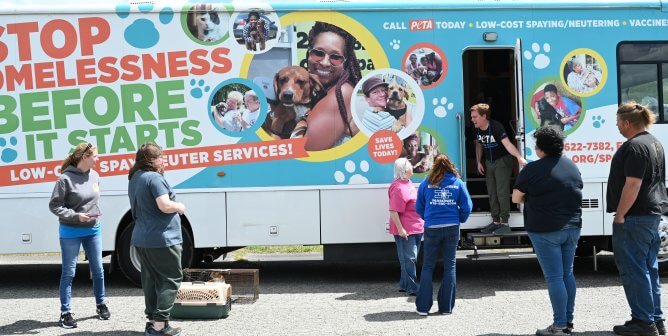
    Unfortunately, PETA's mobile spay-and-neuter clinics can't get to all the animals in need, and there just aren't enough good homes out there for the millions of animals who need them. The shelters are full, and people keep buying from breeders or giving up their animals when their lives change.

    If you're angry about euthanasia, volunteer at an animal shelter or donate to PETA's spay-and-neuter efforts—go out and do something. No one should point fingers and complain because everyone is needed to do something good, to take action and make a difference.

    Written by Kristen Stine

  • Rescued Cat Needs a Home

    Written by Alisa Mullins

    Poor little Olivia was a 5-pound skeleton with fur when a man found her wandering outside the warehouse where he works, just a few miles from PETA's headquarters at the Sam Simon Center in Norfolk, Virginia. She was suffering from an apparent sinus infection, which had caused her cheeks to balloon to the point that her eyes were just slits and she could barely see. On top of that, she was so weakened and anemic from prolonged, severe malnutrition that she was only a day or two away from needing a blood transfusion.


    PETA rushed her to a veterinarian, and with round-the-clock care, she beat the odds and pulled through. She's now recuperating at PETA's Sam Simon Center, where she is already feeling well enough to display a natural aptitude for the Cat Charmer.

    If you are interested in opening your home to a feline companion, Olivia comes highly recommended: PETA staffers bill her as a 3- to 4-year-old sweetie pie who gets along well with other friendly cats. No one claimed Olivia through the lost-and-found report that we filed, even though she obviously once had a home (she has been spayed and declawed), and she will be vaccinated and microchipped before she is adopted out.

    Does Olivia sound like she could be your new best friend? Send an e-mail to Adopt@peta.org to find out more or to fill out an adoption application.

  • Why We Euthanize

    Written by PETA

    In my first year working at a grossly substandard animal shelter in Maryland, I forced myself to go in early to euthanize dogs by holding them in my arms and gently helping them escape an uncaring world without trauma or pain and to spare them from being stabbed haphazardly—while they were fully conscious, terrified and aware—in the general vicinity of their hearts with needles blunt from reuse and left to thrash on the floor until they finally died by the callous people who would arrive later to do the job.

    I always wonder how anyone cannot recognize that there is a world of difference between painlessly euthanizing animals out of compassion—aged, injured, sick, and dying animals whose guardians can't afford euthanasia, for instance—as PETA does, and causing them to suffer terror, pain, and a prolonged death while struggling to survive on the streets, at the hands of untrained and uncaring "technicians," or animal abusers.

    Diamond was suffering from a painful facial tumor that was slowly eating away at his face
    wound


    Sasha had a severely infected bite wound.
    wound


    It's easy to point the finger at those who are forced to do the "dirty work" caused by a throwaway society's casual acquisition and breeding of dogs and cats who end up homeless and unwanted, but at PETA, we will never turn our backs on neglected, unloved, and homeless animals—even if the best we can offer them is a painless release from a world that doesn't have enough heart or homes with room for them. It makes it easy for people to throw stones at us, but we are against all needless killing: for hamburgers, fur collars, dissection, sport hunting, the works. PETA handled far more animals than 2,069 in 2012. In fact, we took in more than 10,000 dogs and cats and work very hard to persuade people to spay and neuter their animals and to commit to a lifetime of care and respect for them. We go so far as to transport animals to and from our spay/neuter clinics, where they are spayed or neutered and given vet care, often for free! Since 2001, PETA's low- to no-cost spay-and-neuter mobile clinics, SNIP and ABC, have sterilized more than 50,000 animals, preventing hundreds of thousands of animals from being born, neglected, abandoned, abused, or euthanized when no one wanted them. And on a national level, PETA is focusing on the root of the problem through our Animal Birth Control (ABC) campaign.

    Big Girl was still alive when a field worker found her
    Still Alive


    If anyone has a good home, love, and respect to offer, we beg them: Go to a shelter and take one or two animals home. The problem is that few people do that, choosing instead to go to a breeder or a pet shop and not "fixing" their dogs and cats, which contributes to the high euthanasia rate that animal shelters face. Most of the animals we took in and euthanized could hardly be called "pets," as they had spent their lives chained up in the back yard, for instance. They were unsocialized, never having been inside a building of any kind or known a pat on the head. Others were indeed someone's, but they were aged, sick, injured, dying, too aggressive to place, and the like, and PETA offered them a painless release from suffering, with no charge to their owners or custodians.

    Every day, PETA's fieldworkers help abused and neglected dogs—many of them pit bulls nowadays and many of them forced to live their lives on chains heavy enough to tow an 18-wheeler—by providing them with food; clean water; lightweight tie-outs; deworming medicine; flea, tick, and fly-strike prevention; free veterinary care; sturdy wooden doghouses stuffed with straw bedding; and love.

    What we see is enough to make you lose faith in humanity. One pit bull we gained custody of, named Asia, looked like a skeleton covered with skin when PETA released her from the 15-pound chain she had been kept on for years. Asia suffered from three painful and deadly intestinal obstructions, which prevented her from keeping any food down. She faced an agonizing, lingering death, so our veterinarian recommended euthanasia to end her suffering. We pursued criminal charges against those responsible for her condition, leading to their conviction for cruelty to animals. That is just one of the dozens of cases we see every week.

    The majority of adoptable dogs are never brought through our doors (we refer them to local adoption groups and walk-in animal shelters). Most of the animals we house, rescue, find homes for, or put out of their misery come from miserable conditions, which often lead to successful prosecution and the banning of animal abusers from ever owning or abusing animals again.

    Santana had facial injuries so serious that his right eye was swollen shut and his jaw was ripped and hanging
    Facial Injuries


    This dog was suffering from advanced cancer
    Cancer


    As long as animals are still purposely bred and people aren't spaying and neutering their companions, open-admission animal shelters and organizations like PETA must do society's dirty work. Euthanasia is not a solution to overpopulation but rather a tragic necessity given the present crisis. PETA is proud to be a "shelter of last resort," where animals who have no place to go or who are unwanted or suffering are welcomed with love and open arms.

    Please, if you care about animals, help prevent more of them from being born only to end up chained and left to waste away in people's back yards, suffering on mean streets where people kick at them or shoo them away like garbage, tortured at the hands of animal abusers, or, alas, euthanized in animal shelters for lack of a good home. If you want to save lives, always have your animals spayed or neutered.

    See more about how PETA saves animals.

    Written by Ingrid E. Newkirk

REPORT CRUELTY

If you have a general question for PETA and would like a response, please e-mail Info@peta.org. If you need to report cruelty to an animal, please click here. If you are reporting an animal in imminent danger and know where to find the animal and if the abuse is taking place right now, please call your local police department. If the police are unresponsive, please call PETA immediately at 757-622-7382 and press 2. 

PETA Tweets

Follow PETA on Twitter!

Chicken Photo: © Rommel Manuel