Written by PETA
Talk about fast results: When star PETA member Emily Lavender organized protests against horse slaughter across Canada earlier this month, one horse was saved on the spot!
Protesters outside a slaughterhouse in Québec spotted a man who was about to hand a horse over to be killed because he didn't want to pay for a medical procedure that the horse needed. They begged the man to give the horse to a sanctuary instead of sending him to a painful and terrifying death, and the man finally agreed to let the concerned group take the horse.
With the help of generous donations, the horse (now named Joe) received his surgery and is currently at a foster home, where he is relishing the freedom to run and play. Joe's former guardian used him for breeding, so he spent most of his life cooped up in a stall. Check out this happy horse!
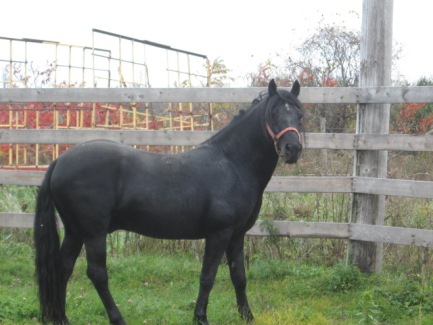
When they stop winning races or become injured, many horses used for racing are sent to slaughterhouses in Canada, Mexico, or Japan. We can all help save horses like Joe from ending up as glue, dog food, or human food by never attending or watching horse races.
Written by Lindsay Pollard-Post
Please stop the killing of innocent horses ,we all love horses ,who could be so cruel as to kill a horse will u please try to get slaughter houses outlawed
Re: Emily. Approximately 12,000 thoroughbreds are trucked to slaughterhouses in Canada and Mexico from the U.S. This is directly related to the appalling number of thoroughbreds born every year – 30,000 in the last year. Some years as many as 50,000. Not all can become racehorses. It may be true that most horses going to slaughter were owned by families/stables, but most thoroughbreds going to slaughter are former racehorses. The industry asks for a paltry $2 donation per horse toward retirement, which can’t begin to cover the cost of actually retiring the horses. So the racing industry isn’t responsible for all slaughter, but they’re responsible for the shocking number of cast-offs from their industry that do go to slaughter, not to mention the 3 deaths every single day on racetracks in the U.S. and many, many more off the track. -PETA
What you fail to mention in this article is that the vast majority of horse racing is staunchly against the mistreatment and slaughter of horses after their racing days. Many racing jurisdictions have severe penalties in place for any owner or trainer who knowingly sells a horse to slaughter overseas (including being barred not only from racetracks, but the revocation of their racing licenses for life as well).
Criticisms for slaughter would be better focused upon the AQHA and other related breed organizations who have taken public stances supporting slaughter.
It is a despicable act, and a majority of the horses reaching slaughter are those once owned by families. Horses do not deserve this sort of treatment, but your blaming of one industry (who is actually working towards eradicating slaughter) is misguided.
By signing up here and giving us your details, you are acknowledging that you've read and you agree to our privacy policy.
If you have a general question for PETA and would like a response, please e-mail Info@peta.org. If you need to report cruelty to an animal, please click here. If you are reporting an animal in imminent danger and know where to find the animal and if the abuse is taking place right now, please call your local police department. If the police are unresponsive, please call PETA immediately at 757-622-7382 and press 2.
Follow PETA on Twitter!