Working With the Media
Developing Literature
If your group is just starting out, you'll need to develop some identifying literature. Even if you intend to use literature from larger animal rights groups (which can save time and money), you need to have at least one brochure, factsheet, or flier that identifies your organization and describes its purpose and goals. You will also need some letterhead stationery. These materials are invaluable when working with reporters, who are always interested in the local angle.
Making a Media List
Create a media list and organize it into the following categories:
- Wire services
- Local print media
- Local radio
- Local TV
- National media
Record the name and title of each contact person (you may have more than one contact person for each organization), the name of the publication or station, and the address, telephone number, and e-mail address of each. For print media, get the name of the news editor (also called the city editor, news director, or assignment editor), the features editor, and the person responsible for the community calendar or bulletin board.
Organize media information according to whether the publication is daily, weekly, or monthly. Find out the publications' deadlines, and make a list of the times your local TV news is broadcast. This will help you plan your demonstrations and actions so that they will best fit into the TV station's schedule.
Try to keep profiles of your media contacts, with comments on whether they are sympathetic or hostile to certain issues and on whether they have covered animal-related issues in the past.
Meeting Deadlines
Reporters work against deadlines. If you call editors or reporters when they are rushing to meet a deadline, you won't get your story in the news, and you may alienate them as well.
The best time to call contacts at a morning paper is between 9:30 and 10 a.m. As it gets later, the staff will be more pressed for time. Call contacts at an evening paper in the late afternoon, when the paper has just gone out.
It is best to call radio or TV reporters as early in the day as possible—between 8 and 9 a.m.—if you're trying to get on an evening broadcast. Don't call after 1 or 2 p.m. for a 5 p.m. story; the staff is rushing to edit the news that they already have. As a general rule, talk to the media as far before deadlines as possible.
Your goal is to become a resource on animal rights issues for the media. You can do this by letting them know that you exist and by cultivating contacts. Send a brief letter to each person on your media list, explaining the purpose of your group and offering information on animal rights issues. Include your group's identifying factsheet or brochure. This alone is probably not enough to get the media to contact you—usually you have to become known in the community—but it is a start.
Develop and maintain professional relationships with the media in your community by being courteous and responsible. Return calls promptly—remember those deadlines! Be enthusiastic, cooperative, friendly, and truthful. If you make a mistake, admit it promptly. Don't be afraid to say, "I don't know, but I can find out." Then do so.
When you send a news release to more than one person in an organization, let each person know who else is receiving it. Nothing infuriates an editor more than working on a story and then finding out that someone else at the paper is doing the same story in another section.
Reporters need an interesting angle. When you make a media call or send out a news release, be sure that it is for something newsworthy. Remember, the media don't like to feel "used" by anyone with a cause. Reporters want what they're writing to be legitimate news, not propaganda. If your information or event isn't newsworthy, don't contact the media because you'll only anger them and waste their time.
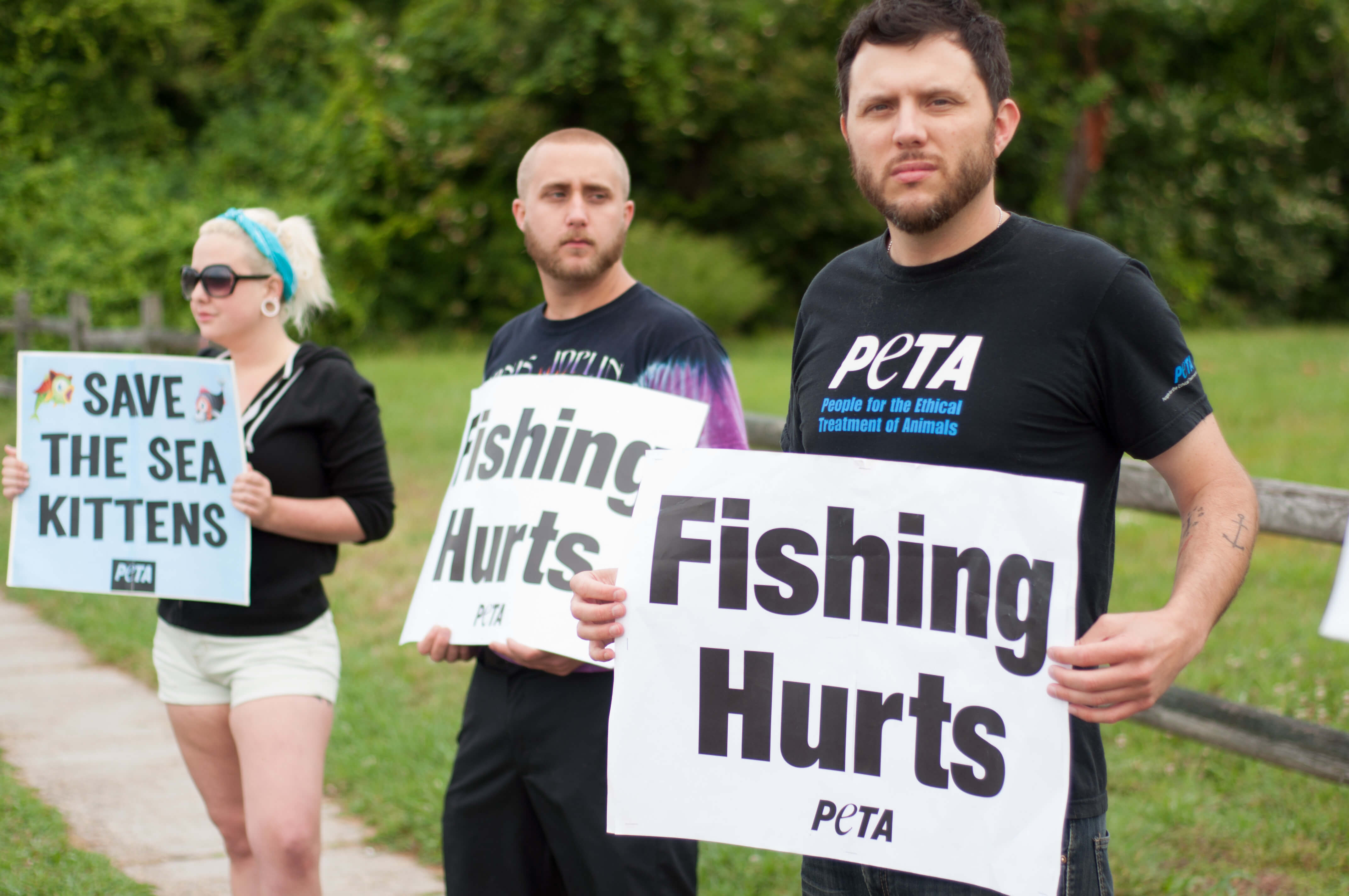
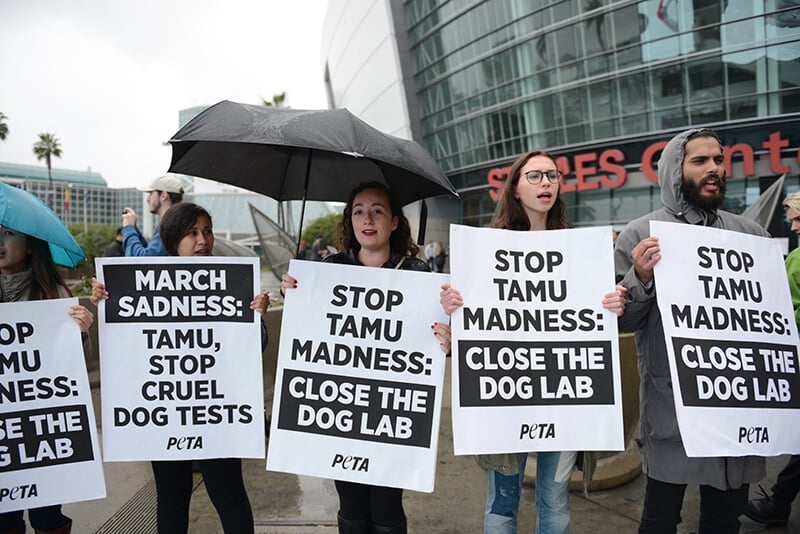
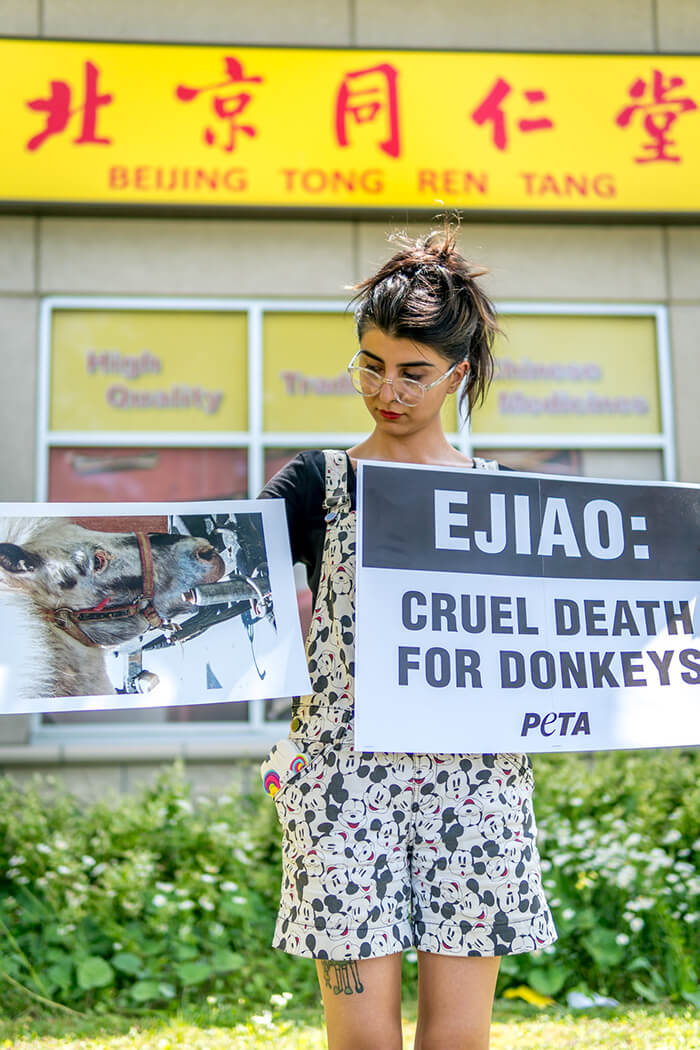
Use interesting visuals, such as costumes and props, in your demonstrations. Focus on the local aspects by explaining, for example, about what the company that employs half the people in town does to animals or by talking about locals who participated in a national demonstration.
Never speak "off the record"; there is no such thing. Also, watch out for jokes, which can cause misunderstandings. Don't get bullied into a simple "yes" or "no" answer to a complex question. Give the facts necessary to address the issue.
Study the professionals on national interview shows. Develop a few good phrases and examples that will catch a reporter's ear.
State important points clearly and briefly. It's helpful if you understand what media professionals consider newsworthy. The following are characteristics of newsworthy stories:
- Timeliness: The media are interested in what's happening today, not yesterday.
- Proximity: The closer the event is to the media's target audience, the more likely it will be considered news.
- Prominence: You may get more media attention by getting well-known people involved.
- Conflict: The media love covering opposing factions.
- Oddity: If you're doing something for the first time, the media are more likely to respond; they get tired of the same old thing.
- Importance: The more people will be affected or interested, the more likely you are to receive media coverage of an event.
Your information or event does not have to meet every one of these criteria, but it should meet most of them.
Writing News Releases
News releases, short announcements of newsworthy events, are sent to newspapers, magazines, and TV and radio stations to interest them in doing a story. Because news directors receive hundreds of releases every day, yours must look professional and present the facts quickly, or it will never be read. The following guidelines will help:
- Keep it short. One page is best.
- Write a concise, catchy headline that summarizes the story. It should be written in the style of a newspaper headline, using active verbs.
- Use the "inverted pyramid" style to write the release: Put the most important facts in the first paragraph and supporting information in descending order, so that the least important information is last.
- The first paragraph should answer the five Ws: who, what, where, when, and why.
- Underline the text that gives the location, time, and date of the event.
- The final paragraph should describe your group and reinforce your message with a quotation from your spokesperson.
- Never editorialize. Use quotations to express opinions.
- Quotations should be attributed to a specific individual, not just your group.
- Proofread the release carefully for grammar and spelling. Ask someone else to read it for an objective reaction. If you have the time, set it aside and look it over again the next morning. Eliminate redundancies, use short words and phrases, and simplify complex ideas.
- If you've got an exciting, relevant photo, include it. A photo showing the timeliness or significance is even better.
- You may also want to include high-quality black-and-white photographs, a factsheet, or a flier. If you do, write, "Attached: (list documents)" at the bottom of the last page of the release.
- Make it dramatic and attention-getting, but be prepared to substantiate everything that you say. Double check the facts. It is virtually impossible to correct a release once it has gone out. But if you do make a mistake—especially in the time or location of an event—call those who received the release as soon as possible.
- The time you give the media should be the ideal time for them to see your event. If your event starts at 11 a.m., tell the media that it's a little later so that they don't arrive to see activists who are still figuring out where to stand or chatting.
View a sample news release, which illustrates the proper format. The following guidelines will tell you more:
- Use white, regular-weight, 8.5"x 11" paper.
- Include your group's name and address in your letterhead.
- Type "NEWS RELEASE" at the top of the first page. Always refer to releases as "news releases," not "press releases." The same goes for "news conference," rather than "press conference."
- Make sure that someone is always available at the number listed on the release, or include both daytime and evening numbers.
- Type the date in the upper-left corner.
- Type "FOR IMMEDIATE RELEASE" above the date.
- Center the headline, which should be underlined, typed in capital letters, and placed about 3 inches below the headings above it to provide space for editors' notes.
- Begin the body of the release about a third of the way down the page.
- Leave wide margins for reporters' and editors' notes.
- Don't use zeroes for times ("11 a.m.," not "11:00") or letters after numbered dates ("August 22," not "August 22nd").
- Never continue on the back of a page. Instead, end the first page with a complete paragraph and type the word "more" centered at the bottom.
- At the end of the release, center "-30-," "###," or "End."
Before deciding how and when to deliver your release, establish what you want to accomplish. Do you want something printed or broadcast before the event, or do you want the media to attend and cover the event? Generally, activities such as film showings, meetings, and fundraisers are better covered before the event. In this case, send your release at least three weeks before the event to the "community calendar" or "bulletin board" sections of your local paper. If, on the other hand, you're organizing a picket or demonstration, you'll want news coverage. In this case, fax and or e-mail your news release one day before the event.
If you are planning a demonstration or something dramatic, call the news desk to inform them. Do not read your entire news release to them; just say, "Hello, I'm calling to let you know that Action for Animals will be holding a demonstration tomorrow at 11 a.m. in front of the Fur Salon at 1213 Market Street. Our contact number is 123-342-7018 if you'd like more information. We've sent a release to the news desk." If you have a good relationship with a particular reporter, call to let him or her know that your release is coming, or call afterwards to see whether he or she got it.
After the demo, assign volunteers to gather the coverage. At least two people should videotape television coverage and check the newspapers for stories and photos. These clips can be sent out with your next news release to show that what you're doing is "newsworthy."
If a newspaper covers your event and the news wires (AP, Reuters) don't, call the wires to let them know that they can pick up the story from the paper. If your event is of national interest (Supreme Court Santeria ruling, animal-to-human organ transplant, etc.), call the national television news desks in New York to let them know that they can pick up footage from the local affiliate.
Creating a Media Kit
A media kit is a packet of information given to reporters who come to your demonstration, event, or news conference. It helps to get your message across and makes you look professional. A media kit can include any or all of the following, depending on the issue:
- A news release
- A factsheet
- Photographs (Type the following information on a sticky label to put on the back of the photograph: what it is, where it is, when it was taken, and who took it. Never write on the back of a photograph with a pen. The ink will rub off and damage other photographs.)
- Background information on or a history of the issue
- Copies of relevant documents
- If dealing with legislation, a copy of the bill and summary of the main points
- Background on the organization
Package the kit in a two-pocket folder (found in any office-supply store), and put a label on the cover with your group's name and the words "Media Kit." If you have a photograph, you can put it on the cover, but it is not essential.
Working With Wire Services
Wire services are news-gathering agencies that sell stories to newspapers and radio stations around the country. They should be your first point of contact for delivering a news release or making press calls. If you can interest the wire services, your story will be sent to all the subscribing media in your area or even across the nation. The biggest wire services are the Associated Press (AP) and Reuters. Many of the nation's largest papers—The Washington Post, The Los Angeles Times, The New York Times—also have news services, which means that if you interest them in your story, it may be sent nationwide as well.
Getting a story "on the wire" is a valuable accomplishment. It is worth a great deal of effort to develop good relations with wire-service reporters. Many TV, radio, and print assignment editors answer calls asking for coverage by saying, "We'll see what comes in over the wire."
To find out what wire-service bureaus are in your area, look in the telephone book or call your local newspaper office. Any reporter can tell you where the nearest bureau is. If the newspaper is a member of the AP, it also submits stories to the AP.
Send the bureau manager a letter describing your organization, and supply the names, addresses, and telephone numbers of your best contact people. Offer to supply information or the local angle on animal rights issues.
The daybook is a listing of scheduled events for the day. Each evening and morning, AP and UPI send the daybook to their members. Assignment editors use this list to decide how to assign reporters and camera crews. Always send two news releases to the wire services—one for the daybook and one for the assignment editor. Call both the daybook editor and the assignment editor to follow up.
To get listed in the daybook, send your news release about a week before the event. If that's not possible, you may still be able to get listed by calling the information in to the daybook editor.
You might also be able to get a photograph of your event on the wire. If you've just had a demonstration, e-mail or take your roll of undeveloped film to the photo department of the wire-service bureau and give it to the staff, along with your news release. If they seem interested, you can come back in a few hours or the next day to pick up the negatives.
Call your closest radio bureaus. Be prepared to do an interview on the spot if they are interested. They'll tape it for later use.
Doing Radio and TV Talk-Show Interviews
You can reach thousands of people through talk shows. Call in to make comments when animal-related subjects are discussed and during "open phone" segments. It's even better if someone from your group can be a talk-show guest.
Before you can do an interview, you must get the TV station interested. It helps to know the "gatekeeper" at the station: the news assignment editor. Call the station to get his or her name and the best time of day to call.
If your group is expecting a visit from someone with a particular area of expertise, try to get the person on a talk show. Or try to get yourself on one. Contact television and radio stations several weeks in advance. Send a letter to the talk-show director, describing your credentials or those of your speaker, possible discussion topics, and reasons that they would interest the audience. Be sure to provide your telephone number.
Prepare a list of people that your speaker would feel comfortable debating, in case the show wants to present both sides.
Once you are booked for a show, listen to it or watch it so that you'll know what style and format to expect. To prepare, do the following:
- Study the issue.
- Practice being interviewed. Tape yourself with a recorder or video camera.
- Anticipate difficult questions and plan your answers.
- Memorize good quotations, anecdotes, and facts.
- Have a friend ask you hard questions in a hostile, aggressive way so that you can be prepared for a difficult interview.
- Decide on the five main points that you want to make during the show. Memorize a fact or an example for each one.
- Try to make your five points, even if the interviewer doesn't ask the "right" questions. Don't feel limited by the questions. You can answer them and still talk about your points. Practice saying, "The real question here is ...," or, "That relates to a larger issue, which is ...."
- If you're doing a TV show, dress carefully. Wear plain, solid colors rather than patterns, but avoid solid black, white, and bright red. Green and blue film especially well. Smile, and don't fidget or touch your face or hair.
- Try to make your point in eight seconds or less. TV news shows look for "sound bites"—statements that can be plugged into a 60-second story. If you take 45 or 60 seconds to make your point, your spot won't be aired, so use short sentences.
- Speak slowly and carefully (but not too slowly!), and take time to think before answering the question.
- Don't say anything that you wouldn't want edited out and aired separately. The reporter may interview you for five minutes but air only eight seconds of it. Don't worry about repeating yourself: It just increases the chance that what you want to be heard actually will be.
- If the reporter is hostile, don't get flustered, raise your voice, or get shrill. Stay calm and concentrate on making your five points. Remember: The reporter is not your real audience!
- Talk directly to the interviewer, not to the audience or camera. If you steal side glances at the camera, you'll look nervous or shifty.
Making Public Service Announcements
Public service announcements (PSAs) are 10- to 60-second notices that radio and TV stations are required to air in order to balance the effect of paid advertisements and present objective coverage of issues. Nonprofit organizations can place PSAs for free.
The four standard lengths for PSAs are 10 seconds (25 to 30 words), 20 seconds (45 to 50 words), 30 seconds (60 to 75 words), and 60 seconds (120 to 150 words).
Radio and TV stations air announcements about meetings and other events on their "community calendars." These calendars offer an excellent forum for publicizing your group's events. Stations will also often display this information for free on their Web sites. To post information, visit the appropriate site, click on the "community calendar" section, and enter the details of your event.
To place a PSA on the radio, send several copies of your PSA by fax or e-mail, along with a letter, to the public service director of the appropriate station. Describe the purpose of your organization and your activities, and explain why the station should air your PSA. In the top left corner of the letter, type the beginning date (when the station should begin to air the PSA), the kill date (the last day the PSA should be aired), and the length of the announcement (in seconds and words). Your script will be either read on the air or produced for free and aired during unsold advertising space.
TV stations typically require a pre-produced, broadcast-quality spot to air. Contact the public service directors of your local stations to find out how to produce a TV spot for your organization.
To listen to and download prerecorded radio PSAs by PETA (in MP3 format), read sample PSA radio scripts, and view PSAs produced for television, visit PETAPSA.com. To get more information about PSAs or order materials, please contact PETA's Production Department.
Writing Letters to the Editor
You can get great exposure for animal rights issues by writing letters to the editors of newspapers or magazines. Make it a point to read local papers and magazines for articles that provide fuel for letters to the editor.
Your letter must be short—300 words is the maximum length that most papers or magazines will publish without cutting, and it's better for you to do the cutting than for the editor to do it. The best length is 100 to 150 words (10 to 15 typed lines).
Make the first sentence catchy to get the readers' attention, and stick to one issue. The letter should be timely. If possible, send it no more than three to four days after the article that you're responding to appeared. Include your home and work telephone numbers. Some papers will want to verify that you wrote it.
Don't just send letters to the biggest paper in town. The smaller the paper, the better the chance of getting your letter printed. Small weekly papers are an excellent way to reach hundreds or even thousands of people.
Sending in regular letters to editors should be a priority. The exposure you get is so valuable that it is worth forming a letter-writing committee to ensure that the job gets done.
Occasionally, you may have the chance to write an opinion piece for the local paper, especially if you are involved in a controversial campaign. These are longer articles of 500 to 800 words that summarize an issue, develop an argument, and propose a solution. Send the article to the editorial page editor with a cover letter explaining why it should be printed. The article has a better chance of getting printed if it is signed by someone prominent, even if you wrote it for him or her.
Appointing a Spokesperson
A spokesperson, not necessarily the group leader, should be appointed for each event. Members of your group need to be prepared to answer media questions with a brief sentence and then direct further questions to the spokesperson, who will be prepared with media kits and all the facts. This helps prevent the media from interviewing the most inarticulate or ill-presented person. Your group must decide ahead of time what the spokesperson should and should not say.
The spokesperson should be well dressed. If the demonstration involves people wearing costumes, the spokesperson should not be in costume.
Though you must appoint a spokesperson, everyone at the event should be familiar with the topic because reporters will often want a second comment from others involved.
Organizing a News Conference
Holding a news conference is a good way to fall flat on your face … unless you have a really important story. Hold a news conference only when the following criteria apply:
- The media can get more from it than they could from photographs and news releases.
- You have important or newsworthy people available to present your story.
- Experts will be available to answer questions.
- The story involves something that has to be seen to be understood.
- The media is inundating you with telephone calls, and rumors must be dispelled.
Use the following format when holding a news conference:
- Hold the conference in a location that is convenient for media professionals, such as in a downtown hotel, and provide light refreshments. The best time to have a conference is 10 or 11 a.m.
- Start promptly with a concise statement from your spokesperson.
- Explain the material available to the media.
- Call on the expert to read a short statement.
- Answer questions.
- End the conference on time. It should not last more than 30 or 40 minutes. Reporters will ask further questions if they wish to do so.
If possible, issue invitations one to two weeks ahead of time by sending a "media alert." Explain the details of the conference and what will be addressed. If you are holding the conference right away, alert the media by telephone. Call the wire services to get it on the daybook.
Be careful to allow only media professionals, not members of the general public, to enter the room. Assign someone to check media IDs at the door. Courteously refuse entry to others.
Hand media kits and news releases out as soon as reporters arrive. If a major statement is being made, you may want to issue the news release after the statement.
After the news conference, follow up with media inquiries as quickly as possible. Make every effort to accommodate requests for personal interviews. Deliver news releases and media kits to media professionals who were invited but did not attend. Tell radio stations that your spokesperson is available for telephone interviews.
If you'd like to learn more about working with the media, read How to Get Free Press by Toni Delacarte, Judy Kimsey, and Susan Halas (Avon, New York, 1981). |